
13

Wide Temperature LCD Displays for Industrial Equipment
Showing all 11 results
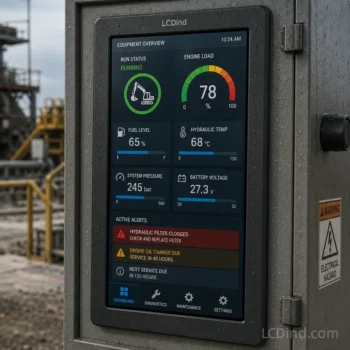
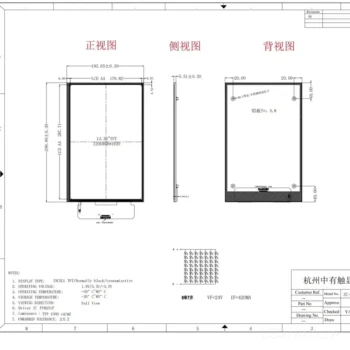
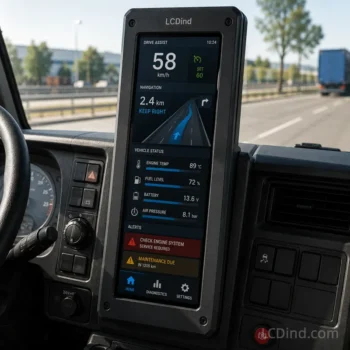
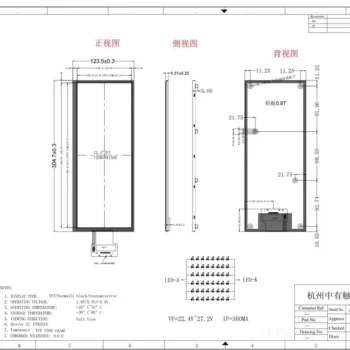
Wide-Temperature LCD Selection and Qualification
Wide-temperature LCD modules are selected for equipment exposed to cold starts, hot enclosures, solar loading or repeated thermal cycling. The category includes different model-specific limits; selected products may target ranges such as -30°C to 85°C, but the exact operating and storage ratings must be confirmed from each datasheet and validated in the final assembly.
Specification boundary: A panel temperature rating does not certify the complete equipment. Touch sensors, optical adhesive, cover-lens ink, FPC, connectors, backlight driver, controller board and enclosure can have narrower limits than the LCD cell.
Define the Complete Temperature Envelope
Cold StorageUnpowered dwell, packaging, transport and condensation-control conditions.
Cold StartRequired power-on temperature, warm-up allowance, image response and backlight ignition.
Continuous OperationNormal ambient range, internal heat, duty cycle and expected image performance.
Hot Soak / Solar LoadPeak internal temperature, TNI margin, dimming strategy and recovery behavior.
Temperature-Related Failure Modes to Review
Slow low-temperature response
Liquid-crystal viscosity increases in the cold, which can produce image lag, motion blur or temporary ghosting even when the panel powers on.
Liquid-crystal viscosity increases in the cold, which can produce image lag, motion blur or temporary ghosting even when the panel powers on.
Condensation after transition
Moving equipment from cold storage into warm humid air can create moisture on or inside the optical stack. Venting, sealing and acclimation procedures matter.
Moving equipment from cold storage into warm humid air can create moisture on or inside the optical stack. Venting, sealing and acclimation procedures matter.
Backlight and driver limits
LED forward voltage, driver start-up, current regulation and heat dissipation can constrain both cold-start and high-temperature operation.
LED forward voltage, driver start-up, current regulation and heat dissipation can constrain both cold-start and high-temperature operation.
High-temperature optical change
Panel TNI, polarizer, adhesive, touch stack and cover-lens materials must tolerate the internal temperature, not only the published outdoor ambient.
Panel TNI, polarizer, adhesive, touch stack and cover-lens materials must tolerate the internal temperature, not only the published outdoor ambient.
Touch and controller mismatch
PCAP controller tuning, glove/water behavior, MCU/bridge-board components and cables may use a different qualified range from the LCD.
PCAP controller tuning, glove/water behavior, MCU/bridge-board components and cables may use a different qualified range from the LCD.
Mechanical stress through cycling
Different expansion rates across glass, frame, adhesive and enclosure can affect bonding, mura, seal integrity and connector reliability.
Different expansion rates across glass, frame, adhesive and enclosure can affect bonding, mura, seal integrity and connector reliability.
Recommended Qualification Plan
| Datasheet review | Separate operating and storage ranges; confirm LCD, backlight, touch, controller, adhesives and cover materials individually. |
|---|---|
| Cold-soak test | Evaluate unpowered dwell, cold start, image response, backlight start-up, touch operation and recovery at the required minimum. |
| Hot-soak test | Measure internal panel temperature under full backlight and equipment load; check color, contrast, image retention, dimming and touch behavior. |
| Thermal cycling | Use project-defined high/low limits, ramp rate, dwell time and cycle count; inspect FPC, connectors, bonding and mechanical stress. |
| Humidity/condensation | Review sealing, ventilation, conformal coating and transition conditions when the equipment will move between temperature and humidity zones. |
Evidence Needed Before Model Selection
Environmental profile
Operating/storage limits, cold-start point, dwell time, ramp rate, humidity, altitude and solar exposure.
Operating/storage limits, cold-start point, dwell time, ramp rate, humidity, altitude and solar exposure.
Display assembly
Size, resolution, interface, brightness, touch, optical bonding, cover glass, enclosure drawing and heat path.
Size, resolution, interface, brightness, touch, optical bonding, cover glass, enclosure drawing and heat path.
Production requirement
Prototype quantity, annual forecast, validation standard, lifecycle, change-control and replacement expectations.
Prototype quantity, annual forecast, validation standard, lifecycle, change-control and replacement expectations.
Related engineering paths: 1000+ nit outdoor LCD modules, automotive LCD displays, and LVDS industrial LCD modules.
Frequently Asked Questions
Does every wide-temperature LCD operate from -30°C to 85°C?
No. Wide-temperature ratings are model-specific. Some products may support -20°C to 70°C, -30°C to 80°C, -30°C to 85°C or another range. Confirm both operating and storage limits from the exact datasheet.
What is the difference between operating and storage temperature?
Operating temperature is the range in which the powered display is specified to function. Storage temperature applies while unpowered and does not guarantee normal image response, backlight operation or touch performance at those limits.
Why can an LCD respond slowly at low temperature?
Liquid-crystal response time increases as temperature falls, which can cause motion blur, image lag or temporary ghosting. The panel technology, drive settings and equipment warm-up strategy must be evaluated.
What must be checked for high-temperature LCD operation?
Review the panel TNI limit, polarizer and adhesive ratings, backlight heat, solar loading, enclosure temperature, touch stack and controller components. Ambient temperature alone does not represent the internal panel temperature.
What information is required for a wide-temperature LCD quotation?
Provide the required operating and storage ranges, cold-start condition, dwell time, thermal cycling, humidity or condensation exposure, size, resolution, interface, brightness, touch, enclosure design, sample quantity and annual quantity.
Request a Wide-Temperature Display Review
Send the environmental profile, display and enclosure drawings, interface, brightness and touch requirements, validation method and forecast quantity. We will review the LCD, backlight, optical stack and controller limits before quotation.