13
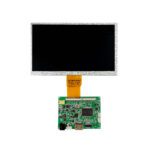
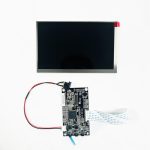
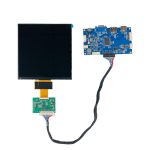
Universal LCD Controller Board solutions. Convert HDMI/VGA signals to LVDS, EDP, or MIPI. Custom firmware support for industrial display panels.
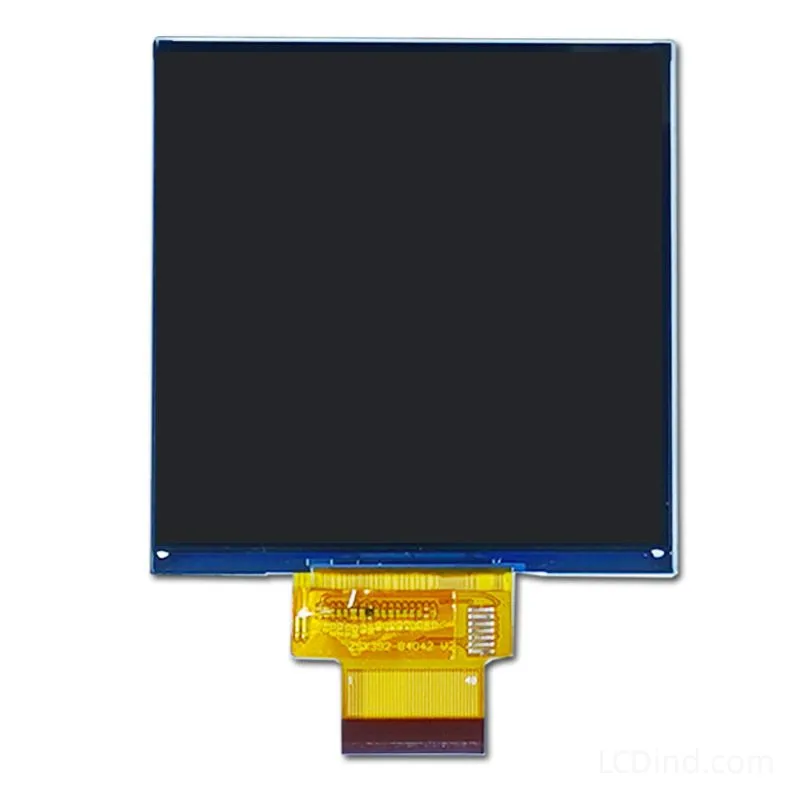
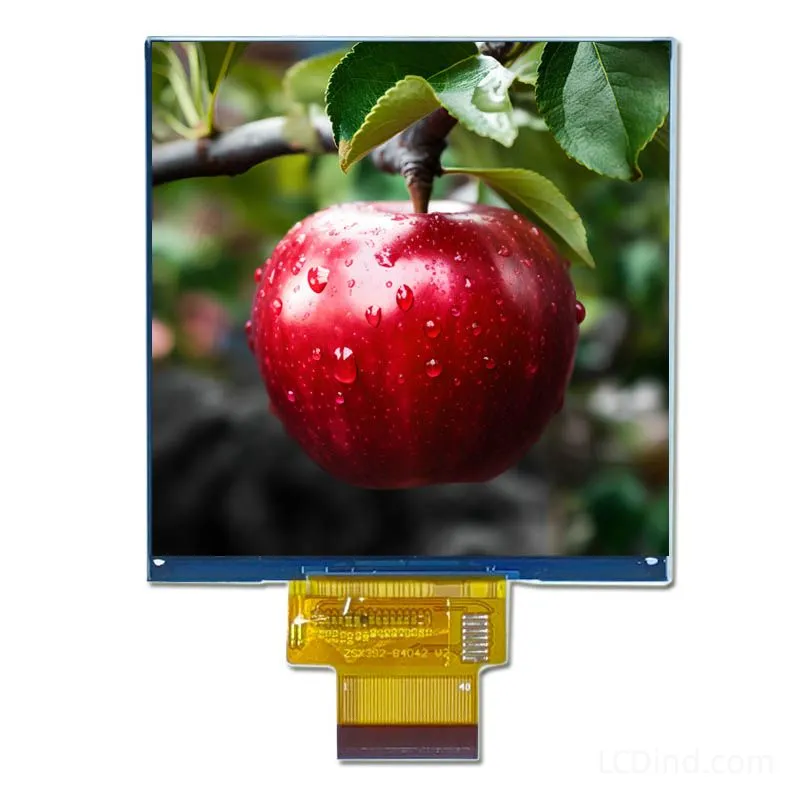
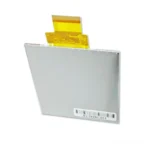
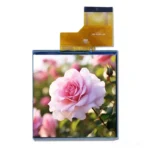
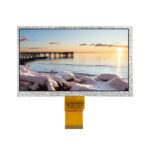
3.92 inch 320×320 wide-temperature MCU LCD with 400 nits brightness, all-direction viewing, 1200:1 contrast, 71.14×69.82 mm active area and -30 to 80 °C operation.
| Brand | OEM / ODM |
|---|---|
| Size | 3.92 inch |
| Resolution | |
| Interface | MCU |
| Brightness | Standard (200-450 nits) |
| Operating Temp | Ultra Wide / Automotive (-30 ℃ to +85 ℃) |
| Touchscreen | No Touch |
| Viewing Direction |
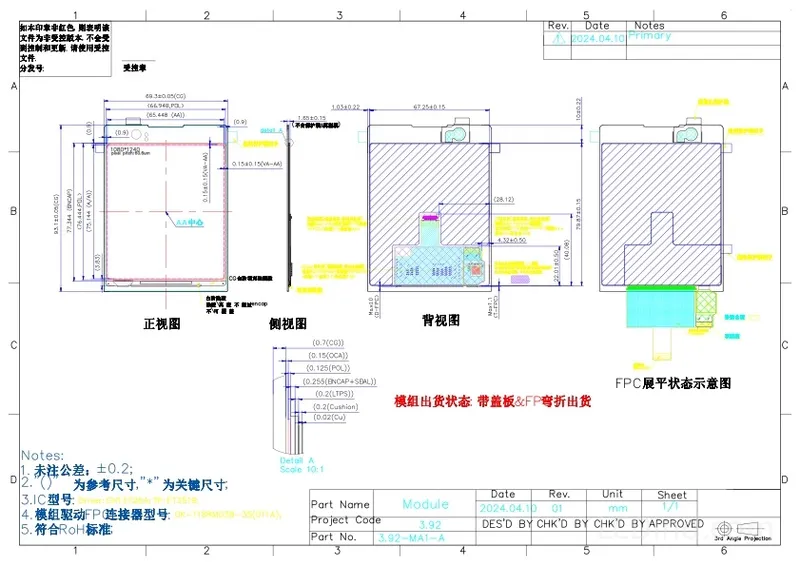
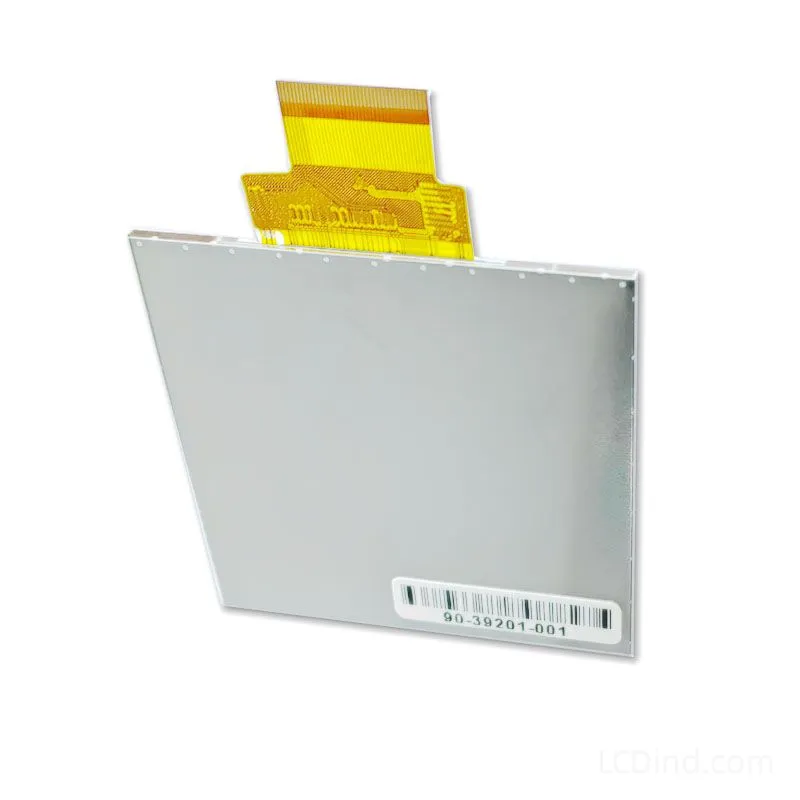
This 3.92 inch wide-temperature LCD is designed for compact instruments and control devices that need a square-like display area, MCU interface and stronger environmental margin than a standard indoor module. The public specification lists 320×320 resolution, MCU interface, 400 nits brightness, all viewing directions, no touch in the standard configuration, -30 to 80 °C operation, -30 to 85 °C storage, 74.86×76.73×2.15 mm outline, 71.14×69.82 mm active area, 1200:1 contrast, 3.3V power supply, 30000-hour LED lifetime and panel model 90-39201-001. It is relevant for outdoor instruments, access terminals, compact industrial HMIs, rugged handheld controllers and embedded devices where temperature range and square UI layout matter.
The word “outdoor” should be treated carefully. The panel offers a wide operating temperature range and 400-nit brightness, but the finished product still needs an optical and thermal review for the actual installation. Direct sunlight, reflective covers, sealed housings, dark front panels and internal electronics can all change readability and operating temperature. If the product is installed outdoors, LCDind should receive the expected ambient range, enclosure color, ventilation method, lens stack, duty cycle and sunlight exposure. A higher brightness or optical bonding solution may be required for some installations.
The 320×320 format is useful for compact status screens, meter-like interfaces, square icons, equipment state pages and short maintenance menus. It gives a balanced canvas for products that do not fit a wide rectangular display. The UI should keep critical data large and centered, with secondary status around the perimeter. Long text strings and complex tables are usually poor fits for this size. Firmware should be designed around clear states, direct navigation and predictable alarm visibility.
MCU interface integration should be reviewed with the host controller. Confirm bus type, data width, voltage, timing, command set, reset behavior, power sequence, backlight control and connector mapping. MCU-interface displays can simplify wiring for compact equipment, but the available bandwidth may limit refresh rate. If the application needs fast animation, map movement or continuous data plotting, the host team should evaluate whether the interface can support the expected performance.
The all-direction viewing characteristic helps products that may be viewed from different operator positions, such as mounted access devices or handheld service tools. Even so, the final cover lens and mounting angle must be tested. A recessed bezel or glossy window can introduce reflections that are not visible on an uncovered sample. If the screen is used by operators wearing gloves or looking through a protective visor, the real working distance and viewing angle should be part of the sample review.
No touch is listed for the standard configuration. For rugged outdoor instruments, that may be intentional: buttons, sealed keypads and rotary controls can be more reliable in rain, dust, cold conditions or gloved operation. If the project requires touch, the RFQ should define capacitive or resistive type, cover thickness, water behavior, glove requirement, bonding method, controller interface and sealing strategy. Touch should be qualified together with the housing, not treated as an afterthought.
Does wide temperature mean the whole device is outdoor rated? No. The LCD rating is only one part of the system. The controller, housing, seals, cables, power supply and optical stack also need validation.
Is 400 nits sunlight readable? Not by itself. Outdoor readability depends on lens reflection, sunlight angle, UI contrast and thermal limits.
Can the MCU interface support fast graphics? It depends on bus bandwidth and firmware strategy. Provide the expected UI update behavior for review.
Is touch recommended for outdoor use? Touch can be reviewed, but physical controls may be more suitable in wet, dusty or gloved conditions.
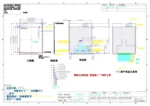
What should be checked before tooling? Confirm the drawing, active-area alignment, connector route, lens stack, host interface and environmental test plan.
This 3.92 inch MCU LCD should be selected for compact rugged instruments where square layout and wide operating temperature are important. Send the host interface, outdoor environment, enclosure drawing and input method to LCDind so the quote can reflect the real assembly requirement.
Wide-temperature selection should be tied to a real test plan. For this 3.92 inch module, sample validation should include cold start, hot soak, backlight behavior, image stability, condensation risk, gasket pressure and enclosure heat rise. If the product is battery powered, check whether backlight current changes the internal temperature or run time under worst-case brightness. If the display is mounted outdoors, review UV exposure and front-lens material even though those values are outside the bare panel table.
Production documentation should record the panel model, drawing, MCU interface definition, front-lens stack, cable route, approved sample and environmental acceptance criteria. If the equipment may need a sealed touch overlay, brighter backlight or alternate connector, treat that as a controlled variant. Mixing those requirements after sample approval can invalidate the original thermal and mechanical review.
If this display is used in an outdoor instrument family, also state whether the same housing will be sold into several climate regions. A requirement for cold regions, hot cabinets or high-humidity sites can change backlight, sealing and inspection decisions even when the LCD model number remains the same.
| Brand | OEM / ODM |
|---|---|
| Size | 3.92 inch |
| Resolution | |
| Interface | MCU |
| Brightness | Standard (200-450 nits) |
| Operating Temp | Ultra Wide / Automotive (-30 ℃ to +85 ℃) |
| Touchscreen | No Touch |
| Viewing Direction |
A: This wide temperature LCD display is best considered for compact instruments, handheld controllers, small HMIs, access terminals, and embedded equipment panels. LCDind recommends confirming annual quantity, enclosure design, host interface, brightness target, and operating environment before moving from samples to batch orders.
A: The MCU interface should be reviewed against the host platform, connector, voltage, cable direction, and display timing before sample approval. Please confirm pin assignment, connector type, voltage, timing, cable direction, and controller-board requirements during engineering review.
A: The 400 nits brightness level is best positioned for indoor equipment, control panels, and embedded terminals used in controlled lighting. For demanding outdoor or sunlight-readable equipment, LCDind can review target nits, AG/AR cover glass, optical bonding, thermal design, and backlight lifetime for the production environment.
A: The touch configuration is listed as Witout, so LCDind can review cover glass, optical bonding, coating, FPC, and controller matching for repeat production. LCDind can evaluate capacitive touch, resistive touch, cover-glass thickness, bonding, coating, FPC changes, cable length, and production consistency requirements.
A: Please share target application, annual forecast, first order quantity, host interface, mechanical drawing, brightness requirement, operating temperature -30 to +80°C, certification needs, delivery schedule, and whether pre-production samples are required.
Q: What is the MOQ?
A: The MOQ for our products is 1 piece. We are able to provide support throughout the testing process.
Q: What about the delivery time?
A: We have products in stock and can ship them within 3 working days.
Q: Does your product have any warranty?
A: Yes, we offer a warranty that ensures the LCD will function properly upon receipt. However, please note that we do not provide guarantees for any damage caused during use.
Q: What’s your payment method?
A: We accept several payment methods, including T/T (bank transfer), and PayPal.
Q: What’s your shipping method?
A: Thank you for your inquiry. We offer various shipping methods to suit different needs.
For small quantity orders, we use UPS Air-Express, DHL, FedEx, TNT, or EMS Express service. These options are safe and fast.
For large quantity orders, we typically work with the buyer’s cargo agent in China. Alternatively, we can arrange for air or sea transportation.
Please let us know your preferred shipping method and we will do our best to accommodate your request.
Q: Do you offer custom solution?
A: Yes, we offer custom solutions if our standard products do not meet the buyer’s requirements. Please let us know your specific needs, and we will work with you to create a tailored solution that meets your business needs.
Q: How to Contact us?
A: Send your Inquiry Details in the Below, Click “Send” Now!
🔒 Your data is secure. We usually reply within 24 hours.