
13
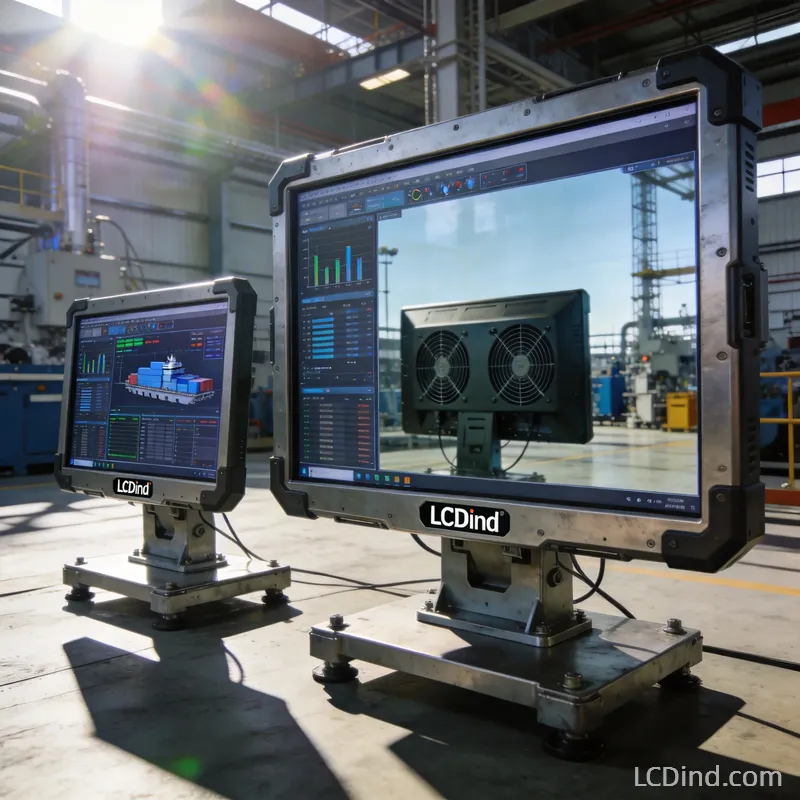
2 Rugged 1000 Nits Touch Monitors: Defeating Sunlight & Thermal Failure
1000 Nits Touch Monitors are not a luxury in outdoor digital signage and industrial control systems; they are an absolute engineering necessity. Deploying standard consumer-grade displays (typically peaking at 250 to 350 nits) in an outdoor kiosk guarantees immediate failure. When exposed to direct sunlight, standard screens suffer from severe glare, making the UI invisible. Worse, the UV and infrared heat absorption causes the liquid crystals to boil and enter an “isotropic state,” resulting in permanent black spots on the panel.
To survive unshaded, harsh environments, hardware developers must utilize specialized optical and thermal architectures. LCDind has engineered two distinct industrial display solutions designed specifically to overcome extreme ambient light and severe thermal loads. Below, we break down the engineering behind our 21.5-inch and 32-inch high-brightness modules.
The Physics of Sunlight Readability: Why You Need 1000 Nits Touch Monitors
Overpowering the sun requires brute optical force. Both of our outdoor monitors are equipped with heavily upgraded LED backlight arrays capable of projecting a continuous 1000 nits of luminance. However, brightness alone is insufficient if the front glass acts as a mirror. To combat environmental reflections, these 1000 Nits Touch Monitors utilize an industrial AG (Anti-Glare) surface treatment. By microscopically etching the front cover glass or polarizer, the surface physically diffuses incoming light rays from the sun, cars, and streetlights, ensuring the underlying 1920×1080 FHD resolution remains perfectly legible.
Active Thermal Management: Surviving the 80°C Threshold
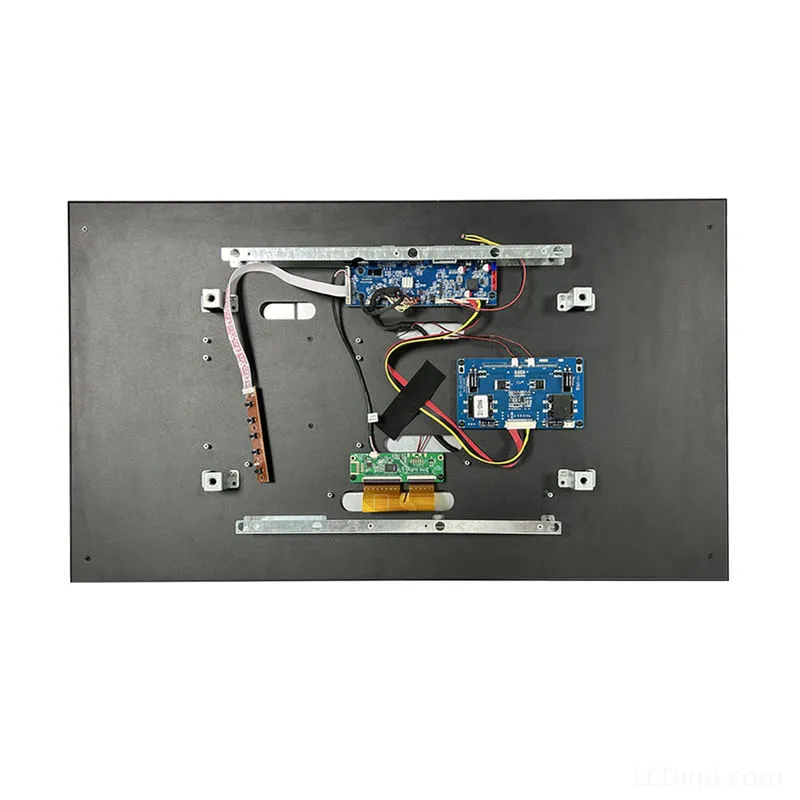
Trapping a high-power backlight inside a sealed metal kiosk creates an oven-like environment. Without active cooling, the internal components will rapidly degrade. To address this, both the 21.5-inch and 32-inch modules feature a ruggedized metal backplate integrated with dual high-RPM cooling fans. This active thermal management system continuously exhausts heat away from the logic boards and the TFT matrix, ensuring these 1000 Nits Touch Monitors operate securely within a punishing temperature range of -20°C to 80°C.
1. Compact Outdoor Kiosks: 21.5 Inch LOCA Bonded Module
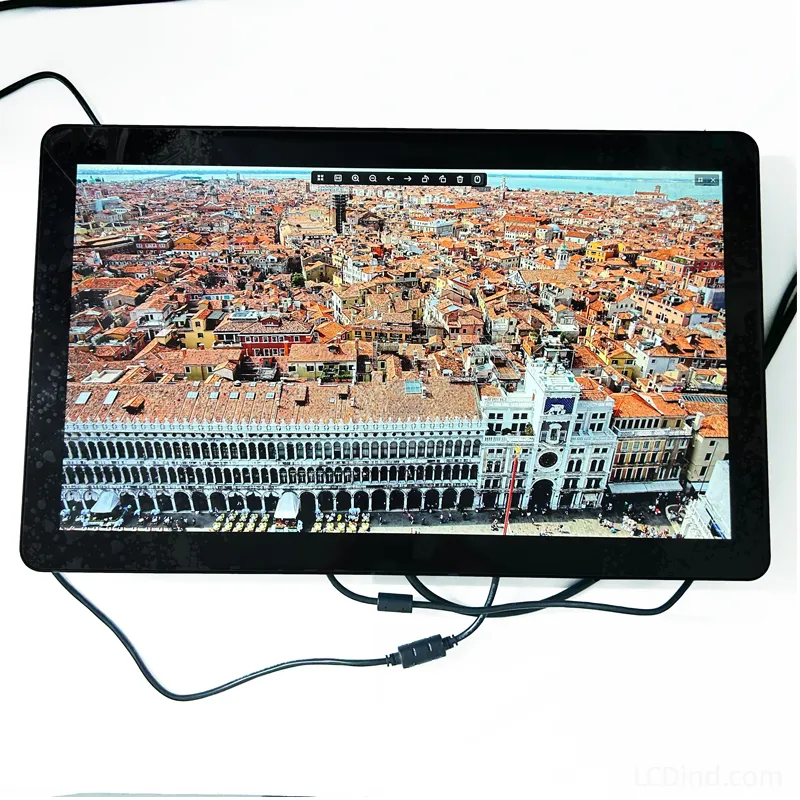
When deploying 1000 Nits Touch Monitors in outdoor storage cabinets and standalone wayfinding terminals, temperature shifts between day and night cause a massive engineering headache: internal condensation. Standard touch screens have an air gap between the outer glass and the LCD, which acts as a trap for moisture, fogging the screen from the inside.
Our 21.5-inch module eliminates this vulnerability through LOCA (Liquid Optically Clear Adhesive) optical bonding. This advanced manufacturing process completely fills the air gap, adhering the capacitive touch glass directly to the TFT array. This not only prevents condensation but also removes internal light refraction, drastically improving contrast. Operating via a 30-Pin LVDS interface, it is the ultimate backbone for rugged outdoor terminals.
Explore the hardware: 21.5 Inch 1000 Nits Touch Monitor | FHD Outdoor Industrial Display
2. Large-Scale Digital Signage: 32 Inch ADS Technology Module
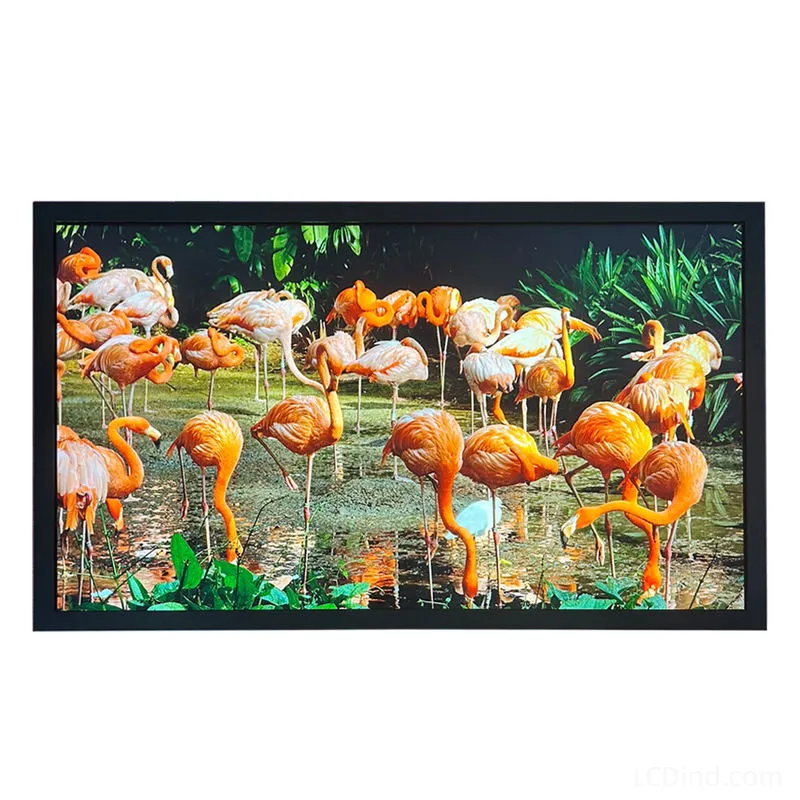
Scaling up 1000 Nits Touch Monitors to a 32-inch display introduces new challenges, particularly regarding viewing angles. In large-format digital signage, users view the screen from multiple heights and extreme side angles. If the color shifts or the contrast washes out, the advertisement loses its impact.
To solve this, our 32-inch outdoor monitor leverages ADS (Advanced Super Dimension Switch) technology alongside a Z-inversion stripe pixel arrangement. This architecture provides an exceptional 1200:1 contrast ratio and guarantees a flawless 89/89/89/89 wide viewing angle. Driven by a high-bandwidth 51-Pin LVDS interface, this massive panel delivers true 8-bit color depth (16.7M colors) without the distortion associated with legacy large-format panels.
Scale up your visual hardware: 32 Inch 1000 Nits Touch Monitor | FHD Outdoor LCD Display
Engineering FAQ: Outdoor Display Integration
Q: What is “Isotropic Failure” and how do these monitors prevent it?
A: Isotropic failure occurs when the internal temperature of the LCD panel exceeds the liquid crystal’s clearing point (usually around 60°C for standard screens). The crystals lose their alignment, causing the screen to develop massive black patches. Our 1000 Nits Touch Monitors utilize specialized High-TNI (Twisted Nematic Irregularity) fluid that resists boiling, combined with the dual active cooling fans on the rear chassis, pushing the failure threshold safely up to 80°C.
Q: How do I connect the capacitive touch interface to my host system?
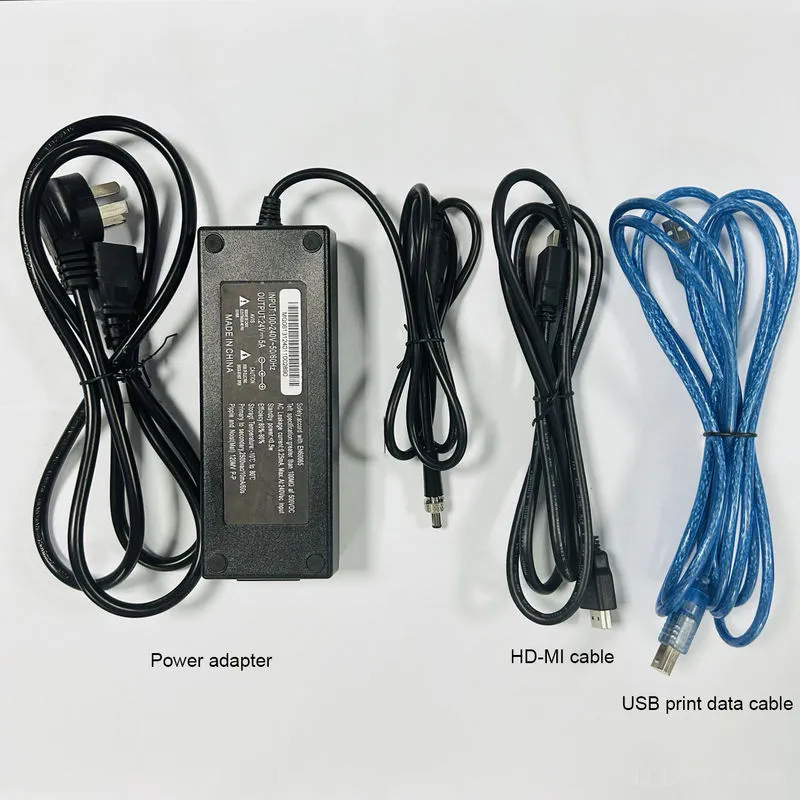
A: System integration is designed for industrial plug-and-play. The monitor kits include a dedicated USB print data cable. You simply connect this cable from the monitor’s touch controller directly into a standard USB port on your Windows PC, Linux controller, or Raspberry Pi. It functions via standard HID (Human Interface Device) protocols, requiring no proprietary driver installations.
Q: Can these monitors be mounted in a portrait (vertical) orientation?
A: Yes. Both the 21.5-inch LOCA module and the 32-inch ADS module are engineered with symmetrical viewing angles (89/89/89/89). This means you can rotate the screens into a Portrait orientation for applications like digital menu boards or smart city totems without suffering from the polarizing color inversion typical of cheaper TN panels.
Evidence & Documentation Status
- Public on this page: this guide explains why high-brightness touch monitors require optical, thermal and mechanical review before outdoor or semi-outdoor deployment.
- Available for project review: LCDind can review the target monitor size, cover glass, touch stack, bonding method, brightness class, thermal path, installation angle and expected sunlight exposure when a buyer provides the enclosure and application conditions.
- Not claimed without supporting records: this page does not state that every 1000 nits monitor has passed direct-sunlight, IP, vibration or long-term thermal testing for every customer system.
For quotation, provide the installation environment, required brightness, touch method, cover glass specification, operating temperature, mounting structure and annual demand so LCDind can separate standard monitor supply from a controlled outdoor-display integration review.