
13

In the competitive world of vehicle manufacturing, choosing the right FPD-Link Automotive Display interface is more than a technical detail—it is a safety imperative. Whether engineering Electronic Vehicles (EVs), heavy construction machinery, or commercial fleets, the shift toward the “Digital Cockpit” is undeniable.
However, a common pitfall for OEM engineers is sourcing consumer-grade HDMI screens for vehicle environments. In this guide, we explore why a dedicated FPD-Link Automotive Display solution is the only viable path for reliable mass production, specifically for 12.3-inch instrument clusters.
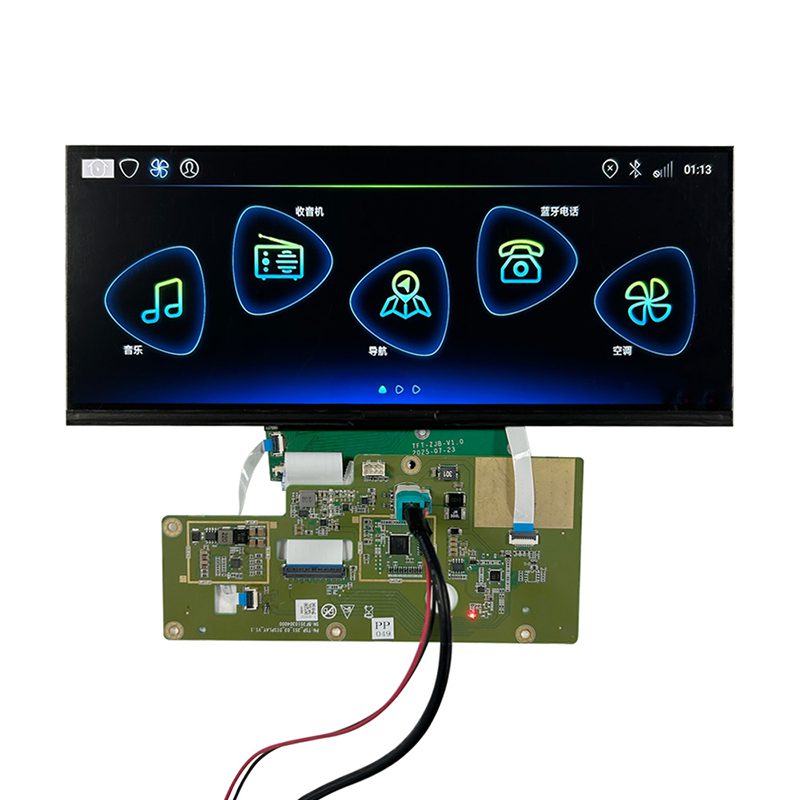
The Hidden Dangers of HDMI in Vehicles
Why shouldn’t you use a standard HDMI monitor in a car? While HDMI is excellent for home theaters, it lacks the robustness required for the automotive industry.
- Vibration Issues: Standard HDMI connectors do not have locking mechanisms. In a moving vehicle, constant vibration can cause the cable to loosen, leading to intermittent signal loss.
- EMI Susceptibility: HDMI cables are prone to Electromagnetic Interference (EMI) from the vehicle’s alternator and motors.
- Limited Distance: High-bandwidth video signals degrade quickly over long HDMI cable runs.
To avoid these risks, industry leaders rely on the FPD-Link Automotive Display standard.
What is an FPD-Link Automotive Display?
Developed by Texas Instruments, FPD-Link (Flat Panel Display Link) is a SerDes (Serializer/Deserializer) technology designed specifically for the harsh electrical environment of vehicles.
Our 12.3 Inch Automotive Grade LCD Display utilizes this technology to solve three critical engineering challenges:
- Single Cable Simplicity: Unlike HDMI which requires separate power and data cables, our FPD-Link Automotive Display solution transmits uncompressed Video, Control data (I2C), and Power over a single, lightweight coaxial cable.
- Weight Reduction: Replacing heavy shielded HDMI cables with thin coaxial cables significantly reduces the wiring harness weight—a crucial factor for EV range efficiency.
- EMI Shielding: The FPD-Link interface is differentially signaled, offering superior noise immunity. This ensures your dashboard remains glitch-free even when high-voltage EV motors are accelerating.
Surviving the Elements: Wide Temperature Range
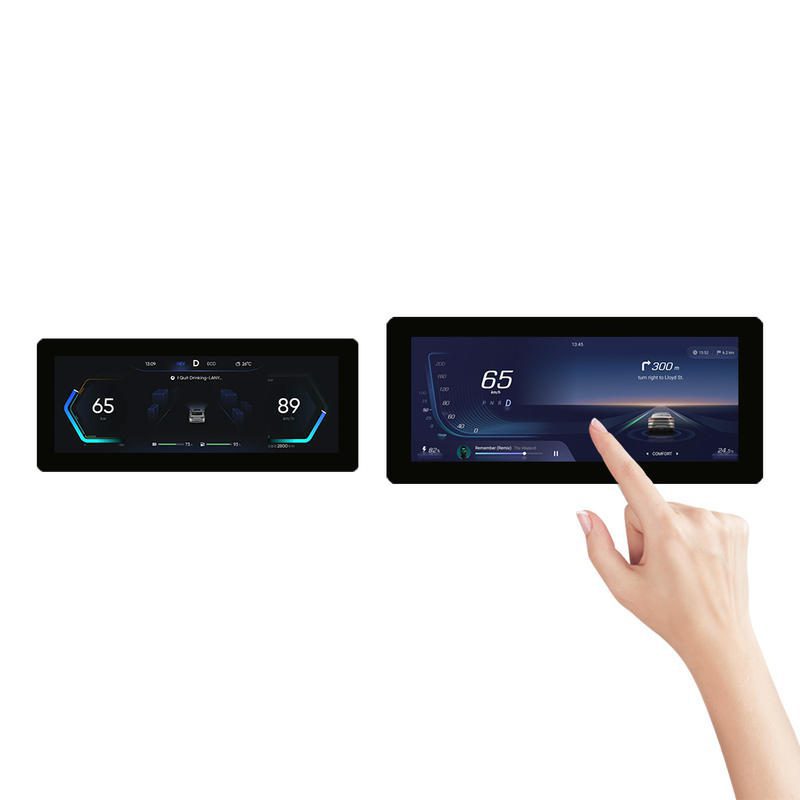
A true FPD-Link Automotive Display must withstand more than just electronic noise; it must survive extreme weather. Imagine an excavator operating in a 40°C desert or an EV starting in a -20°C winter. Consumer tablets will turn black or exhibit “ghosting” under these conditions.
Our 12.3 Inch Automotive LCD Module is engineered with a -30°C to +85°C Operating Temperature range. It complies with ISO 16750 standards, ensuring instant start-up and fluid animations regardless of the climate.
Optical Performance: Bar Type & Bonding
The “Bar Type” (8:3 Aspect Ratio) is the preferred form factor for modern digital dashboards, offering a panoramic 1920×720 resolution. However, visibility is key.
We enhance our FPD-Link Automotive Display with Optical Bonded Capacitive Touch (CTP). By eliminating the air gap between the cover glass and the LCD, we achieve:
- Sunlight Readability: Minimized internal reflection allows the screen to be read under direct sunlight.
- No Fogging: Bonding prevents condensation from forming inside the screen during rapid temperature changes.
Conclusion: Sourcing for Stability
For B2B buyers, the total cost of ownership involves reliability and supply chain security. Choosing a verified FPD-Link Automotive Display ensures your vehicle project meets OEM standards from day one.
At LCDind, we specialize in turnkey industrial solutions. Our 12.3 Inch FPD-Link Solution comes ready with the panel, driver board, and touch integration, streamlining your path from prototype to mass production.
Ready to validate your prototype? Contact our engineering team today to request the datasheet and discuss custom firmware integration for your next vehicle project.
Evidence & Documentation Status
- Public on this page: the article explains why automotive display links require more attention to cable length, EMI, connector locking, temperature and system stability than consumer HDMI-style display paths.
- Available for project review: LCDind can review 12.3 inch display format, LVDS or FPD-Link architecture, bridge board requirement, cable route, power sequence, brightness target, touch stack and automotive installation position.
- Not claimed without supporting records: this page does not certify that every listed display is automotive-qualified, Tier 1 approved, EMC-tested, or validated in a specific vehicle platform.
For an automotive RFQ, provide the cluster or center-display drawing, target resolution, interface architecture, operating temperature, cable length, controller plan, validation level and expected annual production volume.