
13

TDDI In-Cell Technology is a practical option for automotive cockpit buyers who need a thinner touch display stack, stable optical bonding, and cleaner dashboard integration. For procurement teams, the decision is not only about appearance. It should also cover interface choice, cover lens design, operating temperature, backlight lifetime, and long-term LCD supply.
This updated buyer note explains when TDDI In-Cell Technology is suitable, when a conventional touch stack is safer, and which LCDind product paths should be reviewed before sending an RFQ.
Introduction: The Shift to “Integrated” Aesthetics
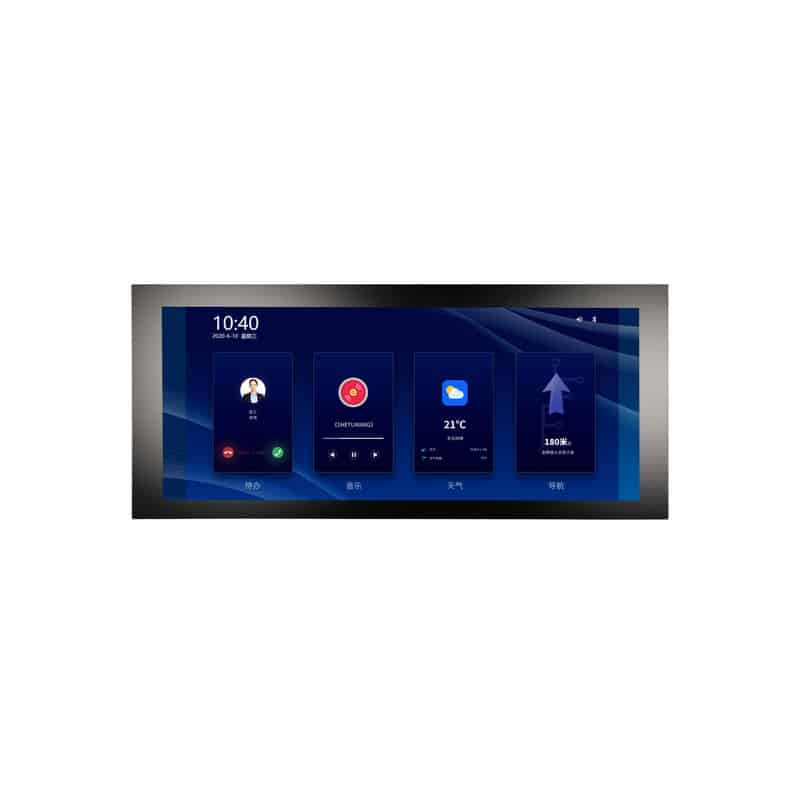
Modern automotive design is moving away from bulky, framed screens. The trend is “Integration”—screens that blend seamlessly into the dashboard, offering a sleek, floating appearance.
If you are designing a digital instrument cluster or a wide infotainment system, you might have encountered terms like In-Cell, On-Cell, and OGS. What do they mean for your project? And why is the AUO 12.3-inch C123HAX04.G considered a benchmark in this category?
In this article, we break down the technology behind this Tier 1 automotive display and why it matters for your next HMI project.
1. What is In-Cell Touch with TDDI?
Traditionally, adding touch to a screen meant bonding a separate capacitive glass sensor on top of the LCD. This added thickness, weight, and crucially, an extra layer of glass that reduced optical clarity.
In-Cell Technology changes the game by embedding the touch sensors inside the LCD cell structure itself.
The Magic of TDDI (Touch and Display Driver Integration): The AUO C123HAX04.G utilizes TDDI. Instead of having one chip for video and another chip for touch, a single IC handles both.
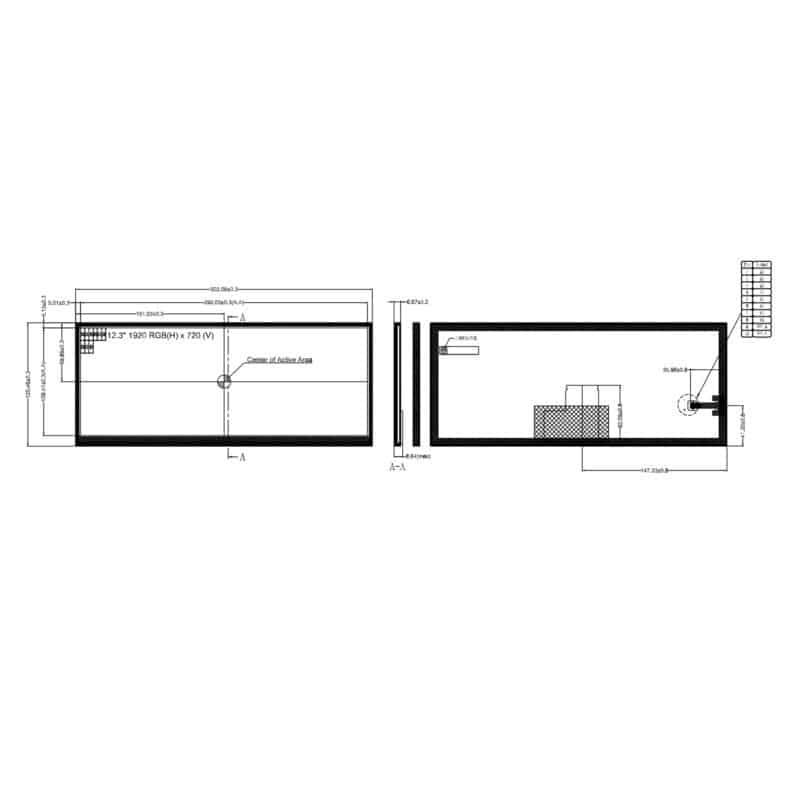
- Thinner Profile: The module thickness is reduced to just 1.024mm (excluding the backlight structure).
- Simpler Architecture: It uses a single FPC (Flexible Printed Circuit) for both display signal and touch data via the LVDS interface. This simplifies your cable routing significantly.
2. Why “Normal Black” & AHVA Matter for Cars
Have you ever noticed how some cheap car screens look “grey” when they are turned off? That’s light leakage.
This AUO module features “Normal Black” mode combined with AHVA (Advanced Hyper-Viewing Angle) technology.
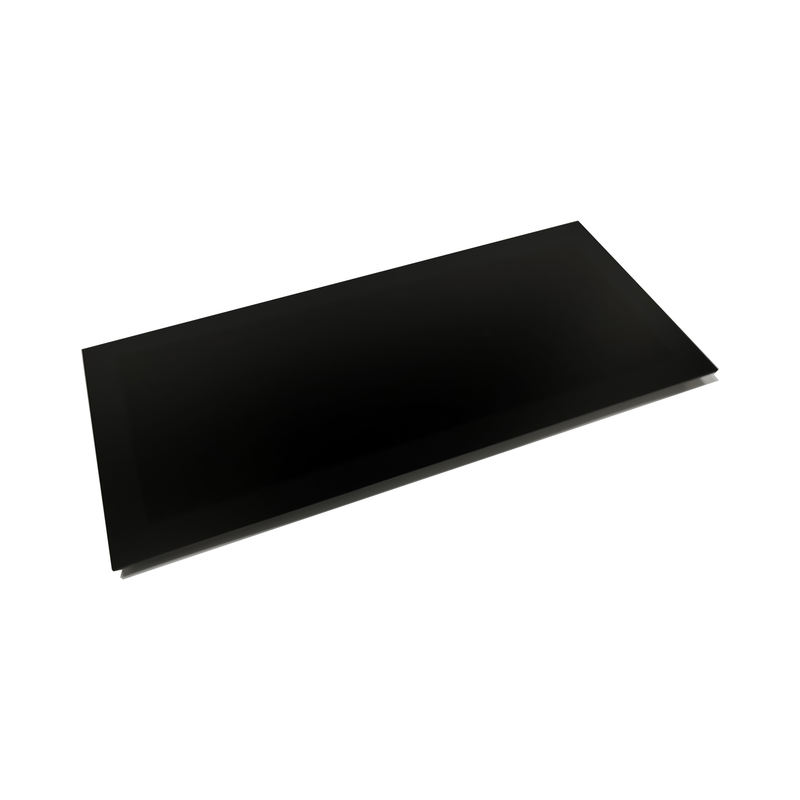
- True Black Aesthetics: When the screen is off (or showing a black background at night), it looks pitch black. This blends perfectly with the dashboard trim, creating a unified look.
- 1100:1 Contrast Ratio: The absence of the extra touch adhesive layer (found in traditional bonded screens) eliminates internal reflections. The result is deep, inky blacks and vibrant colors.
- Safety via Viewing Angles: With an 85/85/85/85 viewing angle, the passenger can read the navigation map just as clearly as the driver, without color shifting.
3. Overcoming the Sunlight Challenge
A consumer tablet usually has 300-400 nits of brightness. In a car, that screen would be invisible under direct sunlight.
The C123HAX04.G is engineered with a high-efficiency backlight delivering 1000 nits.
- Daytime: Cuts through glare from the windshield.
- Nighttime: The driver IC supports PWM dimming, allowing the brightness to drop to comfortable levels for night driving without flickering.
4. Integration Tips for Engineers (The “Gotchas”)
While the C123HAX04.G is a masterpiece of integration, it is not a “Plug and Play” HDMI monitor. Here is what you need to know before sourcing:
- The Interface is 60-Pin LVDS: Unlike the 80-pin or 50-pin variants, this specifically uses a 60-pin connector that carries both 2-channel LVDS video AND the TDDI touch signals.
- Initialization is Key: Because it is an FOG (Functional On Glass) based module, the TDDI chip requires a specific initialization code (Init Code) to wake up and sync the touch coordinates.
- Driver Board Selection: You cannot use a generic universal driver board. You need a board specifically programmed for the AUO TDDI command set.
Pro Tip: If you are retrofitting this into a vehicle or building a prototype, ask our engineering team for the pre-configured HDMI-to-LVDS kit that supports this specific TDDI protocol.
Conclusion
The AUO 12.3-inch In-Cell Display represents the current pinnacle of automotive HMI. It offers the slimness designers want, the ruggedness (-30°C to +85°C) engineers need, and the optical clarity drivers demand.
Ready to upgrade your dashboard project?
(Don’t forget to request the full datasheet and drawing from our support team!)
🚀 Contact Our Engineering Team for Pricing
Get quote, full datasheet & technical support within 24 hours.
TDDI In-Cell Technology Buyer Checklist
Use TDDI In-Cell Technology when the project needs a slim automotive LCD, integrated touch response, and a modern black-panel cockpit look. For rugged industrial or retrofit designs, compare it against standard PCAP plus TFT LCD because repairability, controller availability, and minimum order quantity can be different.
| Selection factor | Recommended review | Why it matters for sourcing |
|---|---|---|
| Cover lens and touch stack | Confirm whether in-cell touch or external PCAP is required | Changes total thickness, bonding process, tooling and test cost |
| Interface | Review LVDS, MIPI, eDP or automotive bridge requirements | Incorrect interface choice can delay the driver board and validation stage |
| Brightness | Define cockpit brightness, dimming and sunlight readability needs | Backlight design affects heat, lifetime and optical uniformity |
| Operating temperature | Specify storage and operating temperature range | Automotive cockpit displays need stronger reliability margins than indoor HMIs |
| Supply plan | Check lifecycle, MOQ and replacement panel options | Long-term supply is more important than a one-time sample match |
Related LCDind Product Paths
- Review automotive grade LCD displays for cockpit and dashboard projects.
- Compare a practical 12.3 inch automotive grade LCD display when the project needs a wide cluster format.
- Use the LVDS vs MIPI vs eDP interface guide before locking the controller board architecture.
- Send custom optical, touch and backlight requirements through LCDind customization support.
For supplier background and display technology context, buyers can also review AUO display manufacturer information before finalizing a TDDI In-Cell Technology RFQ.
FAQ
Is TDDI In-Cell Technology always better than external PCAP?
No. TDDI In-Cell Technology is attractive for thin automotive displays, but external PCAP can be easier to customize, repair, or replace in low-volume industrial projects.
What should buyers include in a TDDI display RFQ?
Include size, resolution, brightness, interface, touch requirements, cover lens drawing, operating temperature, expected annual quantity, target lifetime and certification requirements.
Can LCDind help compare TDDI and standard touch LCD options?
Yes. LCDind can review the mechanical stack, optical target, interface and supply plan, then recommend whether a TDDI in-cell display or standard TFT plus PCAP structure is more practical.