13
Description
12.3 Inch IPS In-Cell Touch LCD Module for Integrated Vehicle HMI Systems
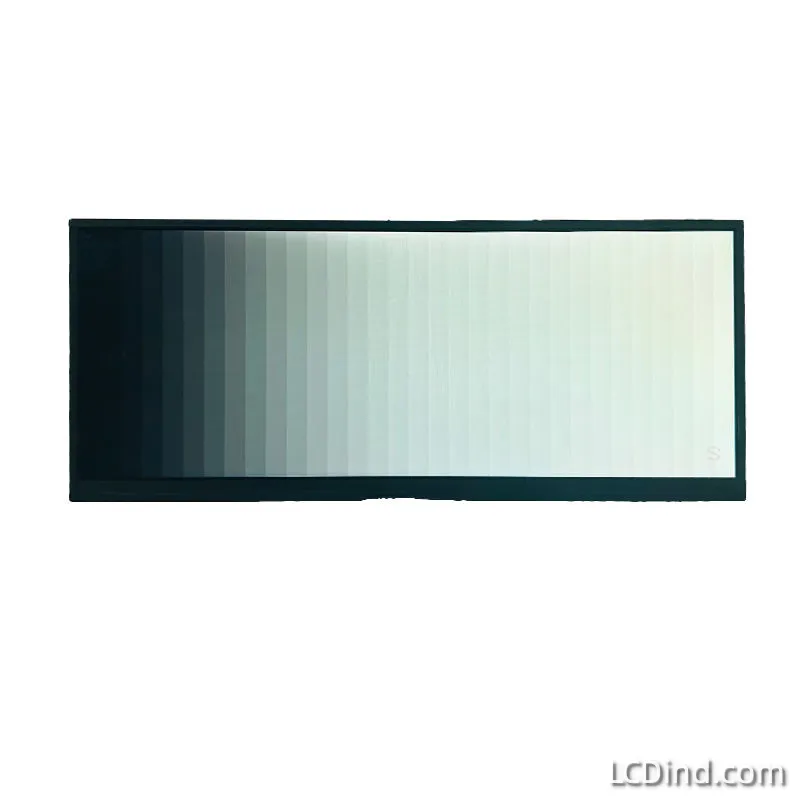
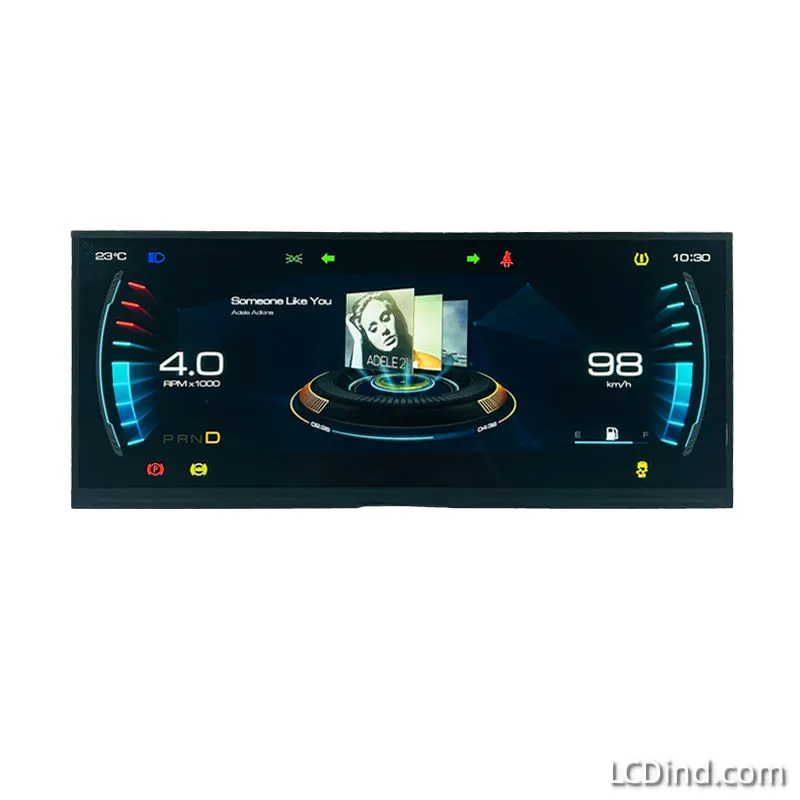
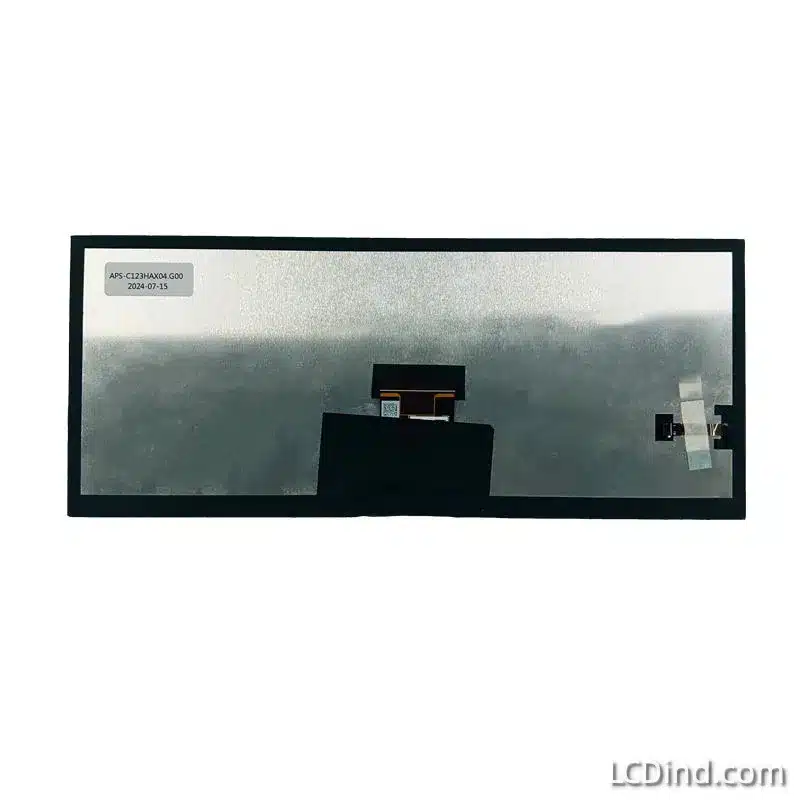
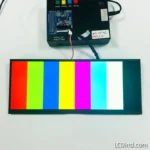
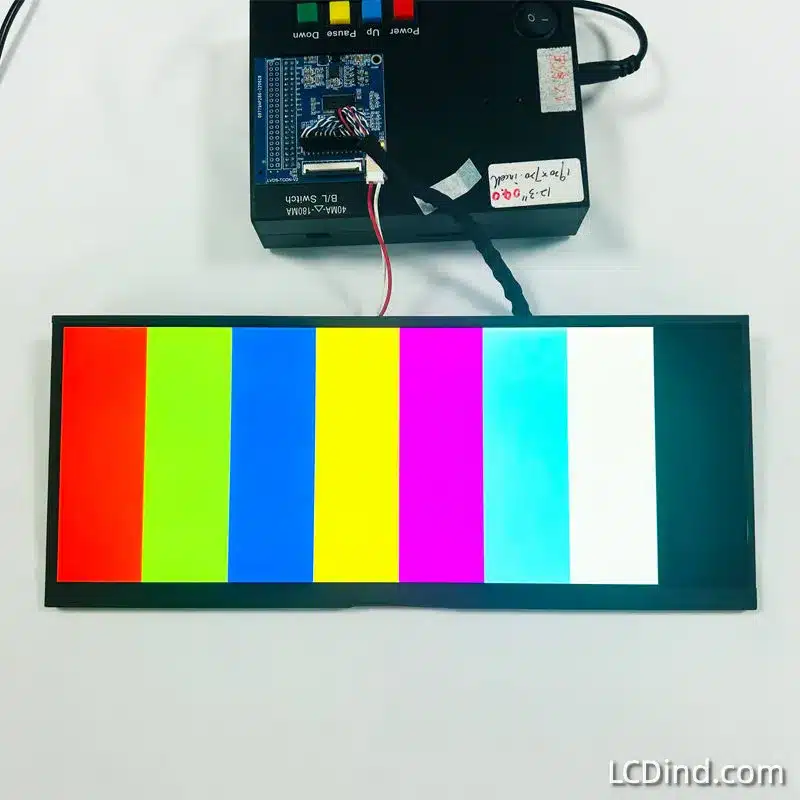
This 12.3 inch IPS LCD display module is an integrated in-cell touch option for vehicle HMI systems and wide industrial dashboards. The live page identifies it as an automotive LCD module with 12.3 inch size, 1920 x 720 bar-type resolution, AHVA/IPS wide-view technology, normally black display mode, in-cell capacitive touch, integrated touch via LVDS/TDDI, 60-pin LVDS connector, hard coating surface, 292.032 x 109.512 mm active area, and approximately 302.06 x 125.46 x 6.67 mm module dimensions. It differs from a simple display-plus-external-touch assembly because the display and touch behavior should be validated as one module.
System-Level Use Case
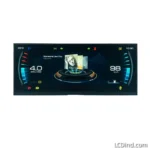
This display fits center stack screens, digital instrument clusters, vehicle auxiliary displays, industrial vehicle panels, marine electronics, and specialty dashboards that need a clean front surface and wide visual area. The integrated touch architecture can reduce thickness and simplify the front assembly, but it also means the host system must be ready for the module's electrical behavior. The buyer should define whether the project is a new platform, replacement screen, or custom display assembly.
TDDI and LVDS Compatibility
The page states integrated touch via LVDS/TDDI. This should trigger a deeper host review than a normal LVDS LCD. Confirm whether the mainboard supports the display timing, touch data path, initialization, reset, interrupt behavior, and cable pinout. If the mainboard was designed for a separate PCAP controller, the engineering team must verify whether the in-cell/TDDI module can be supported without hardware redesign.
Viewing and Optical Design
The AHVA/IPS-like normally black structure gives wide viewing and good contrast for dashboard-style use. However, optical performance in the final product depends on cover lens, anti-glare layer, bonding material, dashboard angle, and backlight control. If the module is used in a bright vehicle cabin, evaluate the screen in day mode and night mode to avoid glare, washed-out graphics, or excessive low-light brightness.
Mechanical Integration
The approximate 302.06 x 125.46 x 6.67 mm module size and 292.032 x 109.512 mm active area should be checked against the bezel, cover lens, bracket, and connector space. In-cell touch modules can reduce front-stack complexity, but they do not remove the need for gasket, pressure, and cable-bend review. Mechanical stress around a wide thin module can create assembly defects or touch instability.
Production Decision Points
Before moving from samples to mass production, define acceptable display/touch firmware, cable, pinout, inspection standard, and revision-control process. If the project has automotive validation requirements, state those clearly in the RFQ. If it is an industrial dashboard using automotive-style hardware, the validation package may be lighter, but temperature, sunlight, vibration, and service parts still need planning.
In-Cell vs Separate Touch Decision
Choose this in-cell module when the project values a thinner front stack, cleaner optical path, and integrated display-touch behavior. Choose a separate CTP structure when the buyer needs more control over custom cover glass, special decoration, or a touch controller already used in the product line. This distinction should be made before the enclosure and mainboard are frozen, because changing touch architecture later can affect both electrical design and mechanical tooling.
Ordering Notes for Vehicle Programs
For a vehicle-facing product, the RFQ should identify whether the module is for prototype display evaluation, pilot build, or a locked production platform. Prototype orders can focus on electrical bring-up and visual review. Production orders need agreed cable drawings, packaging, inspection standards, validation documents, and a revision-control process so replacement lots behave the same as the approved sample.
Project Validation Plan
Before mass production, validate the display with the real host board, cable, enclosure, front lens, power supply, thermal path, and software build. Record the approved sample configuration and keep photos or drawings for later repeat orders. This avoids the common problem where a display passes a bench test but fails after the final cover glass, harness, or firmware is introduced.
Production Risk Control
For a B2B display project, the main risks are usually interface mismatch, optical loss, cable change, uncontrolled substitutions, and unclear acceptance criteria. Define the approved panel model, electrical interface, mechanical drawing, cosmetic standard, packaging method, and revision notice process before the first production order. If alternatives are acceptable, qualify them before supply pressure occurs.
Confirmed Product Specifications
| Feature | Specification |
| Product Name | 12.3 Inch IPS LCD Display Module (In-Cell) |
| Resolution | 1920 RGB x 720 (Bar Type) |
| Module Dimensions | 302.06 x 125.46 x 6.67 mm (Approx) |
| Active Area | 292.032 x 109.512 mm |
| Technology | AHVA / IPS (Wide View) |
| Touch Interface | Integrated via LVDS (TDDI) |
| Connector | 60-Pin LVDS |
| Surface | Hard Coating (H) |
These values are preserved from the live product specification table. Any missing drawing, connector, firmware, optical, touch, or compliance item should be confirmed through LCDind engineering review before production use.
RFQ Checklist
- Target equipment, installation environment, and display duty cycle.
- Host board, interface mapping, connector, cable length, and voltage requirements.
- Mechanical drawing, active-area opening, cover lens, touch structure, and bonding requirement.
- Brightness, viewing angle, operating temperature, vibration, and sunlight-readability expectations.
- Sample quantity, annual forecast, customization scope, lifecycle plan, and approved alternative policy.
Engineering FAQ
How is this different from a CTP add-on touch module?
The touch is integrated in-cell via TDDI, so display and touch compatibility must be reviewed together.
Can it replace any 12.3 inch LVDS display?
No. Match module size, active area, 60-pin connector, LVDS mapping, and in-cell touch support.
Why does the RFQ need host-board details?
The host board determines timing, LVDS mapping, touch support, firmware, power sequencing, and cable design.
Related Engineering Resources
Engineering Review Note
LCDind supports B2B LCD selection, touch integration, cable and controller review, sample validation, and long-term supply planning. For production projects, send drawings and host-board information with the inquiry so the display is checked as part of the complete equipment system rather than as an isolated screen size.
Additional information
| Product Type | Automotive LCD Module |
|---|---|
| Size | 12.3 inchDiscover rugged 12.3 inch industrial displays. Ultra-wide aspect ratios, high brightness, and durable designs ideal for automotive and marine dashboards. |
| Resolution | 1920×720 |
| Touch Tech | In-Cell Capacitive Touch |
| Display Mode | AHVA (IPS-like), Normally Black |
| Interface | LVDSSpecify LVDS industrial TFT LCD modules by size, resolution, channel count, JEIDA/VESA mapping, pinout, brightness, touch, temperature and annual quantity. |
| Brightness | Sunlight Readable (1000+ nits)Specify 1000+ nit LCD displays by ambient light, size, resolution, interface, optical stack, touch, thermal limits, duty cycle and annual quantity. |
| Operating Temp | Ultra Wide / Automotive (-30 ℃ to +85 ℃) |
Technical FAQ
Q: What does "Front Mounting" optimization mean for this module?
While the module can be mounted in various ways, its slim In-Cell form factor and bezel design are optimized for front-loaded integration into dashboard housings. This minimizes the gap between the display surface and the dashboard trim, creating a premium "flush" look essential for modern vehicle interiors.
Q: Does the 60-Pin LVDS interface carry both video and touch signals?
Yes. This module utilizes TDDI (Touch and Display Driver Integration). The 60-Pin connector carries both the LVDS video data and the touch coordinate signals. You do not need a separate I2C or USB cable for the touch panel, which significantly simplifies your wiring harness design.
Q: Is this display sunlight readable?
Absolutely. With a typical brightness of 1000 nits, this screen is classified as sunlight readable. It maintains high visibility even under direct sunlight, which is a mandatory safety requirement for instrument clusters.
Q: Can I get the mechanical drawing to check fitment?
Yes, basic dimensions are listed above. For the detailed 2D/3D CAD files (STEP/DXF) to verify mounting tabs and clearances, please click the "Request Datasheet" button below or contact our engineering team directly.
Shipping and Delivery