13
5 Inch TFT LCD Module for Outdoor Handheld HMI | RGB 480×272, 500 Nits
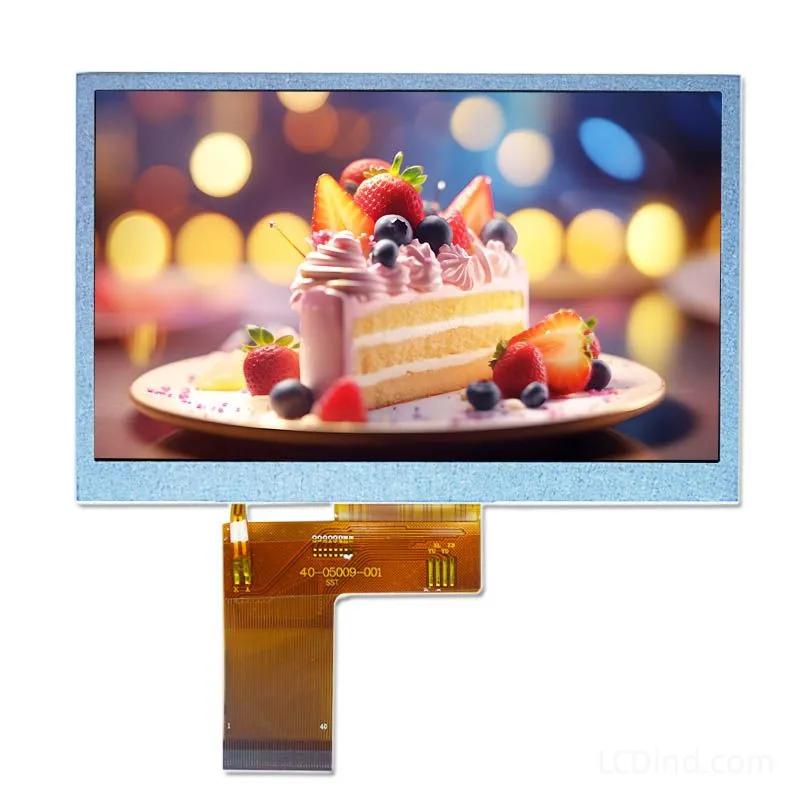
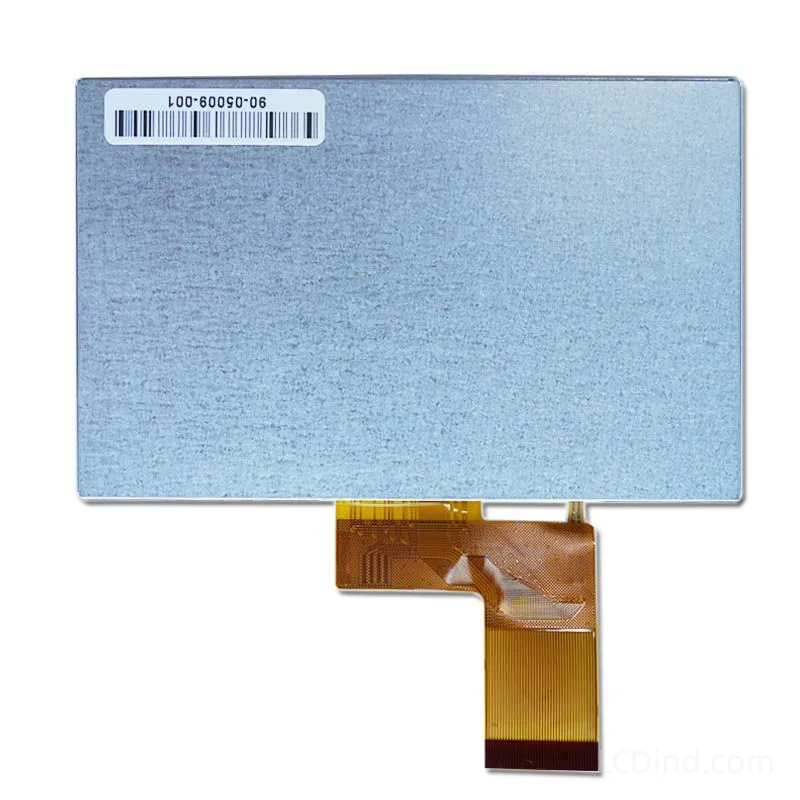
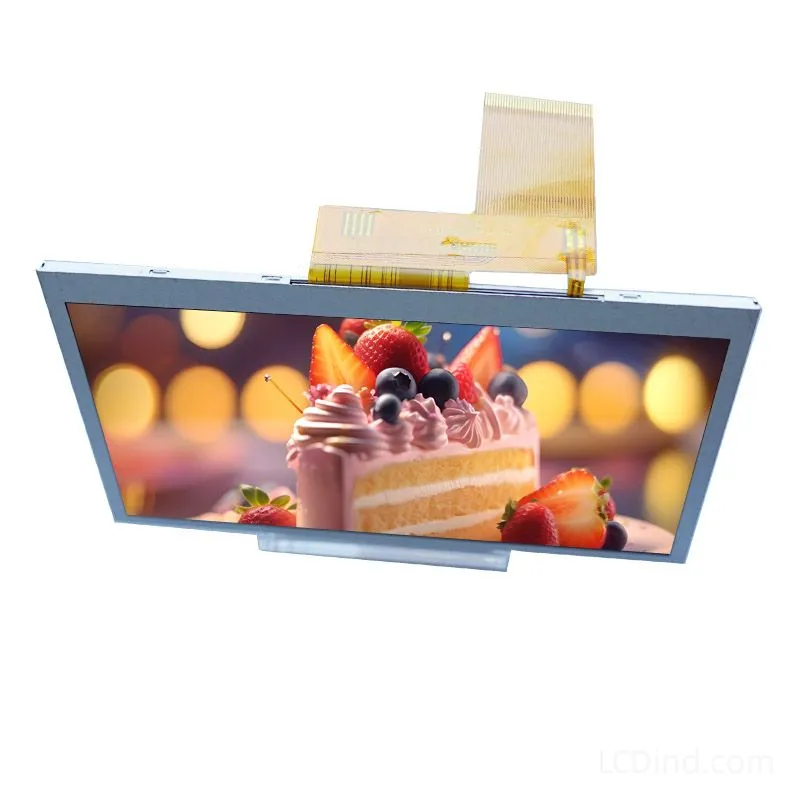
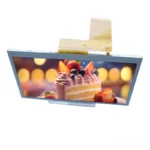
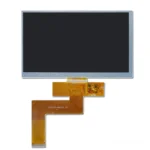
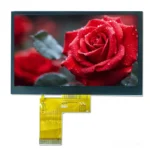
5 inch 480×272 TFT LCD module for outdoor handheld HMI devices, with 500-nit high-brightness class, industrial temperature range and OEM touch support by project.
Product Attributes
| Brand | OEM / ODM |
|---|---|
| Size | 5.0 inch |
| Resolution | 480×272 |
| Interface | |
| Brightness | High Brightness (500-900 nits) |
| Operating Temp | Industrial (-20 ℃ to +70 ℃) |
| Touchscreen | No Touch |
| Viewing Direction |
Description
5 Inch 480×272 TFT LCD Module for Outdoor Handheld HMI Devices
This 5 inch TFT LCD module is intended for outdoor handheld HMI devices and portable industrial equipment where readability, enclosure fit, and supply continuity matter more than consumer multimedia performance. The current public page confirms 5.0 inch size, 480×272 resolution, high-brightness 500 to 900 nit class with 500-nit positioning, industrial -20 ℃ to +70 ℃ operating range, and no touch in the standard table. The summary refers to RGB 480×272 and OEM touch support, so the buyer should confirm whether the project requires no touch, resistive touch, capacitive touch, or cover glass only.
Confirmed Product Specifications
| Brand | OEM / ODM |
|---|---|
| Size | 5.0 inch |
| Resolution | 480×272 |
| Interface | |
| Brightness | High Brightness (500-900 nits) |
| Operating Temp | Industrial (-20 ℃ to +70 ℃) |
| Touchscreen | No Touch |
| Viewing Direction |
Handheld HMI Application Fit
This module fits portable test instruments, service tools, outdoor handheld controllers, agricultural devices, logistics terminals, and field-maintenance products that display menus, status values, alarms, and basic graphics. The 5 inch landscape format gives more usable UI space than 3.5 or 4.3 inch modules while staying practical for hand-carried equipment. The 480×272 resolution should be matched with simple readable UI design rather than dense text.
Brightness in Field Use
The 500-nit brightness class can help in bright workshops, vehicles, and shaded outdoor locations. For open sunlight, the buyer should test the display through the final protective lens and with real UI colors. Handheld equipment also changes viewing angle constantly, so glare, surface reflection, and backlight dimming behavior should be checked during field-style testing.
Host Interface Confirmation
The product summary mentions RGB, but the table does not list a confirmed interface value. For a handheld product, the host PCB and battery system are usually space-constrained, so the display pinout, FPC exit, backlight circuit, voltage, and EMI behavior should be reviewed before PCB layout. If the device is a redesign, send the existing panel model, photos, and connector details.
Touch or Button Decision
The public table lists no touch, while the summary mentions OEM touch support. That should be interpreted as customization scope, not as a standard included touch panel. Handheld products may use physical buttons for reliability, resistive touch for gloved operation, or capacitive touch for a cleaner front panel. Each option changes the lens, firmware, and enclosure design.
Mechanical and Battery Design
Outdoor handheld HMIs need cable strain relief, impact protection, gasket planning, and a front window that does not press against the LCD. Backlight current should be measured at the intended brightness because battery life can be affected significantly by display settings. If the product has a sealed case, heat and service access should be included in the review.
Production Approval
Before production, approve the display with the final host board, enclosure, lens, cable, touch or button method, firmware UI, brightness level, and operating environment. This prevents a common procurement problem where a sample display looks acceptable on a bench but fails in handheld field conditions because glare, battery runtime, or mechanical pressure was not validated.
Handheld Ergonomics
A handheld HMI is read at shorter distance and used while the operator is moving, wearing gloves, or standing in uneven light. The screen content should use large values, high contrast, and simple navigation. If the product uses buttons, their position should match the UI flow so the operator can read and operate the device with one hand.
Battery and Brightness Tradeoff
The 500-nit backlight should be tested against runtime targets. Many handheld products cannot run maximum brightness continuously without affecting battery size, heat, or charging interval. The approval plan should include normal brightness, high-brightness mode, automatic dimming if used, and readability after a protective lens or anti-glare film is added.
Field Service Reliability
Outdoor handheld equipment is often dropped, opened for service, or used with cables connected. Display FPC strain relief, connector retention, front-window impact protection, and gasket compression should be reviewed with the mechanical team. A display that is electrically compatible may still fail in the field if the cable route or enclosure pressure is weak.
Decision Boundary
Choose this display when the product needs a simple outdoor handheld HMI with large controls and controlled power use. If the device needs barcode preview, camera UI, dense forms, or smartphone-like graphics, the 480×272 resolution may become the limiting factor, even if brightness and size are acceptable.
RFQ Checklist
- Handheld enclosure drawing, window size, FPC route, drop/vibration expectation, and service access.
- Host interface requirement, RGB timing if used, connector, voltage, backlight control, and existing display to match.
- Touch decision, glove/stylus requirement, cover lens, brightness environment, battery target, and temperature range.
- Sample quantity, annual forecast, customization needs, inspection standard, and approved substitute policy.
Engineering Review Note
Use the public specifications above as the starting point for selection, not as final system approval. Before sample purchase or batch order, confirm the host interface, drawing, optical stack, touch or no-touch requirement, operating environment, controller board scope, and annual quantity with LCDind. This keeps the product URL unchanged while turning a thin catalog page into a useful engineering selection page for B2B buyers.
Engineering FAQ
Is touch included?
The standard table lists no touch; touch should be specified as an OEM customization if required.
Is it suitable for handheld outdoor use?
It is positioned for outdoor handheld HMI use, but sunlight, cover lens, battery runtime, and enclosure tests are still required.
What should be confirmed first?
Confirm interface, FPC direction, brightness requirement, touch or button method, and enclosure fit before sample approval.
Additional information
| Brand | OEM / ODM |
|---|---|
| Size | 5.0 inch |
| Resolution | 480×272 |
| Interface | |
| Brightness | High Brightness (500-900 nits) |
| Operating Temp | Industrial (-20 ℃ to +70 ℃) |
| Touchscreen | No Touch |
| Viewing Direction |
About brand
Source OEM / ODM LCD panels for OEM, replacement and industrial integration projects. Submit size, resolution, interface, brightness, lifecycle and annual quantity for review.
Technical Specifications
Q: What should engineers confirm before selecting this 5 inch TFT screen display?
A: Confirm the active area, outline dimension, bezel window, FPC route, RGB timing, supply voltage, backlight circuit, and mounting stack before approving samples.
Q: Is the RGB interface suitable for production equipment?
A: Yes, if the host board supports the required RGB timing and pinout. LCDind can review connector direction, cable length, voltage, and adapter FPC needs before repeat production.
Q: How should the 500 nits brightness be evaluated?
A: Test the display in the final enclosure with the real cover lens, viewing distance, ambient light, and thermal condition. Brightness upgrades or optical bonding can be reviewed if the standard backlight is not enough.
Q: Does this module include touch?
A: The listed configuration is No touch panel in standard configuration. PCAP, resistive touch, cover glass, bonding, and coating options can be reviewed according to the finished device design.
Q: What operating environment does this display support?
A: The confirmed operating range is -20 to +70 C. For harsh environments, confirm storage temperature, enclosure sealing, backlight lifetime, and vibration requirements during the engineering review.
Shipping and Delivery
Q: What is the MOQ?
A: The MOQ for our products is 1 piece. We are able to provide support throughout the testing process.
Q: What about the delivery time?
A: We have products in stock and can ship them within 3 working days.
Q: Does your product have any warranty?
A: Yes, we offer a warranty that ensures the LCD will function properly upon receipt. However, please note that we do not provide guarantees for any damage caused during use.
Q: What’s your payment method?
A: We accept several payment methods, including T/T (bank transfer), and PayPal.
Q: What’s your shipping method?
A: Thank you for your inquiry. We offer various shipping methods to suit different needs.
For small quantity orders, we use UPS Air-Express, DHL, FedEx, TNT, or EMS Express service. These options are safe and fast.
For large quantity orders, we typically work with the buyer’s cargo agent in China. Alternatively, we can arrange for air or sea transportation.
Please let us know your preferred shipping method and we will do our best to accommodate your request.
Q: Do you offer custom solution?
A: Yes, we offer custom solutions if our standard products do not meet the buyer’s requirements. Please let us know your specific needs, and we will work with you to create a tailored solution that meets your business needs.
Q: How to Contact us?
A: Send your Inquiry Details in the Below, Click “Send” Now!