13
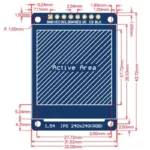
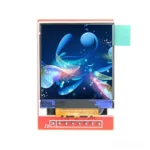
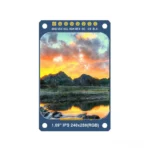
Description
1.54-Inch SPI TFT Display for Compact Equipment Screens
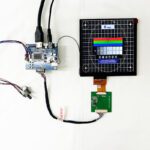
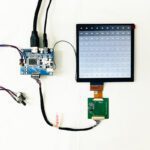
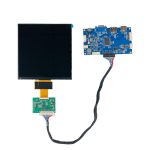
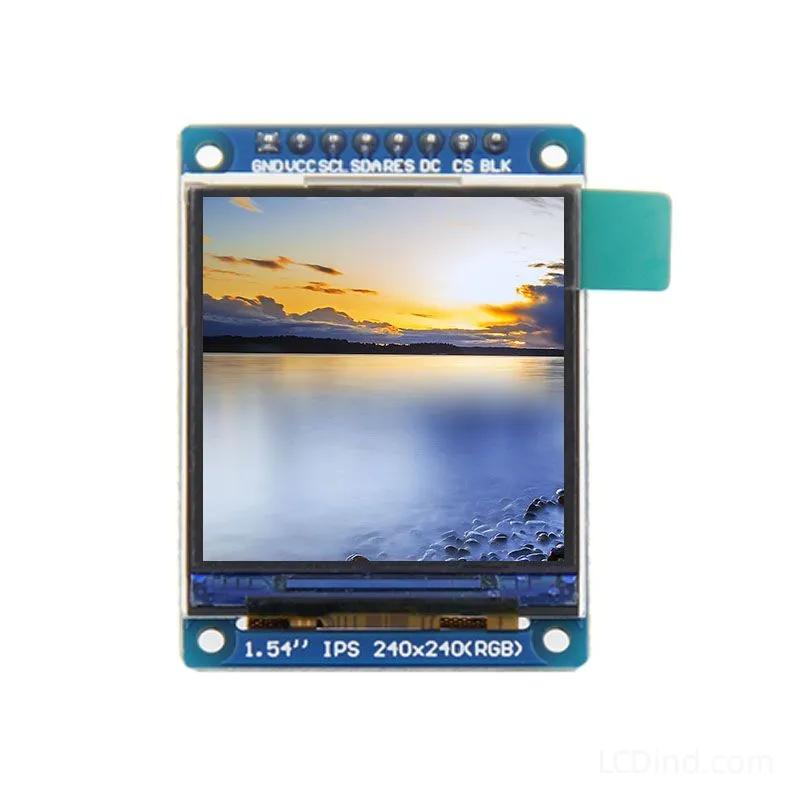
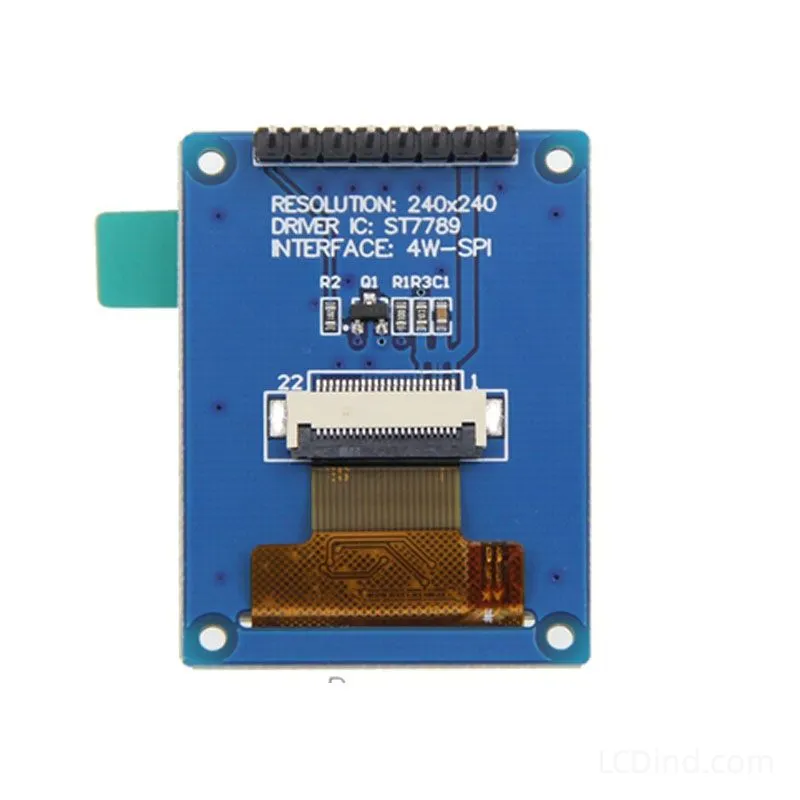
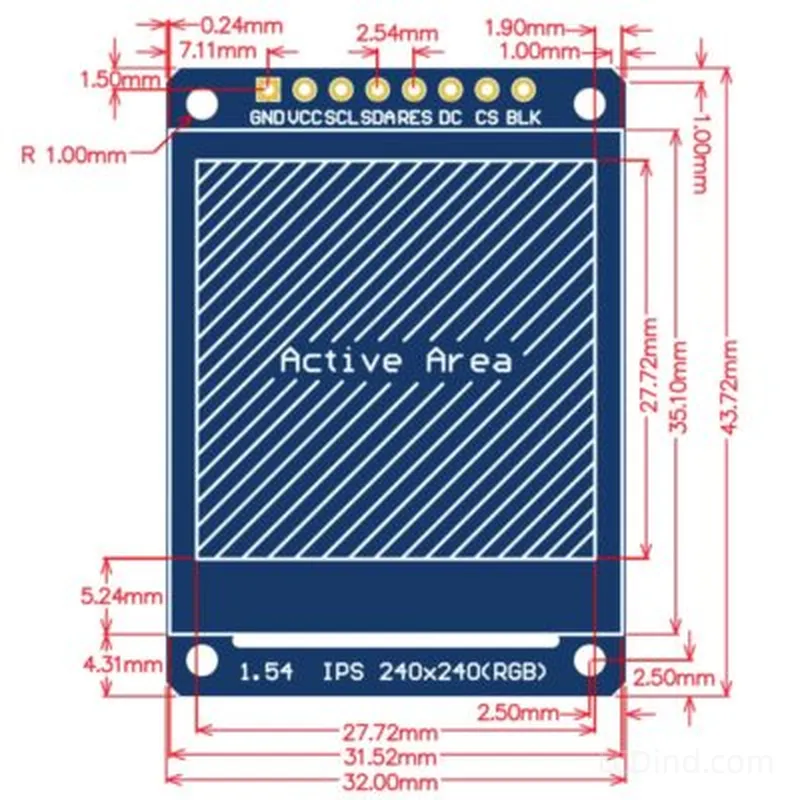
This 1.54 inch SPI TFT display is intended for compact equipment screens where an OEM needs a square 240×240 color display with a simple serial interface. The confirmed data includes 1.54 inch size, 240×240 resolution, 4-wire SPI interface, -10 C~60 C operating range, 32.00 x 43.72 mm outline dimension, 27.72 x 27.72 mm active area, 5V/3.3V power supply, and LCDind model LCDind-DS20205. Brightness, touchscreen, and LED lifetime are not confirmed in the current table and should be reviewed during RFQ.
Technical Specifications
| Size | 1.54 inch |
|---|---|
| Resolution | 240×240 |
| Interface | 4-wire SPI interface |
| Brightness | |
| Touchscreen | |
| Operating Temp | -10 C~60 C |
| Outline Dimension | 32.00 x 43.72 mm |
| Active Area | 27.72 x 27.72 mm |
| Power Supply | 5V/3.3V |
| LED Lifetime | |
| LCDind Model | LCDind-DS20205 |
Mechanical Fit for Compact Equipment
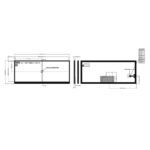
The 1.54 inch square format gives more graphic area than the 1.14 inch and 1.44 inch modules while still fitting into compact equipment panels. The 32.00 x 43.72 mm outline and 27.72 x 27.72 mm active area should be checked against the bezel opening, PCB position, connector space, and cable path. If the display is placed behind a lens or membrane, the visible window should match the active area rather than the full outline.
This type of display is often used where the enclosure is small but the operator needs clearer information than LEDs can provide. Mechanical teams should confirm the FPC bend, mounting support, front cover, sealing, and service access. If the product will be assembled in volume, also check how the display is handled on the production line to avoid FPC damage or alignment variation.
4-Wire SPI Integration
The 4-wire SPI interface supports microcontroller-based products that display status pages, icons, small menus, or instrument values. Engineers should confirm initialization, command set, color depth, orientation, refresh frequency, and whether the UI needs smooth animation. For compact equipment screens, clarity and stability are usually more important than high frame rate.
Power supply is listed as 5V/3.3V. Confirm the actual rail and logic level on the host board. If the display is connected by cable or placed near noise sources, review grounding and EMC. The operating temperature is -10 C~60 C, so products used in colder industrial environments should ask whether a wider-temperature alternative is needed.
Practical Applications
This module can fit compact controllers, test instruments, sensor hubs, charger interfaces, equipment status panels, small medical or laboratory devices, and industrial accessories. The 240×240 resolution supports a clearer UI than 128×128 modules: larger numbers, icons, short menu labels, simple graphs, and alarm states. It is suitable when a product needs a professional information screen but cannot allocate space for a 2.4 inch or larger display.
For OEM teams, this display can support a common interface across several product versions. Firmware can change the language, units, menu items, and branding without changing the front-panel print. That flexibility is valuable for B2B equipment families, but it requires stable display sourcing, controlled revisions, and a verified mechanical design.
Sourcing and Approval Notes
Use LCDind-DS20205, 1.54 inch size, 240×240 resolution, 4-wire SPI interface, and the listed mechanical dimensions as the product reference. Do not assume brightness or touch capability because those fields are blank in the current table. Procurement should define the expected lighting environment, operating hours, and whether a cover lens or touch layer is needed.
Sample approval should include display appearance, UI readability, power behavior, backlight performance, connector quality, and packaging. If the display is a visible product feature, ask for cosmetic standards and alignment requirements. A small square screen can make equipment look more professional, but only when display consistency is controlled across production lots.
Customization Options
LCDind can review FPC length, connector direction, cover lens, logo printing, bonding method, brightness adjustment, and packaging for repeat production. If the display is installed behind a sealed front, share the lens material, adhesive method, and operating environment so the optical stack can be reviewed.
Touch is not listed as a confirmed standard configuration. If the product needs touch, define the cover thickness, operation method, and noise environment. In many compact equipment designs, physical buttons beside the display may be more reliable than adding touch to a small screen.
RFQ and Engineering Review Checklist
- Equipment type, display role, and UI examples.
- Mechanical drawing with active window, PCB position, FPC route, and cover stack.
- Host MCU, 4-wire SPI timing, power rail, and orientation requirement.
- Brightness target and environment because brightness is blank.
- Touch, cover lens, logo, bonding, or cable customization requirements.
- Sample quantity, annual forecast, pilot schedule, and inspection criteria.
Engineering FAQ
Why choose 1.54 inch instead of 1.44 inch?
The 1.54 inch 240×240 format provides more pixel area and a clearer square UI while remaining compact enough for small equipment panels.
Is the operating temperature industrial-wide?
The current table lists -10 C~60 C. If the product needs colder or hotter operation, request confirmation or an alternative display during RFQ.
Can this module support touch?
Touch is not confirmed in the table. It should be reviewed as a separate customization item with cover-lens and grounding details.
What is the correct RFQ model reference?
Use LCDind-DS20205 together with the size, resolution, interface, outline, active area, and the target equipment drawing.
Project Notes for Sourcing Teams
This 1.54 inch SPI TFT display is best evaluated as a compact equipment UI component. Confirm the optical, mechanical, and firmware conditions together before locking the display into a production design.
Why This Size Is Useful for OEM Equipment Families
The 1.54 inch 240×240 format gives engineering teams enough room for a cleaner interface without changing the mechanical class of the product. It can show one large process value, secondary units, icons, and a short status line at the same time. This is useful for compact equipment families where the same hardware platform may be sold with different firmware, language, or branding. A display-based interface can reduce printed overlay variations and make future product updates easier.
For production approval, test the screen with the actual UI content, not only color bars or a demo image. Confirm that operators can read the main value at the expected distance, that warning colors remain visible through the cover, and that the refresh behavior is stable during power cycling. These checks help turn a catalog display into a reliable equipment component.
Additional information
About brand
Source OEM / ODM LCD panels for OEM, replacement and industrial integration projects. Submit size, resolution, interface, brightness, lifecycle and annual quantity for review.
Engineering FAQ
Q: What is this 1.54 inch SPI TFT display best used for?
A: This SPI TFT display is intended for compact equipment screens, embedded controllers, instrument panels, compact terminals, and OEM equipment programs that need stable display sourcing with 240x240 resolution.
Q: Which interface details should engineers confirm before sampling?
A: Use the 4-wire SPI interface interface as the starting point. Before sample approval, confirm pinout, signal timing, voltage, cable length, connector direction, firmware support, and EMC layout with the host board.
Q: Can LCDind customize touch, cover glass, or bonding for this display?
A: Yes. LCDind can review resistive touch, capacitive touch, cover lens thickness, logo printing, AG/AR/AF coating, optical bonding, and controller matching. Current touch note: touch configuration is reviewed during RFQ.
Q: How should brightness be selected for the final device?
A: The current brightness guidance is brightness should be confirmed against the lighting environment. Share indoor, vehicle, kiosk, outdoor shade, or sunlight-readable requirements so LCDind can review backlight, heat, bonding, and cover-glass options.
Q: What mechanical details matter before enclosure tooling?
A: Check outline 32.00 x 43.72 mm, active area 27.72 x 27.72 mm, power input 5V/3.3V before releasing tooling. Buyers should confirm bezel opening, mounting stack, FPC bend radius, connector clearance, gasket pressure, and viewing area tolerance.
Q: What should be included in an RFQ for this SPI TFT display?
A: Send annual forecast, trial quantity, target schedule, host platform, interface requirement, mechanical drawing, brightness target, touch plan, operating environment, and any replacement display dimensions.
Q: Can this display be used for outdoor or high-ambient-light equipment?
A: It can be reviewed for outdoor equipment, but final approval depends on brightness, thermal design, sealing, UV exposure, cover glass, and viewing angle. For direct sunlight, request high-brightness or optical-bonding review.
Q: How does LCDind identify this product during engineering review?
A: Use LCDind internal model LCDind-DS20205 together with size, resolution, interface, and mechanical drawing. Supplier-only panel codes are not needed for public sourcing discussions.
Shipping and Delivery