13
LCD Round Display Circular Module 1.28 inch
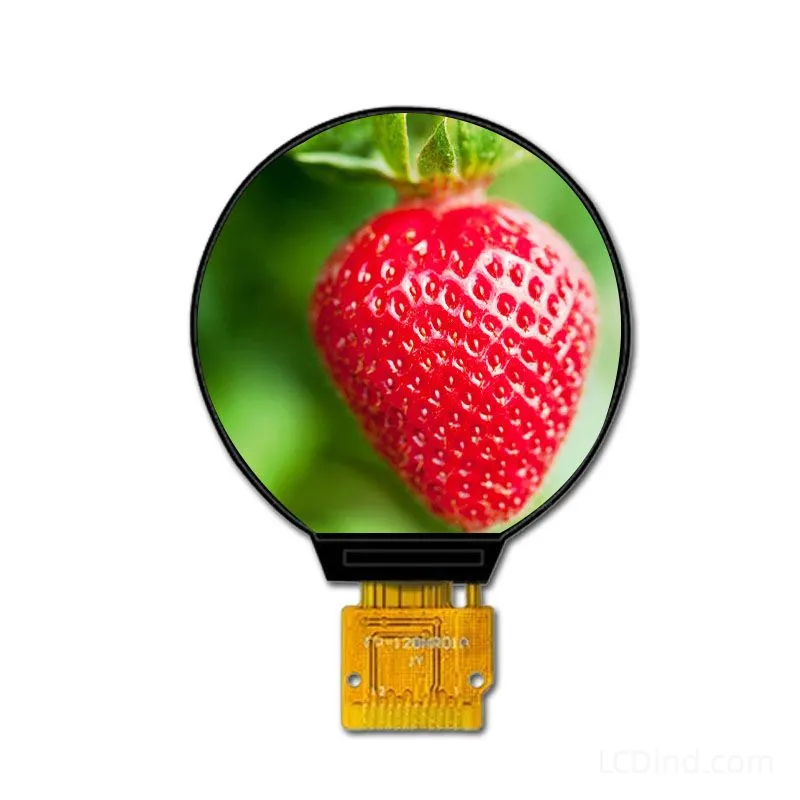
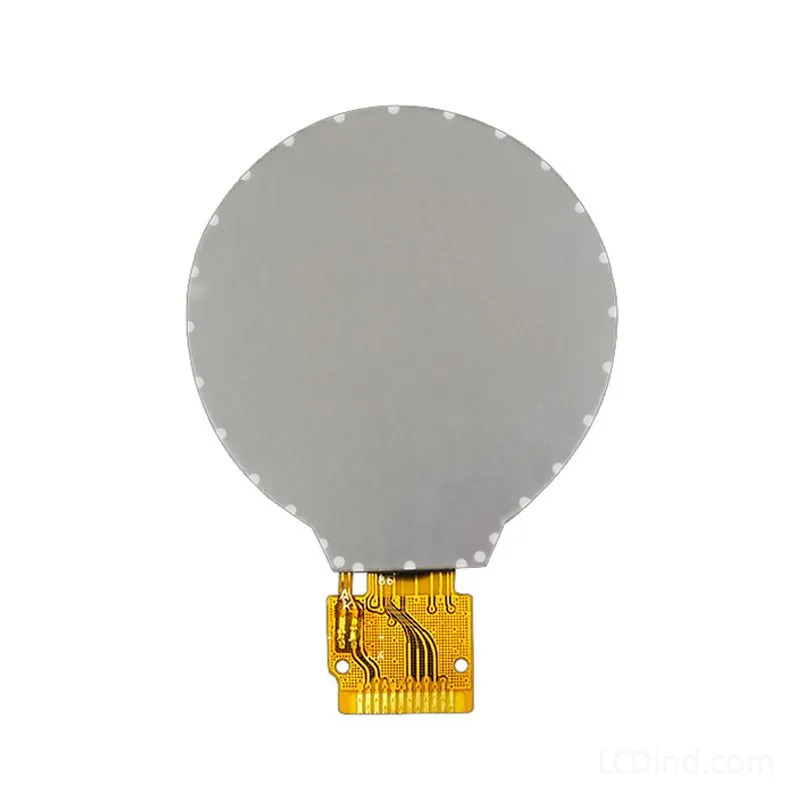
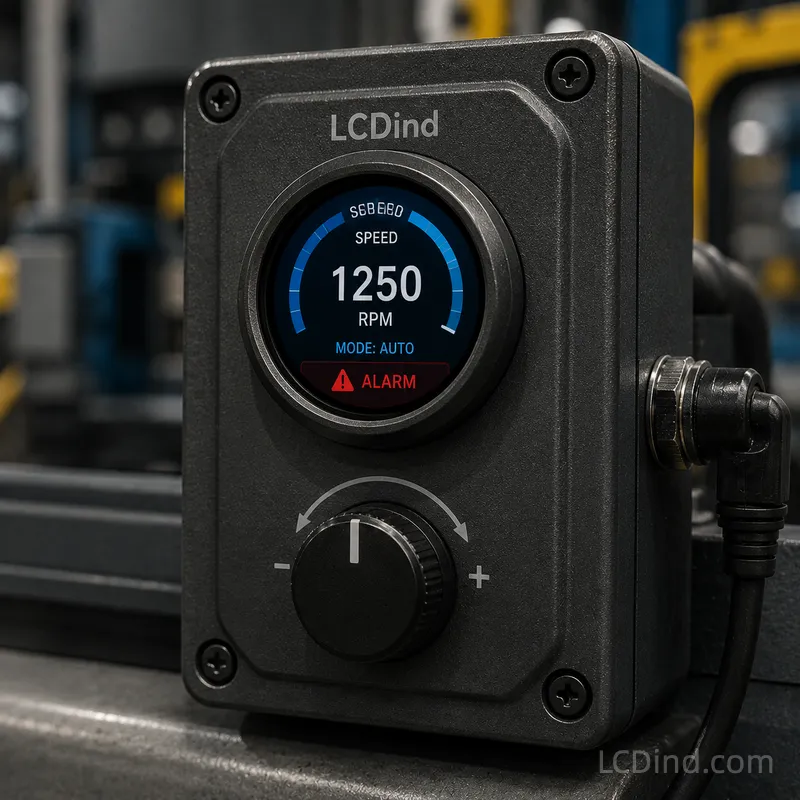
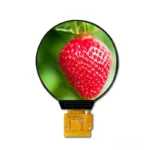
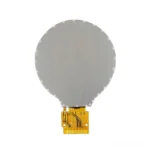
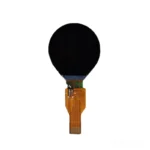
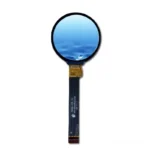
1.28 inch circular SPI LCD module with 240×240 resolution, 350 nits brightness, all-direction viewing, 1200:1 contrast and 32.4×32.4 mm active area.
Product Attributes
| Brand | OEM / ODM |
|---|---|
| Size | 1.28 inch |
| Resolution | 240×240 |
| Interface | SPI |
| Brightness | Standard (200-450 nits) |
| Operating Temp | Industrial (-20 ℃ to +70 ℃) |
| Touchscreen | No Touch |
| Viewing Direction |
Description
1.28 Inch 240×240 SPI Round LCD Module for Compact Control Knobs
This 1.28 inch circular LCD module is a small-format display for compact dials, control knobs, smart appliance interfaces, charging equipment status points and instrumentation panels where the visible UI is intentionally minimal. The public specification lists 240×240 resolution, SPI interface, 350 nits brightness, all viewing directions, no touch in the standard configuration, -20 to 70 °C operation, -30 to 80 °C storage, 35.6×38.1×1.55 mm outline, 32.4×32.4 mm active area, 1200:1 contrast, 3.3V power supply, 20000-hour LED lifetime and panel model 90-12804-001. Because the display is small, successful integration depends on clear UI discipline and exact mechanical alignment.
The 1.28 inch size should not be used for dense menus or long text. It is better suited to one main value, a short state label, an icon, a radial indicator, a percentage, a temperature setpoint, a charging state or a compact warning symbol. The UI team should test the longest expected value, language variations and alarm states on a 240×240 canvas before committing to tooling. A small round screen can look refined in a control knob, but it becomes hard to use if too many functions are forced into the same display area.
SPI interface is practical for compact embedded products because it reduces pin count and can be driven by many MCUs. The trade-off is update bandwidth. A knob interface or status display often only needs partial updates, which fits SPI well. If the buyer expects continuous animation, fast graphs or frequent full-screen transitions, the host firmware and bus speed need to be evaluated early. LCDind should receive the host MCU, voltage, SPI speed target, connector preference and boot sequence requirements.
Mechanically, the active area is 32.4×32.4 mm and the outline is 35.6×38.1×1.55 mm. That difference matters in a small round design. The housing must leave clearance for the full module, not only the visible circle. If the module is built into a rotating knob or sealed control head, the engineer should check cable strain, FPC bend radius, adhesive selection, lens thickness, gasket pressure and serviceability. Any printed border should allow for tolerance so the image is centered after assembly.
The 350-nit brightness and 1200:1 contrast are useful for indoor control surfaces and compact instruments. They are not a direct-sunlight specification. A tinted cover or thick transparent cap can reduce visible brightness, while glossy plastic can create reflections. For appliance or industrial controls, the front material and lighting condition should be tested with a production-intent sample. If the display is inside a knob with a curved cover, optical distortion and viewing angle should also be checked.
The standard no-touch configuration fits many rotary or button-based designs. A round display in a knob often works best when the input is the knob rotation or press action, while the screen only confirms state and value. If the project requires touch on the small circular display, that must be reviewed as a custom stack with cover lens, sensor, controller, bonding and cable exit. The added layers may affect brightness, thickness and assembly yield.
RFQ Checklist
- Product concept: control knob, appliance dial, charger indicator, instrument status point or compact HMI.
- Host MCU, SPI settings, voltage, connector preference and expected refresh behavior.
- Mechanical drawing with round window, lens, gasket, module pocket and cable route.
- UI mockup showing main value, icon, alarm state and longest text requirement.
- Operating environment, lighting condition, front-cover material and touch or no-touch decision.
- Sample quantity, annual forecast, approval schedule and production inspection criteria.
Engineering FAQ
Can this 1.28 inch display show a full menu system? It can show simple states and short options, but dense menus are usually not practical on a small round 240×240 canvas.
Is SPI enough for the UI? SPI is often enough for values, icons and partial updates. Fast animation needs host-side bandwidth review.
Is touch included? No touch is listed for the standard configuration. Touch requires a separate circular sensor and cover-lens design.
What is the main mechanical risk? Centering the active image, protecting the FPC and leaving enough clearance for the full outline inside a very small housing.
What should LCDind review before quotation? Send the drawing, host interface, UI mockup, front-cover plan, quantity and target environment.
Engineering Review Note
This 1.28 inch SPI round LCD is best for compact status and control interfaces, not for complex text-heavy HMI. Confirm the host SPI capability, round-window mechanics and front-cover optical effect before approving samples.
Small Round UI Approval
For a 1.28 inch circular display, the approval process should include a real-size UI review. Printouts or enlarged mockups are not enough. Test the actual pixel canvas with the final font, icon size, color scheme and warning state. If the product uses a rotary knob, verify that the operator can read the display while the hand is near the control. If the device is used in a charging unit, appliance or industrial controller, check visibility under the expected panel angle and ambient light.
Production risk is usually mechanical rather than electrical. The small active area leaves little tolerance for misalignment. The team should confirm the display pocket, adhesive placement, FPC bend, lens position and border print before tooling. If a family of products will use several round display sizes, keep separate drawings and purchasing records for each size so a 1.28 inch module is not confused with a visually similar circular part.
For quotation, include whether the display will sit behind a flat lens, a curved knob cap or an exposed window. That one mechanical choice can change reflection, image centering, adhesive selection and service replacement method.
Additional information
| Brand | OEM / ODM |
|---|---|
| Size | 1.28 inch |
| Resolution | 240×240 |
| Interface | SPI |
| Brightness | Standard (200-450 nits) |
| Operating Temp | Industrial (-20 ℃ to +70 ℃) |
| Touchscreen | No Touch |
| Viewing Direction |
About brand
Source OEM / ODM LCD panels for OEM, replacement and industrial integration projects. Submit size, resolution, interface, brightness, lifecycle and annual quantity for review.
Engineering FAQ
Q: What type of equipment project is this 1.28 inch Round TFT LCD Display 240x240 SPI suitable for?
A: This lcd round display is best considered for industrial dials, smart appliance controls, charging equipment, instrumentation panels, and compact control knobs. LCDind recommends confirming annual quantity, enclosure design, host interface, brightness target, and operating environment before moving from samples to batch orders.
Q: What interface should the OEM mainboard support?
A: The SPI interface is useful for compact instruments and MCU products where board space and pin count are more important than high refresh bandwidth. Please confirm pin assignment, connector type, voltage, timing, cable direction, and controller-board requirements during engineering review.
Q: Is this display suitable for outdoor or high-ambient-light equipment?
A: The 350 nits brightness level is best positioned for indoor equipment, control panels, and embedded terminals used in controlled lighting. For demanding outdoor or sunlight-readable equipment, LCDind can review target nits, AG/AR cover glass, optical bonding, thermal design, and backlight lifetime for the production environment.
Q: Can LCDind support touch, cover glass, or module customization for batch production?
A: The touch configuration is listed as Witout, so LCDind can review cover glass, optical bonding, coating, FPC, and controller matching for repeat production. LCDind can evaluate capacitive touch, resistive touch, cover-glass thickness, bonding, coating, FPC changes, cable length, and production consistency requirements.
Q: What information should procurement provide for a factory quotation?
A: Please share target application, annual forecast, first order quantity, host interface, mechanical drawing, brightness requirement, operating temperature -20 to +70°C, certification needs, delivery schedule, and whether pre-production samples are required.
Shipping and Delivery
Q: What is the MOQ?
A: The MOQ for our products is 1 piece. We are able to provide support throughout the testing process.
Q: What about the delivery time?
A: We have products in stock and can ship them within 3 working days.
Q: Does your product have any warranty?
A: Yes, we offer a warranty that ensures the LCD will function properly upon receipt. However, please note that we do not provide guarantees for any damage caused during use.
Q: What’s your payment method?
A: We accept several payment methods, including T/T (bank transfer), and PayPal.
Q: What’s your shipping method?
A: Thank you for your inquiry. We offer various shipping methods to suit different needs.
For small quantity orders, we use UPS Air-Express, DHL, FedEx, TNT, or EMS Express service. These options are safe and fast.
For large quantity orders, we typically work with the buyer’s cargo agent in China. Alternatively, we can arrange for air or sea transportation.
Please let us know your preferred shipping method and we will do our best to accommodate your request.
Q: Do you offer custom solution?
A: Yes, we offer custom solutions if our standard products do not meet the buyer’s requirements. Please let us know your specific needs, and we will work with you to create a tailored solution that meets your business needs.
Q: How to Contact us?
A: Send your Inquiry Details in the Below, Click “Send” Now!