13
3.5 Inch TFT LCD Module for Industrial RGB Control Panels
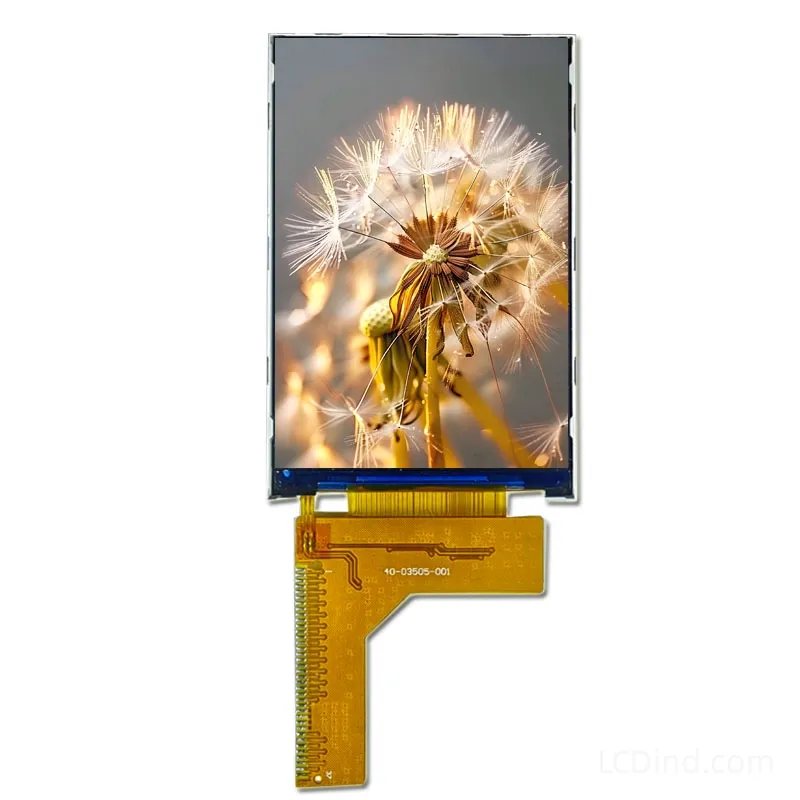
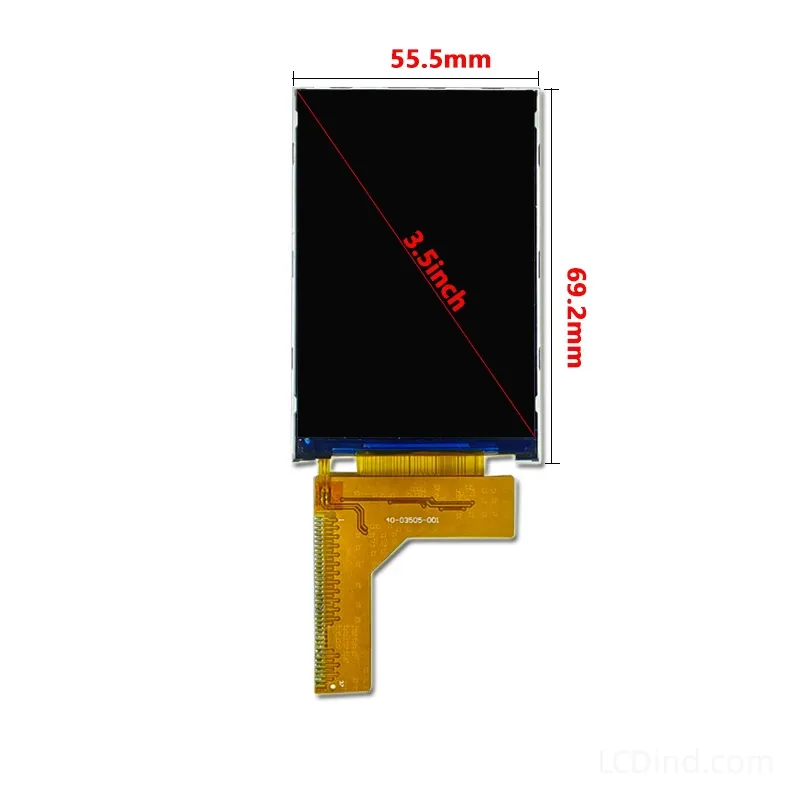
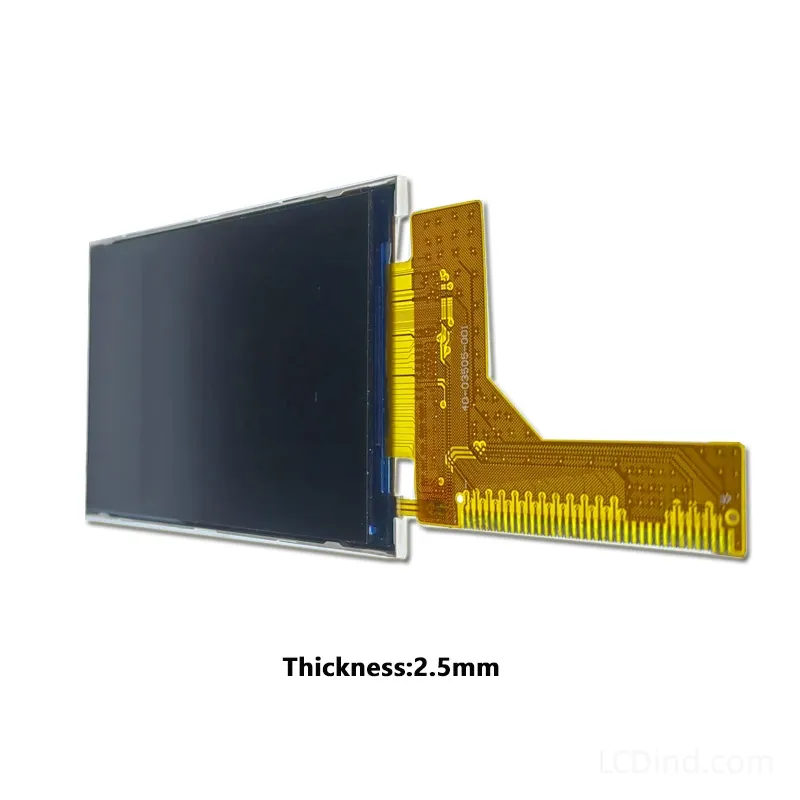
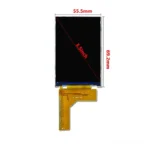
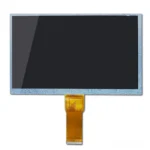
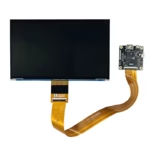
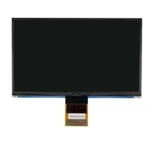
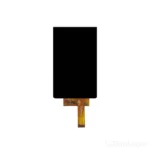
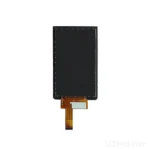
3.5 inch 320×480 RGB TFT LCD module for industrial control panels, with 350 nits brightness, 3.3V supply, 48.96×73.44 mm active area and no touch baseline.
Product Attributes
| Brand | OEM / ODM |
|---|---|
| Size | 3.5 inch |
| Resolution | 320×480 |
| Brightness | Standard (200-450 nits) |
| Operating Temp | Industrial (-20 ℃ to +70 ℃) |
| Touchscreen | No Touch |
Description
3.5 Inch 320×480 RGB TFT Module for Industrial Control Panels
This 3.5 inch RGB TFT module is intended for compact industrial control panels that need a portrait 320×480 display with direct RGB input. The public facts list 350 nits brightness, no touch in the standard configuration, -20°C to +70°C operation, 48.96×73.44 mm active area, 3.3V supply, 20000-hour LED lifetime and LCDind model LCDind-DSZ0020. It should be evaluated for equipment where the controller board already supports RGB timing, or where the customer is designing a controller specifically for this module.
The RGB interface is the key difference from MCU, SPI or MIPI versions of similar size. RGB can support responsive UI updates, but it requires more signal lines and careful timing. Confirm pixel clock, sync signals, data width, voltage, connector, cable length and grounding. If the display is installed near relays, motors, power converters or long harnesses, sample testing should include signal stability and EMI behavior. A stable bench image is not enough for a production control panel.
The 320×480 portrait format is useful for control states, setpoints, alarms, small graphs, parameter lists and maintenance prompts. The UI should prioritize fast operator recognition rather than dense text. For an industrial panel, the largest value, alarm state and current mode should be readable from the real operating distance. If physical buttons or an encoder drive the UI, menu depth should be limited so the operator can navigate reliably without touch.
The standard no-touch baseline can be an advantage in industrial equipment with gloves, dust, moisture or fixed operating sequences. If touch is required, define capacitive or resistive technology, cover-lens thickness, bonding, controller interface, ESD requirement and water or glove behavior. A touch stack changes optics and mechanics, so it should be qualified as a different assembly.
Mechanical review should include the active area, module pocket, bezel opening, FPC route, connector clearance, front lens and gasket pressure. The public page does not list a full outline in the visible summary, so the latest drawing should control enclosure tooling. For repeat production, freeze the LCDind model, drawing, RGB timing, cable, front stack and inspection criteria.
RFQ Checklist
- Host RGB timing, data width, voltage, connector and cable route.
- Control-panel UI layout, alarm states and viewing distance.
- Mechanical drawing, active-area window, front lens and gasket details.
- No-touch baseline or defined touch customization.
- Operating temperature, duty cycle and expected industrial environment.
- Sample quantity, annual forecast and production approval schedule.
Engineering FAQ
Is this suitable for an MCU-only board? Only if the board supports RGB timing or uses a suitable bridge/controller.
Is touch included? No touch is the standard configuration.
Can it be used outdoors? 350 nits is mainly for controlled-light industrial panels.
What information is missing from a size-only request? RGB timing, connector, drawing, front stack and environmental requirements.
What should be frozen for production? Freeze model LCDind-DSZ0020, drawing, host timing, cable, sample and inspection criteria.
Engineering Review Note
Use this RGB module when the control panel needs a compact portrait display and the host can support RGB timing. Send LCDind controller details and drawings before sample approval.
Prototype Validation and RGB Production Control
For this RGB control-panel module, validation should include timing margin and cable behavior in the real enclosure. Test the display with the production controller, final cable length, intended grounding and nearby power electronics. Confirm image stability during startup, reset, alarm pages and long operation. If the equipment uses PWM dimming for the backlight, check whether dimming introduces visible flicker or noise on the image.
For production control, define the accepted no-touch configuration and any optional front lens or touch stack as separate items. Keep LCDind model LCDind-DSZ0020, RGB timing, drawing, cable, optical stack and inspection limits together. If the product family later needs MCU, MIPI or resistive-touch versions, keep those as separate approved modules. Similar 3.5 inch size and 320×480 resolution do not make the displays interchangeable.
Application fit should be checked against the panel’s 350-nit brightness and no-touch baseline. For a machine-side panel with physical buttons, this can be a stable configuration. For an operator terminal expected to behave like a phone or tablet, it may not be enough. Define whether the screen is for status viewing, parameter entry, alarm acknowledgement or service setup. That use case determines UI complexity and whether touch is needed.
For repeat production, the buyer should provide LCDind with expected annual volume and product lifecycle. If the module becomes part of a long-life industrial control, approved alternates should be reviewed early. A future substitute must match RGB timing, active area, brightness class, front-window fit and cable route. Without those records, a later replacement request becomes slower and riskier.
Prototype validation should also include the expected installation angle. Industrial control panels are often mounted vertically, on sloped surfaces or inside a handheld controller. The same display may look different after the operator steps to the side or views it from above. Capture approval photos from the real operating position and use those photos in production inspection.
If the panel is used for alarm acknowledgement, check whether the largest warning state remains visible through the front window. This matters more than decorative graphics for B2B equipment.
When the display is used in a safety-related control panel, verify that alarms remain readable under worst-case lighting and from the operator’s normal position. Document the accepted colors and contrast.
For quotation, state whether the project is new design, replacement or second source. Each case has different risk and sample approval requirements.
Additional information
| Brand | OEM / ODM |
|---|---|
| Size | 3.5 inch |
| Resolution | 320×480 |
| Brightness | Standard (200-450 nits) |
| Operating Temp | Industrial (-20 ℃ to +70 ℃) |
| Touchscreen | No Touch |
About brand
Source OEM / ODM LCD panels for OEM, replacement and industrial integration projects. Submit size, resolution, interface, brightness, lifecycle and annual quantity for review.
Engineering FAQ
Q: What is this 3.5 inch TFT LCD module best used for?
A: This TFT LCD module is intended for industrial RGB control panels, embedded controllers, instrument panels, compact terminals, and OEM equipment programs that need stable display sourcing with 320x480 resolution.
Q: Which interface details should engineers confirm before sampling?
A: Use the RGB interface as the starting point. Before sample approval, confirm pinout, signal timing, voltage, cable length, connector direction, firmware support, and EMC layout with the host board.
Q: Can LCDind customize touch, cover glass, or bonding for this display?
A: Yes. LCDind can review resistive touch, capacitive touch, cover lens thickness, logo printing, AG/AR/AF coating, optical bonding, and controller matching. Current touch note: No touch panel in standard configuration.
Q: How should brightness be selected for the final device?
A: The current brightness guidance is 350 nits brightness. Share indoor, vehicle, kiosk, outdoor shade, or sunlight-readable requirements so LCDind can review backlight, heat, bonding, and cover-glass options.
Q: What mechanical details matter before enclosure tooling?
A: Check active area 48.96 x 73.44 mm, power input 3.3V before releasing tooling. Buyers should confirm bezel opening, mounting stack, FPC bend radius, connector clearance, gasket pressure, and viewing area tolerance.
Q: What should be included in an RFQ for this TFT LCD module?
A: Send annual forecast, trial quantity, target schedule, host platform, interface requirement, mechanical drawing, brightness target, touch plan, operating environment, and any replacement display dimensions.
Q: Can this display be used for outdoor or high-ambient-light equipment?
A: It can be reviewed for outdoor equipment, but final approval depends on brightness, thermal design, sealing, UV exposure, cover glass, and viewing angle. For direct sunlight, request high-brightness or optical-bonding review.
Q: How does LCDind identify this product during engineering review?
A: Use LCDind internal model LCDind-DSZ0020 together with size, resolution, interface, and mechanical drawing. Supplier-only panel codes are not needed for public sourcing discussions.
Shipping and Delivery
Q: What is the MOQ?
A: The MOQ for our products is 1 piece. We are able to provide support throughout the testing process.
Q: What about the delivery time?
A: We have products in stock and can ship them within 3 working days.
Q: Does your product have any warranty?
A: Yes, we offer a warranty that ensures the LCD will function properly upon receipt. However, please note that we do not provide guarantees for any damage caused during use.
Q: What’s your payment method?
A: We accept several payment methods, including T/T (bank transfer), and PayPal.
Q: What’s your shipping method?
A: Thank you for your inquiry. We offer various shipping methods to suit different needs.
For small quantity orders, we use UPS Air-Express, DHL, FedEx, TNT, or EMS Express service. These options are safe and fast.
For large quantity orders, we typically work with the buyer’s cargo agent in China. Alternatively, we can arrange for air or sea transportation.
Please let us know your preferred shipping method and we will do our best to accommodate your request.
Q: Do you offer custom solution?
A: Yes, we offer custom solutions if our standard products do not meet the buyer’s requirements. Please let us know your specific needs, and we will work with you to create a tailored solution that meets your business needs.
Q: How to Contact us?
A: Send your Inquiry Details in the Below, Click “Send” Now!