13

Description
0.96-Inch Round TFT Display for Compact Instrument Dials
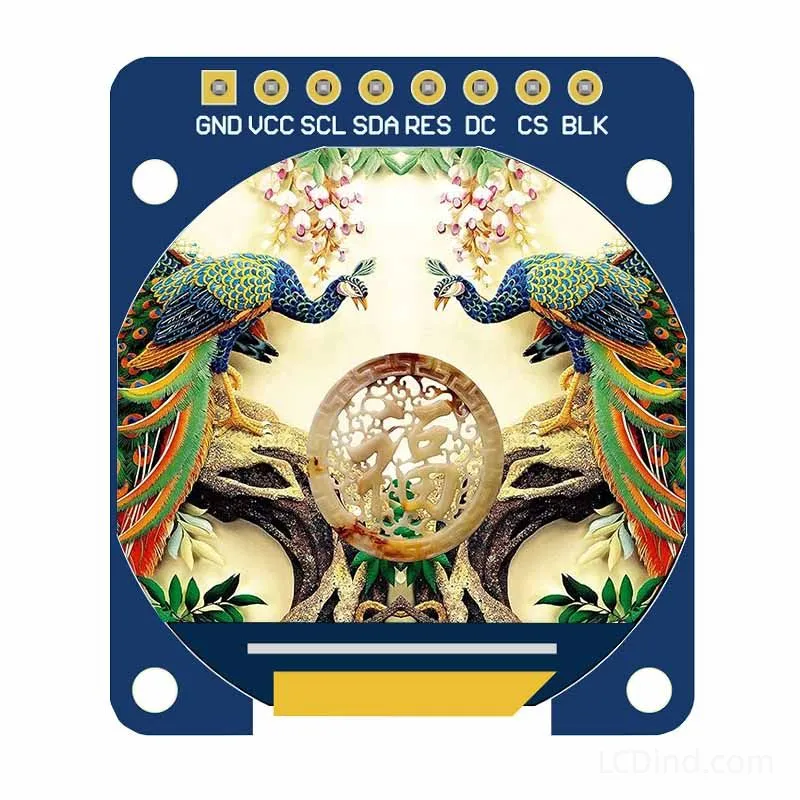
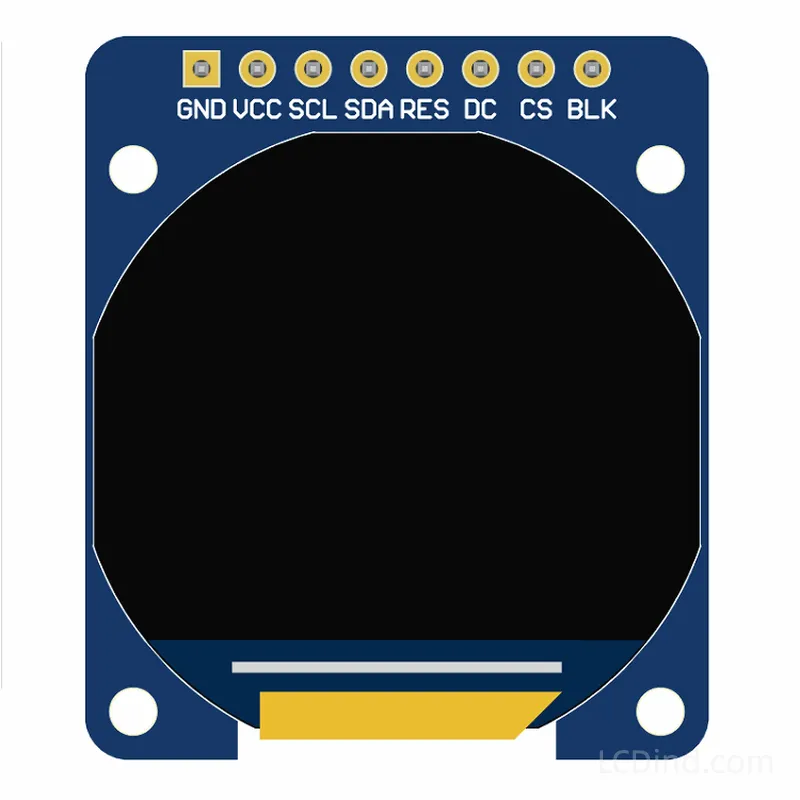
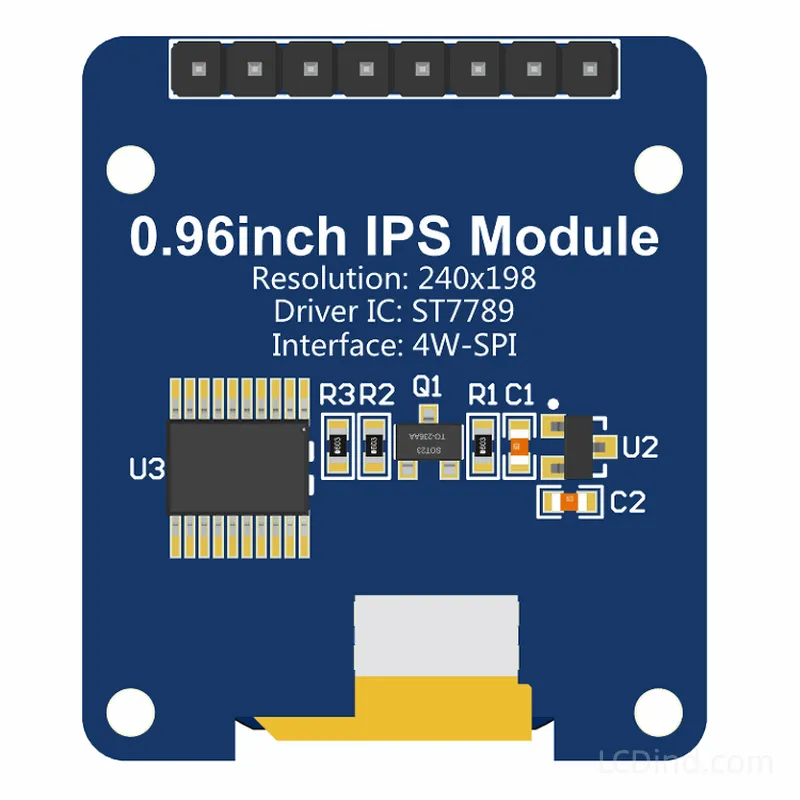
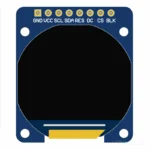
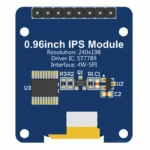
This 0.96 inch round TFT display is a small-format visual module for compact instrument dials where the display must look circular, fit inside a narrow mechanical envelope, and still present clear status values to an operator. The page is written for engineering and sourcing teams comparing round TFT modules for meters, test instruments, compact controllers, rotary panels, and branded equipment front faces. The confirmed production-facing data for this item includes 0.96 inch size, 240×198 resolution, 4-Line SPI interface, 300 nits brightness, -10 to +60 C operating range, 28.4(W)x33.0(H)x11.17(D)(including Pin Header) mm outline dimension, 24.408(W)x20.137(H) mm active area, 5.0 V/3.3V power input, and LCDind model LCDind-DS20199. Empty touchscreen and LED lifetime fields should remain RFQ confirmation items rather than assumed specifications.
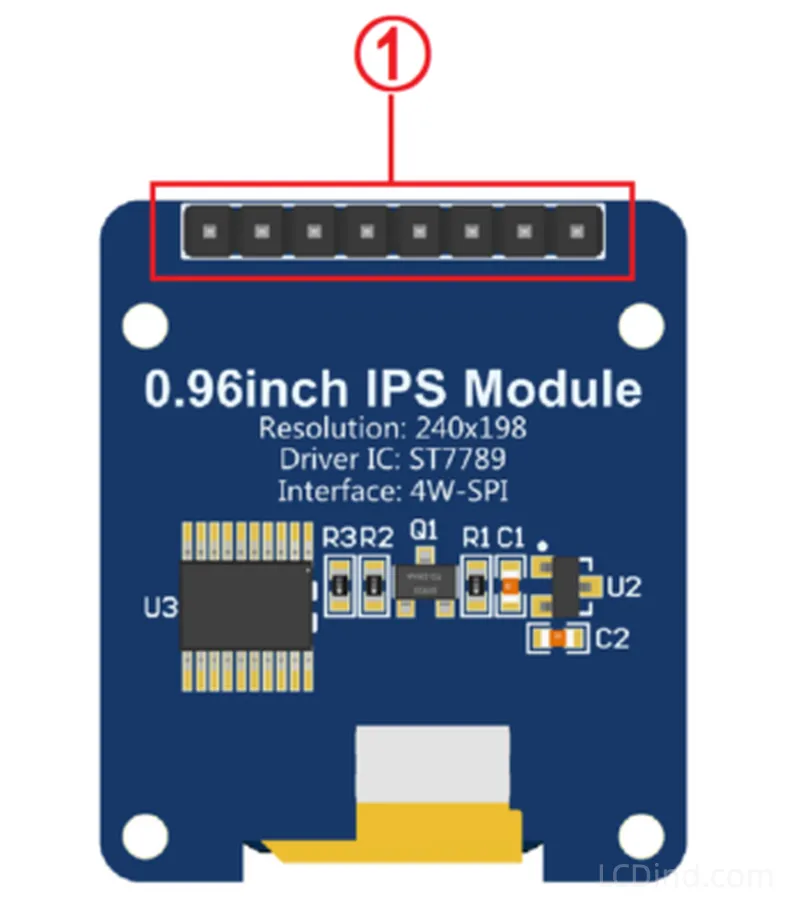
Technical Specifications
| Size | 0.96 inch |
|---|---|
| Resolution | 240×198 |
| Interface | 4-Line SPI |
| Brightness | 300 nits |
| Touchscreen | |
| Operating Temp | -10 to +60 C |
| Outline Dimension | 28.4(W)x33.0(H)x11.17(D)(including Pin Header) mm |
| Active Area | 24.408(W)x20.137(H) mm |
| Power Supply | 5.0 V/3.3V |
| LED Lifetime | |
| LCDind Model | LCDind-DS20199 |
Mechanical Fit for Dial-Style Instruments
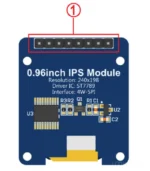
This module is useful when a conventional rectangular LCD would make the front panel look oversized or visually inconsistent with a gauge, knob, or circular indicator. The 28.4(W)x33.0(H)x11.17(D)(including Pin Header) mm outline should be checked against the housing depth, retaining structure, pin-header height, board-to-lens distance, and allowable installation angle. Because this version includes the pin header in the depth note, mechanical review should not stop at the visible round active area. The engineering drawing should also confirm where the display board sits relative to the plastic bezel, gasket, retaining clips, and any light pipe or diffuser around the dial.
The 24.408(W)x20.137(H) mm active area gives the usable graphic window, not the complete keep-out zone. For compact instruments, small differences between the active area, round mask opening, and cover-lens artwork can decide whether numerals or icons appear centered. Before tooling, share the front-panel CAD, target visible diameter, mounting stack, and any required anti-glare cover. LCDind can review whether the standard module fits directly or whether a modified FPC, cover lens, or bracket approach should be planned for repeat production.
SPI Integration and Firmware Planning
The 4-Line SPI interface is appropriate for compact embedded controllers that do not need a wide RGB or MIPI bus. It reduces pin count and keeps the host board simpler, but firmware timing still matters. Engineers should confirm the controller command set, initialization sequence, refresh frequency, display orientation, and whether the UI uses static icons, a rotating pointer, warning colors, or small numeric readouts. For an instrument dial, smoothness is usually less important than stable legibility, predictable startup, and reliable behavior after brownout or sleep wake-up.
Power planning should consider both 5.0 V/3.3V input availability and the logic level used by the host processor. If the product uses a long cable, separate front-panel PCB, or electrically noisy enclosure, signal integrity and EMC layout should be reviewed before sample sign-off. LCDind can help check pinout, FPC direction, adapter board requirements, and whether the display should be evaluated with the customer controller before mass production.
Where This Round TFT Works Best
The strongest fit is compact instrumentation: portable gauges, industrial dial indicators, battery-powered testers, HVAC service tools, small laboratory devices, and compact equipment where the user expects a circular visual element rather than a rectangular display. The 300 nits brightness is suitable as a baseline for indoor or controlled-light equipment; outdoor shade, vehicle cabins, or strong overhead lighting should be reviewed separately. If the user interface mainly shows one or two values, a status ring, a mode icon, and alarm color, this size can deliver a polished front-panel experience without forcing a larger enclosure.
For OEM buyers, the practical value is not only the module size but also the ability to keep the same display family through sample, pilot, and repeat orders. Round TFT projects often fail late because the industrial design is approved before the display stack is fully checked. Treat this item as a candidate for early mechanical and electrical validation: mount it into a representative bezel, test the viewing distance, check icon readability, and verify whether the pin header arrangement is compatible with the final assembly process.
Procurement Considerations for Repeat Orders
When sourcing a round TFT display, compare more than the diagonal size and resolution. Confirm the supplier model, active area, outline dimension, interface, power input, brightness class, operating temperature, and whether the display is delivered as a bare module, mounted board, or customized assembly. For LCDind-DS20199, the public table should be treated as the current reference, while optional items such as touch panel, LED lifetime, cable changes, and cover-lens stack need engineering confirmation during RFQ.
If the project will become a branded instrument, also clarify inspection criteria. Small round modules are visually sensitive: dust, polarizer marks, uneven bonding, connector height, and off-center lens printing are easier to notice on a dial than on a large rectangular HMI. Procurement should request sample photos, drawing confirmation, packaging method, and acceptance criteria before the first production order. This reduces approval loops between the mechanical, firmware, purchasing, and quality teams.
Customization Scope
LCDind can review FPC direction, connector arrangement, backlight adjustment, cover-lens design, logo printing, surface treatment, and assembly-level packaging for this type of module. If the final dial requires a black circular mask, printed icons, a protective cover, or flush-mounted industrial design, share the drawing rather than only asking for a catalog display. A display that fits electrically may still need mechanical changes before it works in the final product.
Touch is not listed as a confirmed standard configuration for this item. If the dial needs touch, rotary-touch interaction, or a sealed cover lens, specify the operating method, cover thickness, glove requirement, and expected environment. That allows LCDind to evaluate whether a capacitive touch layer, separate input device, or non-touch indicator design is the more stable production route.
RFQ and Engineering Review Checklist
- Target annual volume, sample quantity, and expected production schedule.
- Front-panel drawing showing visible opening, bezel, depth limit, and mounting method.
- Host processor, logic voltage, SPI timing requirement, and display orientation.
- Indoor, outdoor-shade, or high-ambient-light use case for brightness review.
- Touch, cover lens, logo printing, coating, or bonding requirements if needed.
- Quality criteria for cosmetic inspection, packaging, and repeat-order consistency.
Engineering FAQ
Is this display mainly for consumer knobs or industrial instruments?
It can be used in both forms, but this product page is intended for OEM industrial instrument and equipment projects. The key review points are drawing fit, SPI integration, brightness, operating environment, and repeat supply rather than retail plug-and-play use.
Can the empty touchscreen field be treated as no-touch?
Do not assume the final touch configuration from an empty field. Treat touch as an RFQ item. If the project needs touch or a cover lens, send the mechanical drawing and interaction requirement so LCDind can review a suitable stack.
What makes the pin-header depth important?
The outline note includes 11.17(D)(including Pin Header) mm. That can affect housing depth, board clearance, and assembly sequence. It should be checked early if the display is mounted behind a compact dial face.
Is 300 nits enough for outdoor instruments?
300 nits is a standard brightness reference for controlled lighting. Outdoor or sunlight-readable use should be reviewed with the actual cover lens, viewing distance, enclosure color, heat condition, and required readability target.
Project Notes for Sourcing Teams
Use LCDind-DS20199, the exact outline, active area, 4-Line SPI interface, and the target dial drawing together in the RFQ. That gives engineering enough information to confirm whether the standard module is sufficient or whether customization is required before sample approval.
Additional information
| Brand | OEM / ODM |
|---|---|
| Size | 0.96 inch |
| Resolution | 240×198 |
| Interface | SPI |
| Brightness | Standard (200-450 nits) |
| Operating Temp | Standard (0 ℃ to +50/60 ℃) |
About brand
Source OEM / ODM LCD panels for OEM, replacement and industrial integration projects. Submit size, resolution, interface, brightness, lifecycle and annual quantity for review.
Engineering FAQ
Q: What is this 0.96 inch round TFT display best used for?
A: This round TFT display is intended for compact instrument dials, embedded controllers, instrument panels, compact terminals, and OEM equipment programs that need stable display sourcing with 240x198 resolution.
Q: Which interface details should engineers confirm before sampling?
A: Use the 4-Line SPI interface as the starting point. Before sample approval, confirm pinout, signal timing, voltage, cable length, connector direction, firmware support, and EMC layout with the host board.
Q: Can LCDind customize touch, cover glass, or bonding for this display?
A: Yes. LCDind can review resistive touch, capacitive touch, cover lens thickness, logo printing, AG/AR/AF coating, optical bonding, and controller matching. Current touch note: touch configuration is reviewed during RFQ.
Q: How should brightness be selected for the final device?
A: The current brightness guidance is 300 nits brightness. Share indoor, vehicle, kiosk, outdoor shade, or sunlight-readable requirements so LCDind can review backlight, heat, bonding, and cover-glass options.
Q: What mechanical details matter before enclosure tooling?
A: Check outline 28.4(W)x33.0(H)x11.17(D)(including Pin Header) mm, active area 24.408(W)x20.137(H) mm, power input 5.0 V/3.3V before releasing tooling. Buyers should confirm bezel opening, mounting stack, FPC bend radius, connector clearance, gasket pressure, and viewing area tolerance.
Q: What should be included in an RFQ for this round TFT display?
A: Send annual forecast, trial quantity, target schedule, host platform, interface requirement, mechanical drawing, brightness target, touch plan, operating environment, and any replacement display dimensions.
Q: Can this display be used for outdoor or high-ambient-light equipment?
A: It can be reviewed for outdoor equipment, but final approval depends on brightness, thermal design, sealing, UV exposure, cover glass, and viewing angle. For direct sunlight, request high-brightness or optical-bonding review.
Q: How does LCDind identify this product during engineering review?
A: Use LCDind internal model LCDind-DS20199 together with size, resolution, interface, and mechanical drawing. Supplier-only panel codes are not needed for public sourcing discussions.
Shipping and Delivery