13
3.5 Inch TFT LCD Module for Handheld Control Panels
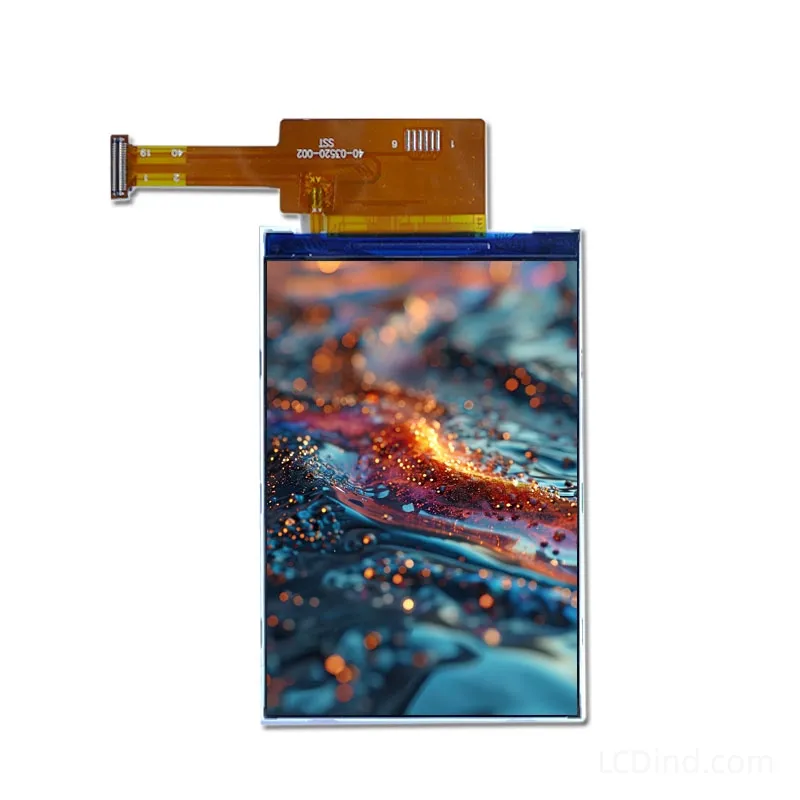
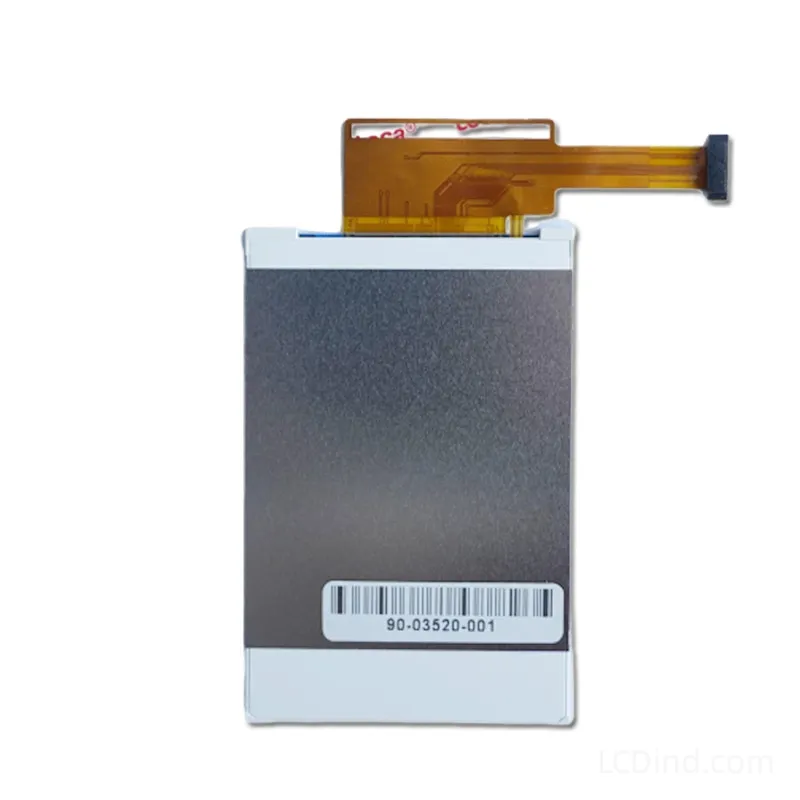
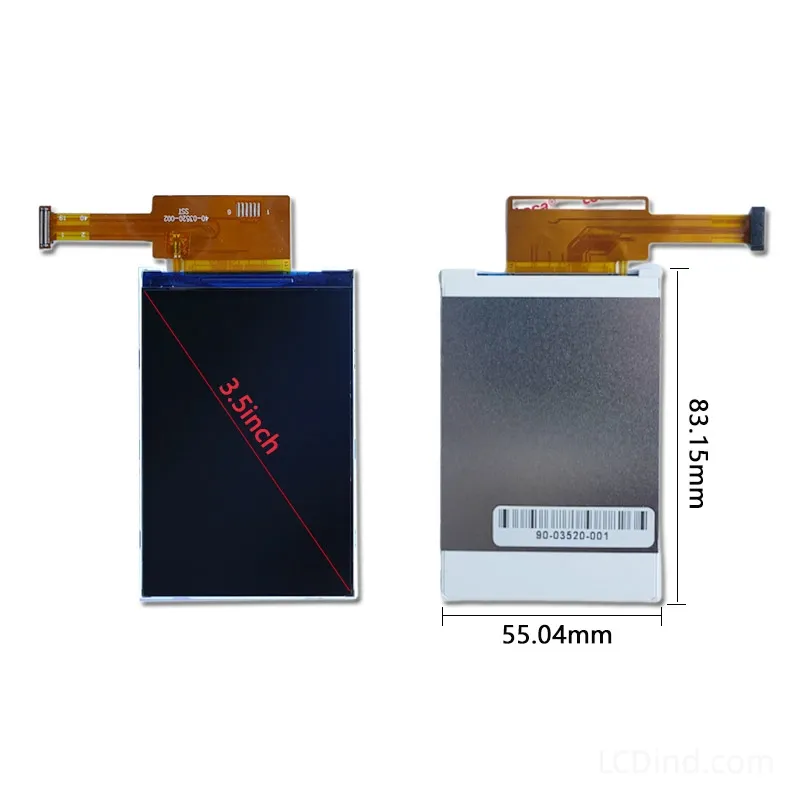
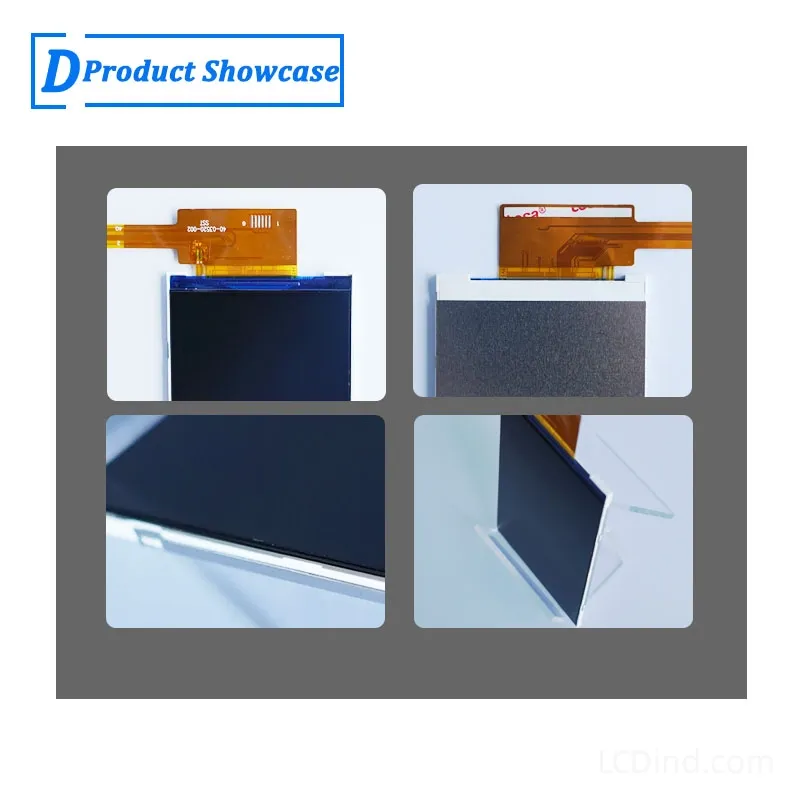
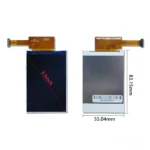
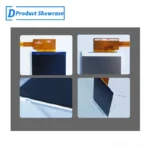
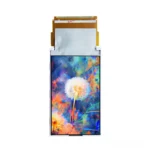
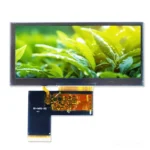
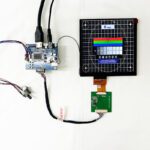
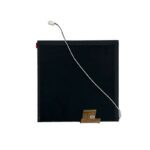
3.5 inch 320×480 MCU TFT LCD module for handheld control panels, with 350 nits brightness, 55.04×83.15×2.2 mm outline and no touch baseline.
Product Attributes
| Brand | OEM / ODM |
|---|---|
| Size | 3.5 inch |
| Resolution | 320×480 |
| Interface | MCU |
| Brightness | Standard (200-450 nits) |
| Operating Temp | Industrial (-20 ℃ to +70 ℃) |
| Touchscreen | No Touch |
Description
3.5 Inch MCU TFT Module for Handheld Control Panels
This 3.5 inch TFT LCD module is intended for handheld control panels, compact service tools and portable equipment interfaces that need a portrait 320×480 display with MCU control. The public facts list 350 nits brightness, 3.3V supply, -20°C to +70°C operation, 55.04×83.15×2.2 mm outline, 48.96×73.44 mm active area, 20000-hour LED lifetime, panel model 90-03520-001 and no touch panel in the standard configuration. It is a good candidate when the product already uses physical keys, a keypad, encoder or host-side controls.
The MCU interface should be evaluated against firmware resources and refresh needs. Handheld control panels often show setpoints, equipment status, channel values, alarms and menus rather than fast animation. If the UI can use partial updates and simple transitions, an MCU interface can simplify integration. If the product requires video, live charts or frequent full-screen redraws, the host bandwidth and memory should be checked before choosing this module.
The 350-nit brightness can support indoor or controlled-light field work. A handheld device may be used in workshops, service vans or near windows, so final readability must be checked behind the production lens. Battery-powered equipment should also test backlight current, dimming range and run time. A bright screen that shortens operating time may not be acceptable for field service use.
No touch is listed for the standard configuration. For handheld control panels, this can improve durability where operators wear gloves or use the device in dusty or wet conditions. If touch is required, specify resistive or capacitive type, cover lens, controller interface, bonding, glove behavior and ESD requirement at the RFQ stage. A later touch addition may change thickness, brightness and cable routing.
Mechanical integration should check the 55.04×83.15×2.2 mm outline, active area, FPC route, PCB location, housing ribs, front window, gasket and drop-shock behavior. The display should be tested in the real handheld enclosure, with the battery and board installed, because cable stress and internal heat differ from a loose bench sample.
RFQ Checklist
- Host MCU, bus timing, voltage, initialization and connector preference.
- Handheld UI content, update rate and physical-control method.
- Enclosure drawing, active window, FPC route and drop-shock requirements.
- Brightness setting, battery budget, front lens and ambient light.
- No-touch baseline or defined touch requirement.
- Prototype quantity, forecast, qualification plan and production schedule.
Engineering FAQ
Is this a touch display? No. The standard configuration has no touch panel.
Why choose MCU interface? It can suit handheld panels with simple values, menus and alarms, but refresh performance must be checked.
Is 350 nits enough? It can be suitable indoors, but test through the final lens and at target brightness.
What is the main handheld risk? Cable strain, drop shock, battery heat and front-window readability.
What should be sent for quotation? Send host MCU details, enclosure drawing, UI behavior, quantity and touch decision.
Engineering Review Note
Use panel model 90-03520-001 for handheld control panels where MCU display control and no-touch operation are appropriate. LCDind should review host timing, mechanics and battery use before samples.
Prototype Validation and Handheld Reliability
For handheld control panels, approval should include user handling, not only electrical startup. Test display readability while the user holds the device, presses keys, rotates the device and views it from likely field angles. Confirm that the FPC route does not pull during assembly and that the battery, board and housing do not press into the module. If the product may be dropped or transported in a case, include mechanical stress testing with the production enclosure.
Because this module uses MCU control and no touch by default, firmware design should keep interactions simple. Use large status values, short menus and clear alarms. If the customer later requests touch, quote a new assembly and retest brightness, thickness, FPC route and front-lens behavior. For repeat orders, record model 90-03520-001, approved drawing, host initialization and sample appearance.
For handheld use, service and assembly process should be part of the display selection. If the display is bonded into a front shell, replacement may be difficult. If it is held by a bracket, check screw pressure and shock protection. If the device is used outdoors occasionally, define whether the screen only needs shade-readable performance or whether a higher-brightness module should be reviewed instead.
Incoming inspection should include FPC condition, polarizer appearance, active-area alignment, image orientation, backlight uniformity and packaging. If the device is sold into multiple regions, test cold and hot start with the actual battery and charger. These checks help prevent a display choice that works in development but becomes unreliable in service.
For sourcing, specify whether the handheld panel needs a bare LCD, a matched cable, cover lens, gasket or complete front module. If the product is already in production, note which parts cannot change. If the project is still in design, LCDind can review whether a brighter, touch-enabled or different-interface module would reduce total system cost before tooling.
Approved documentation should include the interface, drawing, backlight setting, FPC route and drop-test notes.
If the handheld product uses rechargeable batteries, test the LCD during charging and under low-battery operation. Voltage behavior, backlight stability and internal heat should be reviewed together.
For service teams, include display removal and cable handling instructions in the product record.
If a future touch version is being considered, reserve mechanical space now. Otherwise the housing may need redesign when touch is added later.
Document the approved battery and charger condition used during LCD testing.
Use the same test setup for incoming inspection.
Record sample photos too.
Additional information
| Brand | OEM / ODM |
|---|---|
| Size | 3.5 inch |
| Resolution | 320×480 |
| Interface | MCU |
| Brightness | Standard (200-450 nits) |
| Operating Temp | Industrial (-20 ℃ to +70 ℃) |
| Touchscreen | No Touch |
About brand
Source OEM / ODM LCD panels for OEM, replacement and industrial integration projects. Submit size, resolution, interface, brightness, lifecycle and annual quantity for review.
Engineering FAQ
Q: Can this 3.5 inch TFT LCD module be supplied with a touch screen?
A: The standard listing is No touch panel in standard configuration. LCDind can review resistive touch, capacitive touch, cover lens, bonding, and controller matching when the finished device needs operator input.
Q: What customization options are available for this display?
A: Common custom work includes brightness tuning, FPC length, connector direction, cover glass, logo placement, touch integration, bonding, packaging, and production inspection requirements.
Q: How should the MCU interface be confirmed?
A: Confirm timing, pinout, voltage, cable direction, firmware support, and EMC layout with the host board before sample approval. LCDind can review drawings and interface notes before production.
Q: Can the brightness be adjusted for a different environment?
A: The confirmed brightness is 350 nits. If the display is used behind cover glass or in stronger ambient light, share the target environment so LCDind can review backlight and thermal options.
Q: What information should buyers send for an RFQ?
A: Send quantity, forecast, interface, mechanical drawing, brightness target, touch requirement, operating temperature, logo needs, and any current panel model or datasheet.
Q: Is this display suitable for outdoor equipment?
A: This module is mainly for compact equipment and controlled-light use. For outdoor or direct-sunlight projects, LCDind should review brightness, cover glass, bonding, thermal design, and sealing requirements first.
Shipping and Delivery
Q: What is the MOQ?
A: The MOQ for our products is 1 piece. We are able to provide support throughout the testing process.
Q: What about the delivery time?
A: We have products in stock and can ship them within 3 working days.
Q: Does your product have any warranty?
A: Yes, we offer a warranty that ensures the LCD will function properly upon receipt. However, please note that we do not provide guarantees for any damage caused during use.
Q: What’s your payment method?
A: We accept several payment methods, including T/T (bank transfer), and PayPal.
Q: What’s your shipping method?
A: Thank you for your inquiry. We offer various shipping methods to suit different needs.
For small quantity orders, we use UPS Air-Express, DHL, FedEx, TNT, or EMS Express service. These options are safe and fast.
For large quantity orders, we typically work with the buyer’s cargo agent in China. Alternatively, we can arrange for air or sea transportation.
Please let us know your preferred shipping method and we will do our best to accommodate your request.
Q: Do you offer custom solution?
A: Yes, we offer custom solutions if our standard products do not meet the buyer’s requirements. Please let us know your specific needs, and we will work with you to create a tailored solution that meets your business needs.
Q: How to Contact us?
A: Send your Inquiry Details in the Below, Click “Send” Now!