13
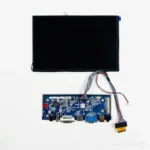
Universal LCD Controller Board solutions. Convert HDMI/VGA signals to LVDS, EDP, or MIPI. Custom firmware support for industrial display panels.
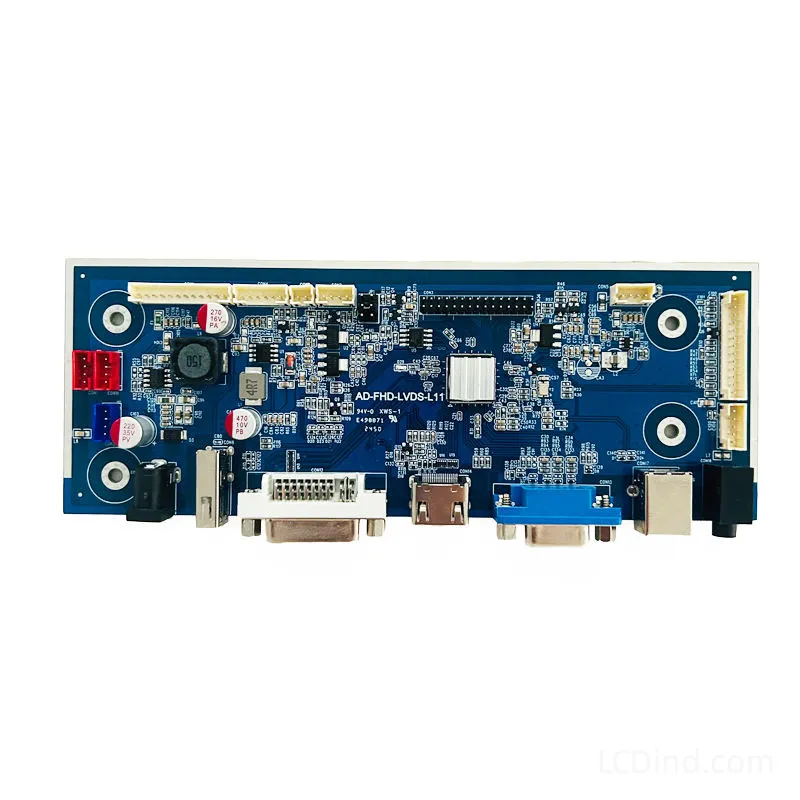
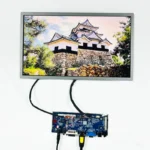
AD-FHD-LVDS-L11 industrial controller board with 24V DC input, dual 6/8/10-bit LVDS output, 1920×1080 max resolution, VGA/DVI/HDMI/USB inputs and selectable panel voltage.
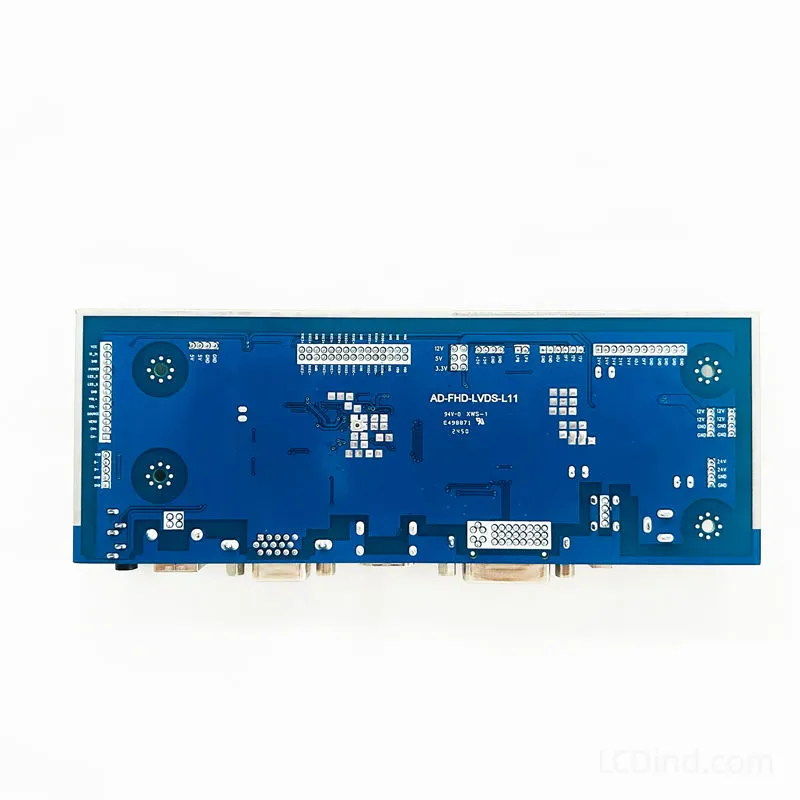
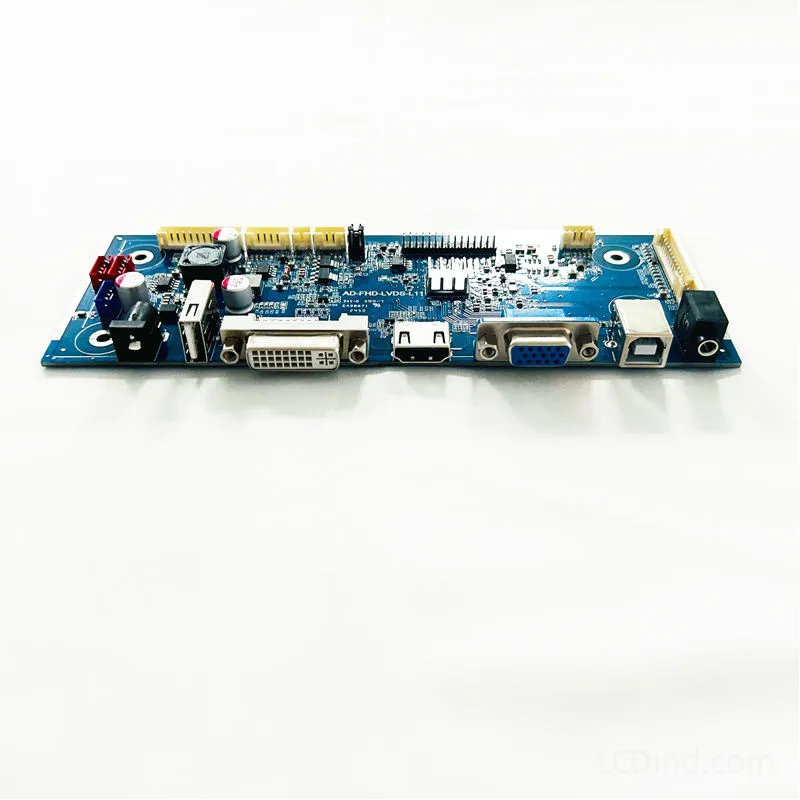
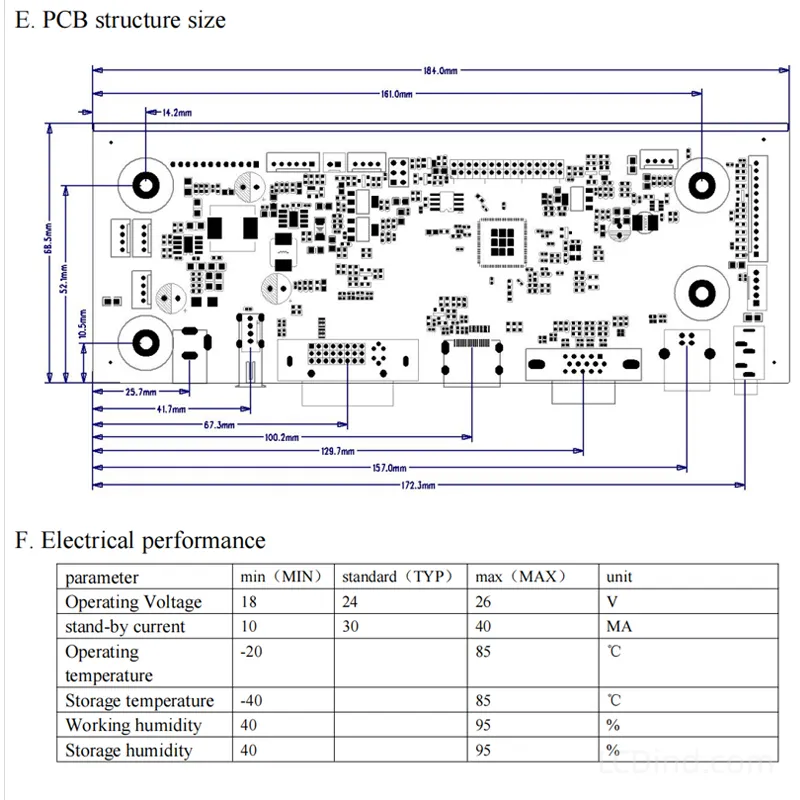
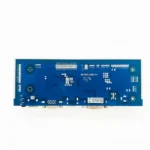
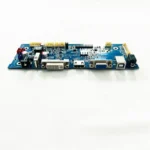
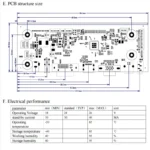
AD-FHD-LVDS-L11 is an industrial LVDS controller board for projects that need a 24V display driver rather than a basic consumer monitor board. The public specification confirms 1920×1080 maximum resolution, 18V to 26V operating input with 24V DC nominal voltage, dual 6/8/10-bit LVDS panel output, selectable 3.3V/5V/12V screen voltage, 12V backlight voltage, VGA, DVI, HDMI and USB 2.0 inputs, USB decoding support, contact ±8KV and air ±25KV ESD protection, 50–60 Hz field frequency, 50–67.5 kHz line frequency and 184.0×68.5 mm PCB dimensions.
| Model Number | AD-FHD-LVDS-L11 |
| Max Resolution | 1920 x 1080 (1080p) |
| Operating Voltage | 24V DC (Range: 18V – 26V) |
| Panel Output Interface | Dual 6/8/10-bit LVDS |
| Selectable Screen Voltage | 3.3V / 5V / 12V |
| Backlight Voltage | 12V |
| Video Inputs | VGA, DVI, HDMI, USB 2.0 |
| USB Video Decoding | MPEG1/2/4, H.264, AVI, MP4, MKV, RMVB, VC1 |
| ESD Protection Rating | Contact ±8KV (Class 3B), Air ±25KV (Class 4B) |
| Field / Line Frequency | 50~60Hz / 50~67.5KHz |
| PCB Dimensions | 184.0 x 68.5 mm |
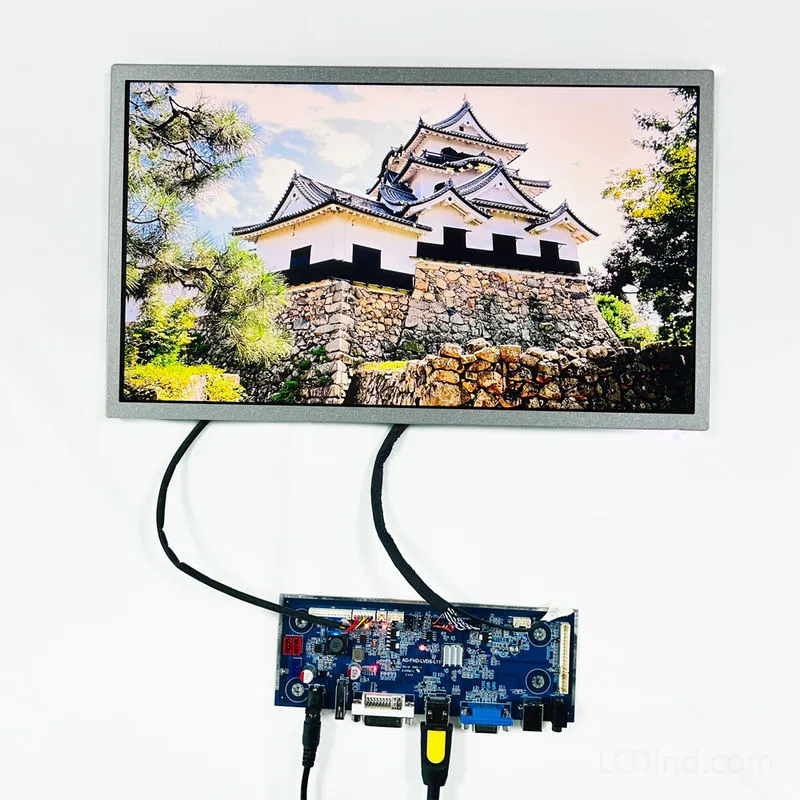
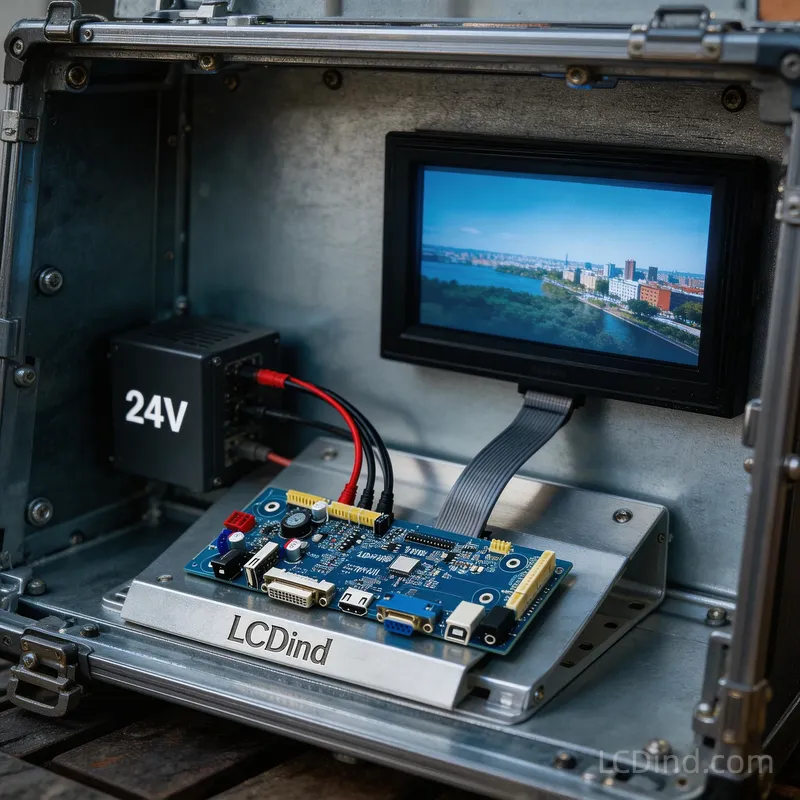
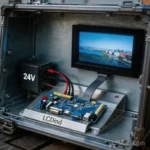
This controller board is relevant for industrial monitors, cabinet displays, factory terminals, retrofit LVDS screens, embedded PC display systems and equipment panels powered from a 24V control cabinet. It is not simply a cable adapter. It should be treated as a display control subsystem that must match the LCD panel, power environment, input source and mechanical space inside the final product.
The most important engineering task is to match the board to the target LCD panel. The RFQ should confirm panel resolution, LVDS channel count, 6/8/10-bit depth, JEIDA or VESA mapping if applicable, connector, cable length, panel voltage and backlight requirement. A 1920×1080 maximum resolution does not mean every 1080p LVDS panel will work without configuration. Screen voltage selection is useful, but it also creates risk if the wrong voltage is set during testing.
The 18V to 26V input range makes the board suitable for many industrial systems that already use 24V DC. Engineers should still check power noise, grounding, inrush, brownout behavior and common-mode interference. Industrial equipment can include motors, solenoids and long cable routes that create display faults if the power and signal paths are not designed together. The board should be tested with the actual power supply, not only with a clean bench adapter.
VGA, DVI and HDMI inputs give flexibility for embedded PCs, legacy controllers and modern industrial computers. For production, the buyer should decide the preferred input and lock the cable type, resolution, refresh rate and EDID behavior. If USB playback is required, confirm file format, decoding limits and whether the function is for maintenance media, signage, instructions or standalone display content. Do not assume USB playback replaces the host HMI system.
The public ESD rating is useful for industrial applications, but it does not qualify the full monitor assembly by itself. The enclosure, front glass, metal frame, grounding, cable shield and user-accessible connectors all affect ESD performance. If the product is installed in a kiosk, workshop, vehicle or outdoor cabinet, LCDind should review the complete assembly requirement and not only the board specification.
The PCB dimension is 184.0×68.5 mm. The enclosure should allow mounting posts, connector insertion, cable bend radius, airflow and service access. Heat from the board, backlight driver and panel should be checked together. If the display is sealed, mounted behind a metal chassis or used at high brightness, thermal validation is necessary before pilot production.
For repeat purchases, record the firmware version, panel configuration, LVDS cable, keypad or OSD board, IR receiver if used, power input cable and any custom settings. Controller-board substitutions can change EDID, scaling, color, backlight control or startup timing, so sourcing should control the exact configuration that passed engineering approval.
A controller board can be physically identical but configured differently for panel voltage, LVDS mapping, OSD language, input priority, backlight behavior or startup mode. After engineering approval, record the accepted configuration and request the same configuration for later batches. This is especially important for OEM monitors and repair programs, where a small firmware or jumper change can create a field failure even when the board model number looks correct.
Sample testing should include every required input source, target resolution, LVDS image stability, backlight control, OSD access, power cycling, brownout recovery, ESD-sensitive connector handling and operation with the actual LCD panel. If the board will be mounted close to a power supply or motor drive, test it in that electrical environment. Board validation should confirm the whole display path, not only that HDMI can show an image on a bench screen.
The specifications above are taken from the current public product page and should be treated as selection inputs, not final system approval. Before sample purchase or production order, LCDind should review host interface, drawing, optical stack, touch requirement, controller-board scope, operating environment, supply quantity and inspection criteria. This update keeps the existing product URL unchanged while making the page more useful for B2B engineering and sourcing decisions.
No. LVDS mapping, voltage, connector and timing still need confirmation.
It fits many industrial control systems that already use 24V DC power.
Yes, for production use the LVDS cable, power cable and input accessories should be defined.
A: No. Unlike typical consumer controller boards, the AD-FHD-LVDS-L11 is designed for industrial applications and requires a 24V DC power input. The board's operating voltage specification strictly demands between 18V and 26V for stable performance. Using a 12V adapter will fail to power the system.
A: Yes. The onboard USB 2.0 interface serves as a standalone digital multimedia player. It supports hardware decoding for heavy formats like H.264 and MKV up to 1080p @ 30fps. Using the OSD menu, you can configure it for digital signage to play videos directly from a connected USB drive without needing a PC.
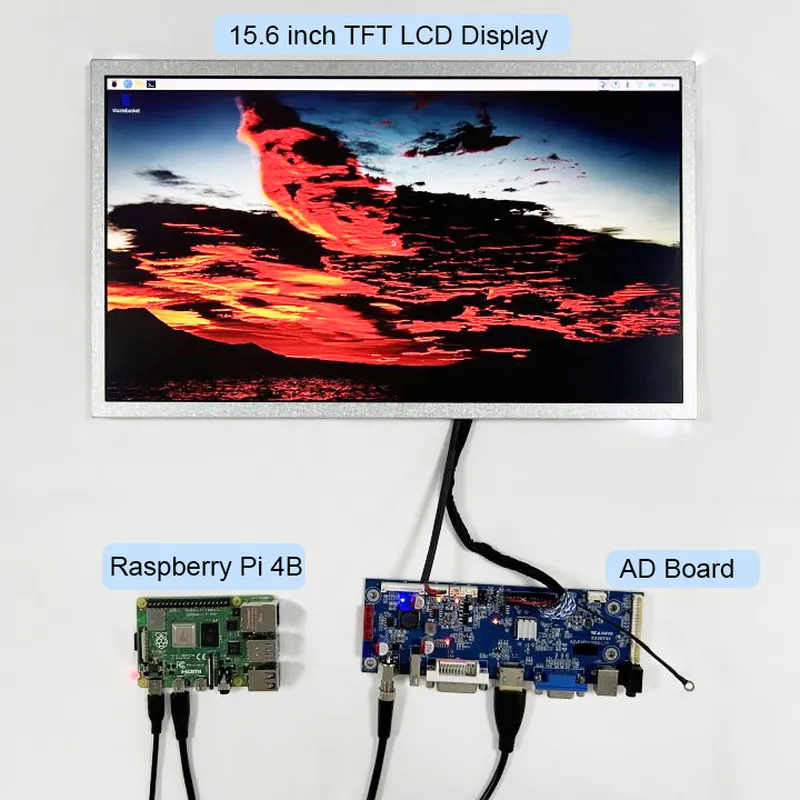
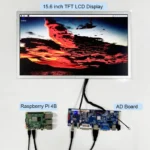
A: It is completely plug-and-play. You can connect your Raspberry Pi's HDMI output directly to the board's HDMI input port. The controller board will process the signal and drive the connected LVDS panel natively.
A: An ESD (Electrostatic Discharge) rating of Contact ±8KV and Air ±25KV means this board is highly shielded against static electricity shocks. This is crucial for hardware installed in dry, industrial environments, or devices frequently touched by users (like arcade machines or ATM kiosks), preventing the board from short-circuiting.
Q: What is the MOQ?
A: The MOQ for our products is 1 piece. We are able to provide support throughout the testing process.
Q: What about the delivery time?
A: We have products in stock and can ship them within 3 working days.
Q: Does your product have any warranty?
A: Yes, we offer a warranty that ensures the LCD will function properly upon receipt. However, please note that we do not provide guarantees for any damage caused during use.
Q: What’s your payment method?
A: We accept several payment methods, including T/T (bank transfer), and PayPal.
Q: What’s your shipping method?
A: Thank you for your inquiry. We offer various shipping methods to suit different needs.
For small quantity orders, we use UPS Air-Express, DHL, FedEx, TNT, or EMS Express service. These options are safe and fast.
For large quantity orders, we typically work with the buyer’s cargo agent in China. Alternatively, we can arrange for air or sea transportation.
Please let us know your preferred shipping method and we will do our best to accommodate your request.
Q: Do you offer custom solution?
A: Yes, we offer custom solutions if our standard products do not meet the buyer’s requirements. Please let us know your specific needs, and we will work with you to create a tailored solution that meets your business needs.
Q: How to Contact us?
A: Send your Inquiry Details in the Below, Click “Send” Now!
🔒 Your data is secure. We usually reply within 24 hours.