
13
Description
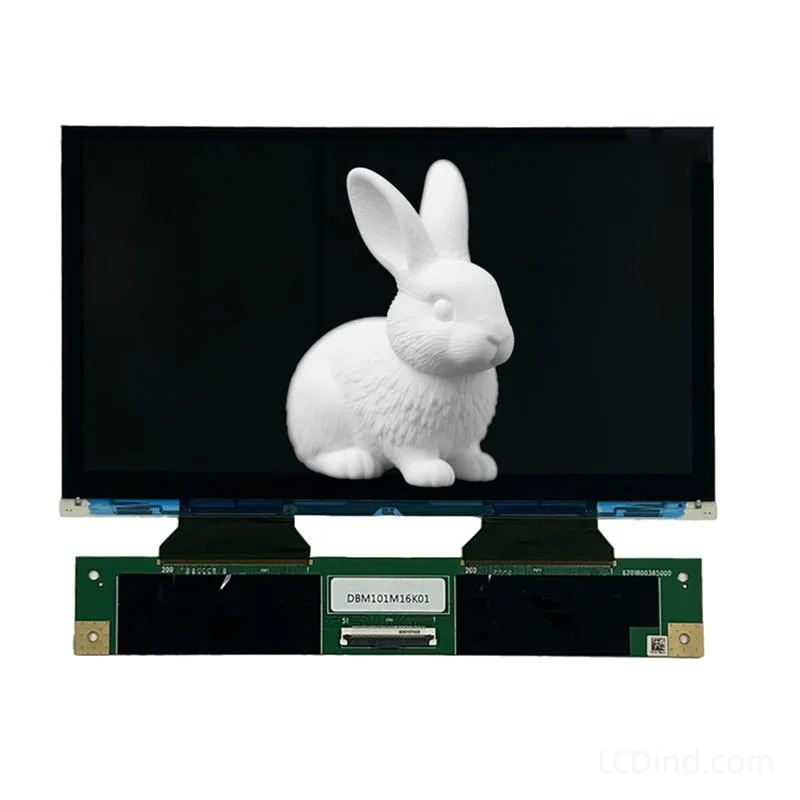
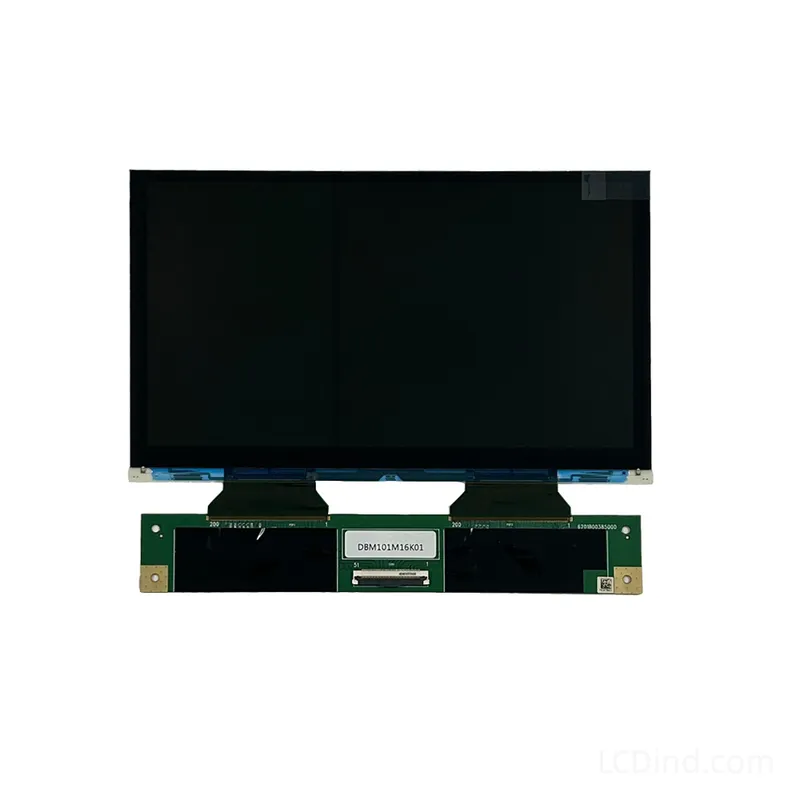
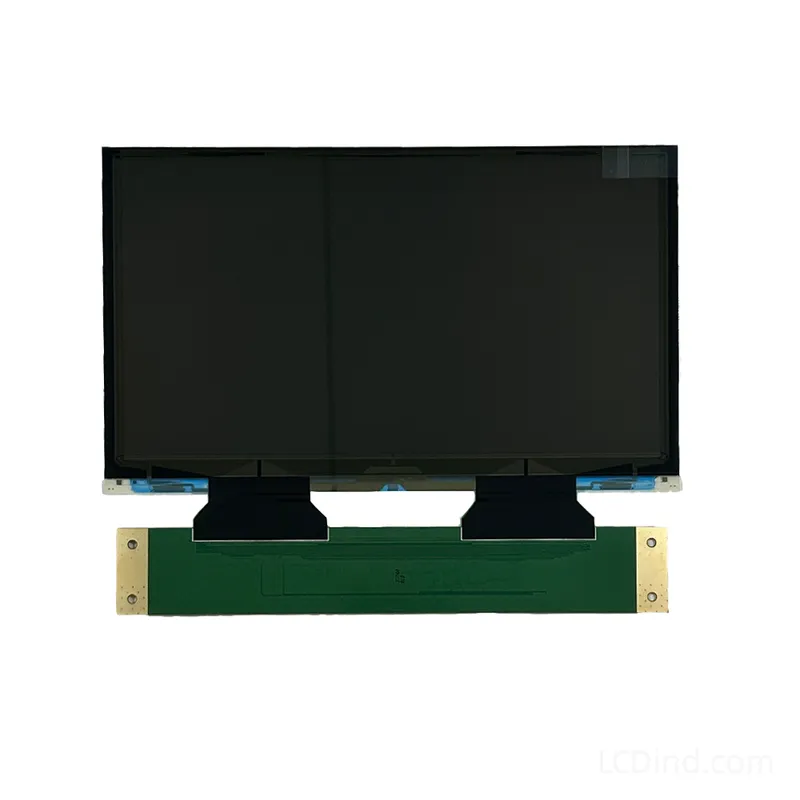
10.1 Inch 16K Mono LCD and Driver Board Kit for High-Density Resin Printers
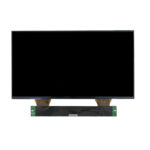
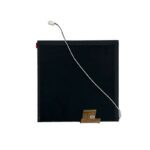
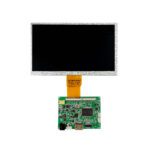
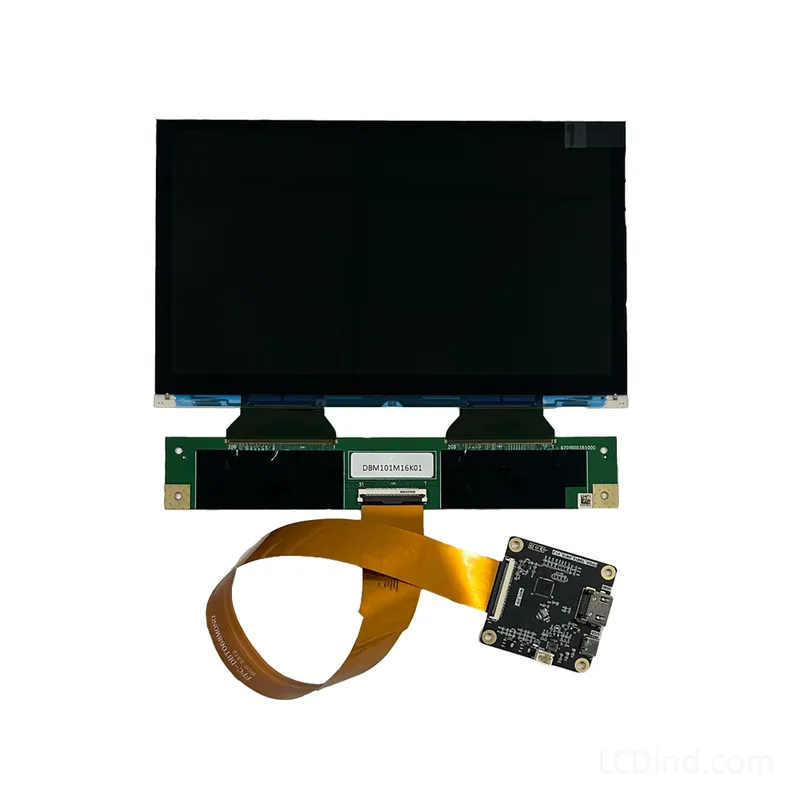
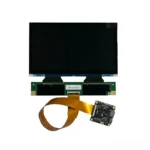
This 10.1 inch 16K mono LCD page targets resin-printer OEMs and advanced printer-development teams that need a complete display path rather than a bare display description. The confirmed table lists model LCD101M16K01, 15120 x 6230 16K mono resolution, 211.68(W) x 118.37(H) mm active area, 227.43(W) x 139.50(H) mm outline dimension, 14 x 19 um pixel pitch, 51-pin MIPI interface, 4.1% UV transmittance, 300:1 minimum contrast ratio, normally black transmissive mode, 0°C to 70°C operating temperature, and open-cell design without backlight. The page also positions the product with AD board and Raspberry Pi integration support, which makes the engineering review different from a simple replacement LCD order.
Technical Specifications
| Model Name | LCD101M16K01 |
| Display Size | 10.1 Inch |
| Resolution | 15120 x 6230 (16K Mono LCD) |
| Active Area | 211.68(W) x 118.37(H) mm |
| Outline Dimension | 227.43(W) x 139.50(H) mm |
| Pixel Pitch | 14 x 19 um |
| Signal Interface | 51 Pins MIPI |
| UV Transmittance | 4.1% |
| Contrast Ratio | 300:1 (Min.) |
| Display Mode | Normal Black, Transmissive |
| Operating Temp | 0°C ~ 70°C |
| Backlight | Without Backlight (Open Cell) |
Why the 16K Version Needs a System-Level Review
At 15120 x 6230 resolution, the display choice affects the complete optical, electrical, and processing architecture of an MSLA printer. The panel is not only a resolution upgrade. It changes exposure timing, slicing assumptions, motherboard bandwidth, MIPI signal quality, UV power balance, thermal load, and mechanical registration. A buyer should define whether the goal is a new printer platform, a developer kit, a limited production upgrade, or a repair part for an existing chassis.
Driver Board and Host Compatibility
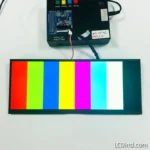
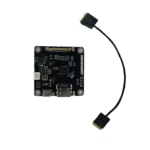
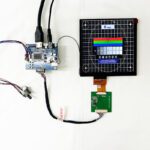
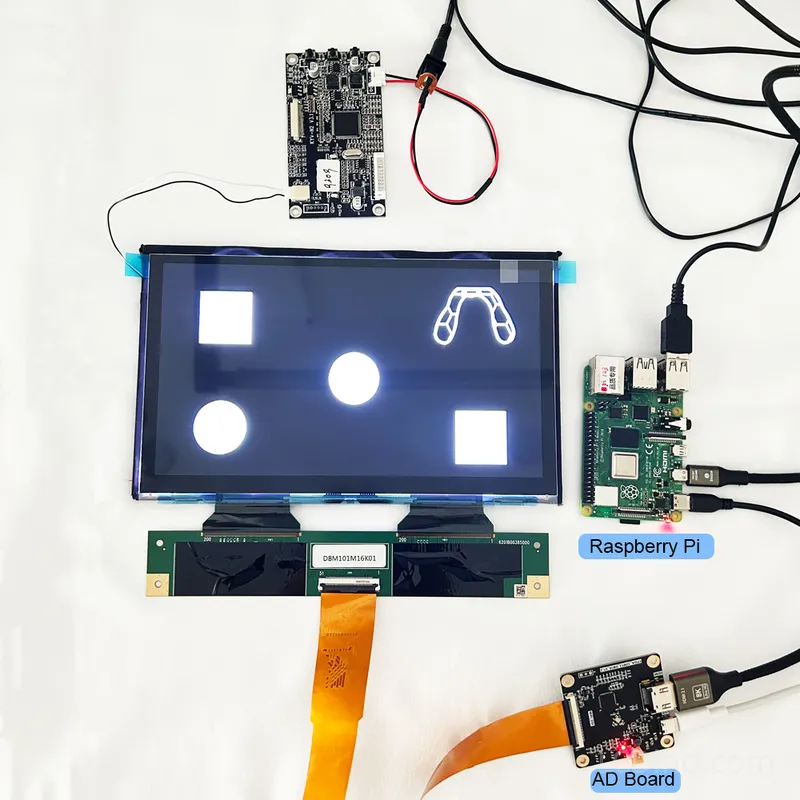
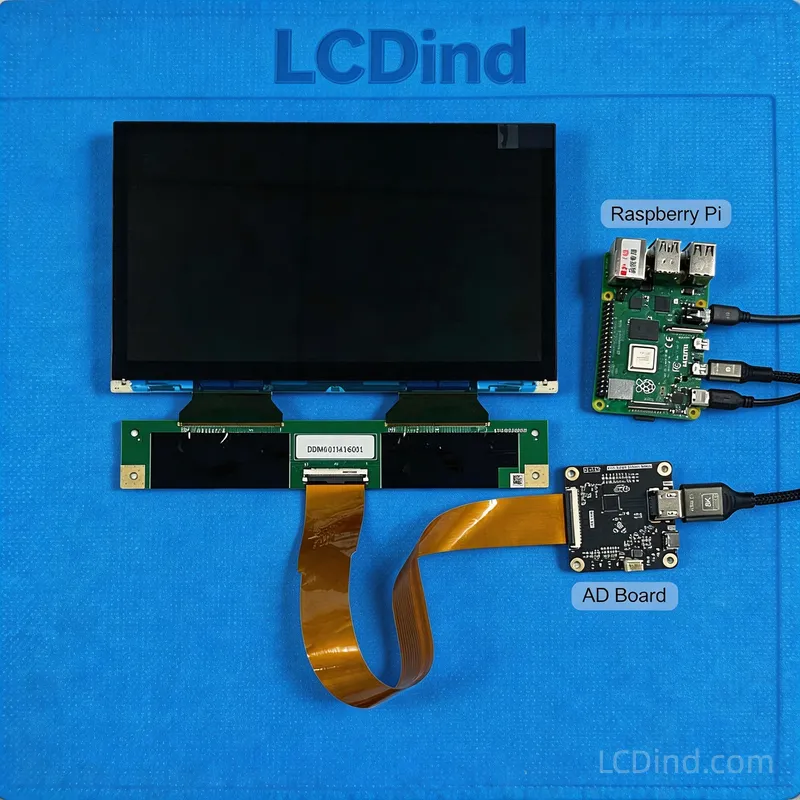
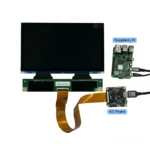
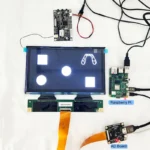
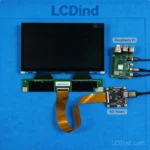
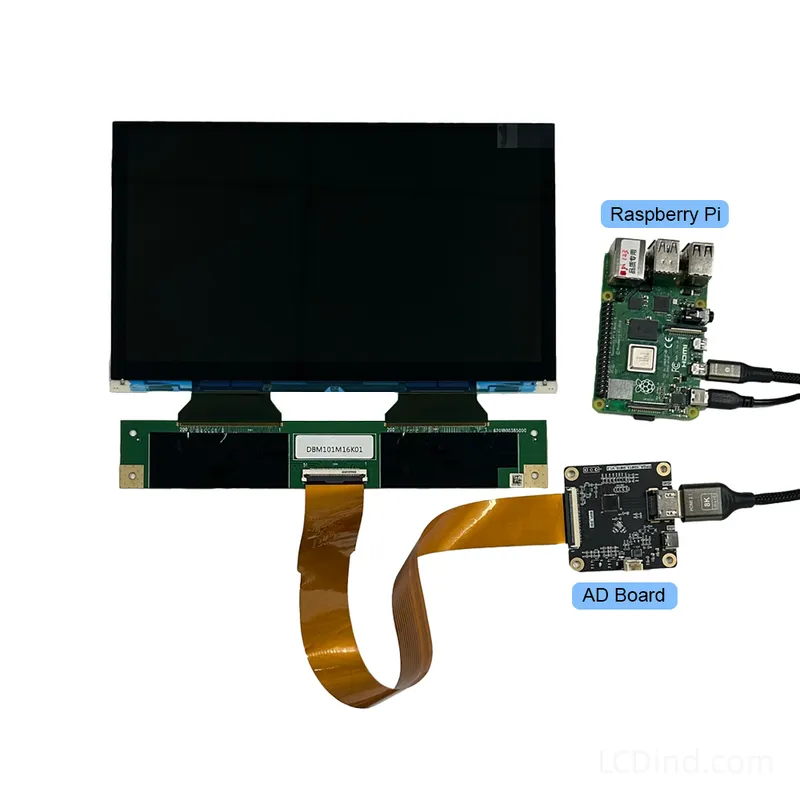
The page states that an HDMI-to-MIPI AD board can be supplied and that Raspberry Pi integration is supported through a kit approach. For an OEM program, this should be translated into clear deliverables: board input, output cable, firmware version, supported timing, power input, mechanical fixing, and startup behavior. Engineering teams should validate image scaling, orientation, latency, and error recovery before promising compatibility to downstream customers.
UV Transmittance and Exposure Control
The confirmed UV transmittance is 4.1%. That value should not be treated as a universal exposure setting. Resin type, LED wavelength, light engine uniformity, lens path, screen temperature, and anti-aliasing strategy all affect final curing performance. For dental or precision manufacturing use, sample approval should include exposure calibration, uniformity mapping, dark-detail retention, and multi-hour thermal behavior.
Commercial Application Fit
This 16K mono LCD is best suited for printer OEMs, controller-board developers, professional resin-printer upgrades, and laboratory equipment builders that can validate the full display path. It is not a plug-and-play consumer display unless it is sold with the correct board, cable, and documented printer compatibility. For B2B procurement, the kit configuration should be fixed before quotation so that samples and production orders match.
Procurement and Lifecycle Control
Use LCD101M16K01, the confirmed 51-pin MIPI interface, UV transmittance, contrast ratio, active area, outline dimension, and kit requirements in the RFQ. If the product will be used in a printer model sold for several years, discuss revision control, packaging protection, controller-board availability, and replacement-screen supply planning with LCDind before the enclosure or optical path is frozen.
Sample Approval and Production Controls
Sample approval for a 16K LCD and driver-board kit should validate the whole signal chain. Test boot sequence, HDMI input recognition if an AD board is used, MIPI cable stability, image orientation, full-screen pattern rendering, UV exposure uniformity, and thermal behavior during long print jobs. For development kits, document board version, cable version, firmware settings, and supported host configuration. This prevents a prototype success from turning into a production problem when a board or cable is changed without engineering approval.
How to Compare Alternatives
This page should be compared with other mono screens as a display-and-driver path, not only as a panel. A bare 16K screen may be cheaper but may leave the buyer responsible for MIPI timing, cable sourcing, and controller-board engineering. A kit approach can reduce development time if board version, firmware, and host compatibility are clearly documented. Compare total integration risk, not only LCD unit price.
Project Risk Boundaries
The main risk is treating the driver-board kit as a generic accessory. At 16K resolution, timing margin, board firmware, cable quality, power stability, and host output all affect whether the system works reliably. If the board or cable is changed after sample approval, the display path should be retested. For printer brands, avoid promising universal Raspberry Pi compatibility unless the exact board, image settings, and display orientation have been validated.
Information LCDind Needs for a Reliable Quote
For quotation, state whether you need the bare LCD101M16K01 LCD, LCD with cable, or LCD with AD board and host integration support. Provide target host platform, HDMI or other input requirement, mechanical space for the board, power plan, sample deadline, and expected annual volume. If Raspberry Pi support is required, include the intended board model and software environment so the kit can be reviewed accurately.
RFQ Checklist
- Product URL, model reference, and target application.
- Host interface, controller board, cable, firmware, and voltage requirements.
- Mechanical drawing, active area, outline, cover lens, mounting, and cable route.
- Brightness, touch, operating environment, thermal, and optical requirements.
- Sample schedule, annual quantity, packaging, inspection, and revision-control expectations.
Engineering FAQ
Is the AD board included by default?
Treat the driver board as a project configuration. Confirm whether the RFQ is for bare LCD, LCD plus cable, or complete driver-board kit.
Can it work with Raspberry Pi?
The page states Raspberry Pi support through an AD board path, but final timing, orientation, power, and cable configuration should be confirmed for the target build.
What is the key optical parameter?
UV transmittance, contrast ratio, active area, and pixel pitch should be reviewed together with the printer light engine.
Engineering Review Note
For quotation, send the product URL, target quantity, application background, host platform, interface requirement, and any existing drawing or replacement panel details. LCDind will review whether the standard configuration fits or whether cable, controller board, touch, cover glass, optical bonding, brightness, packaging, or lifecycle customization should be quoted.
Additional information
| Brand | LCDind |
|---|---|
| Brightness | Standard (200-450 nits) |
| Interface | MIPISpecify MIPI DSI displays by TFT or mono path, resolution, lane count, driver IC, command or video mode, initialization, pinout, touch and annual quantity. |
| Panel Type | IPS |
| Resolution | 15120×6230 |
| Size | 10.1 inchSpecify 10.1 inch industrial LCD modules by resolution, brightness, interface, touch, operating environment and annual quantity. 600-1200 nit options require application review. |
| Operating Temp | Standard (0 ℃ to +50/60 ℃) |
| Touchscreen | No Touch, Optional Touchscreen |
About brand
Specify LCDind LCD options for industrial equipment and resin 3D printer systems. Submit size, resolution, interface, optical stack, FPC, operating conditions and quantity for review.
Engineering FAQ
Q: How much better is the 16K (14x19um) resolution compared to an 8K screen?
A: A standard 10.1-inch 8K screen typically features a pixel pitch of around 28.5um. This 16K panel drives the pixel pitch down to an astonishing 14x19um. This means the physical pixels are roughly half the size, resulting in a 4x increase in pixel density. This translates to significantly smoother curves and the ability to print microscopic textures that 8K screens simply cannot resolve.
Q: Can I run this 16K display directly from a Raspberry Pi?
A: Yes, but not directly via the raw MIPI interface. To facilitate this, we offer an integration kit that includes an AD (Analog-to-Digital) driver board. This board takes the HDMI output from the Raspberry Pi and converts it flawlessly into the MIPI signal required by the 16K panel, making custom printer development highly accessible.
Q: What is the UV Transmittance of this panel?
A: The panel boasts a UV transmittance of 4.1%. While slightly lower than some lower-resolution screens (due to the immense density of the 16K pixel matrix), it remains highly efficient for MSLA printing. You may need to slightly increase your standard layer exposure times (e.g., from 2s to 2.5s) compared to an 8K screen, but the leap in detail quality is well worth the tradeoff.
Shipping and Delivery