
13
1.8 Inch SPI TFT Display for Embedded Control Screens
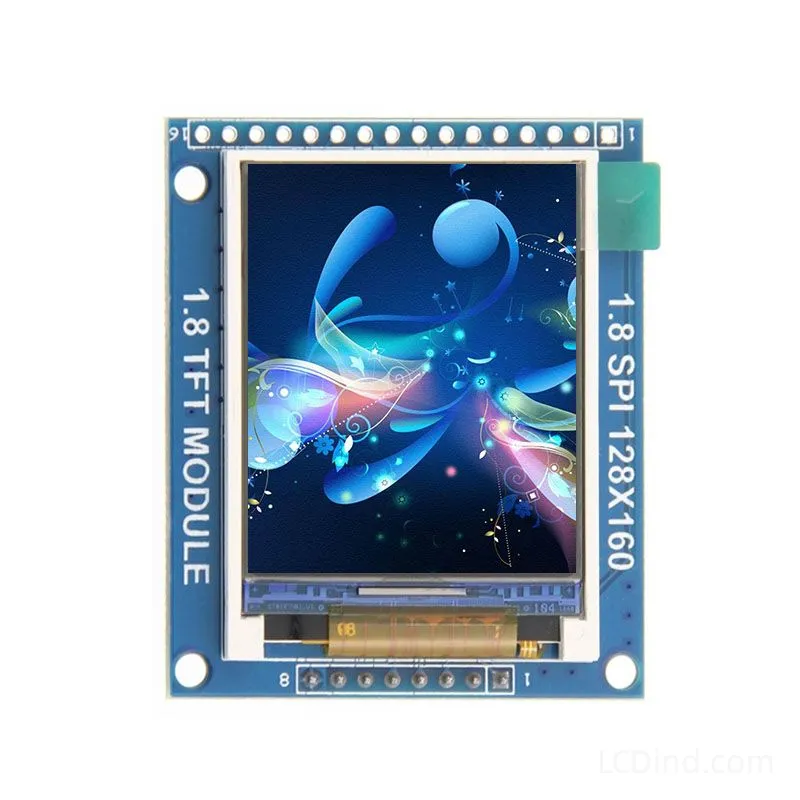
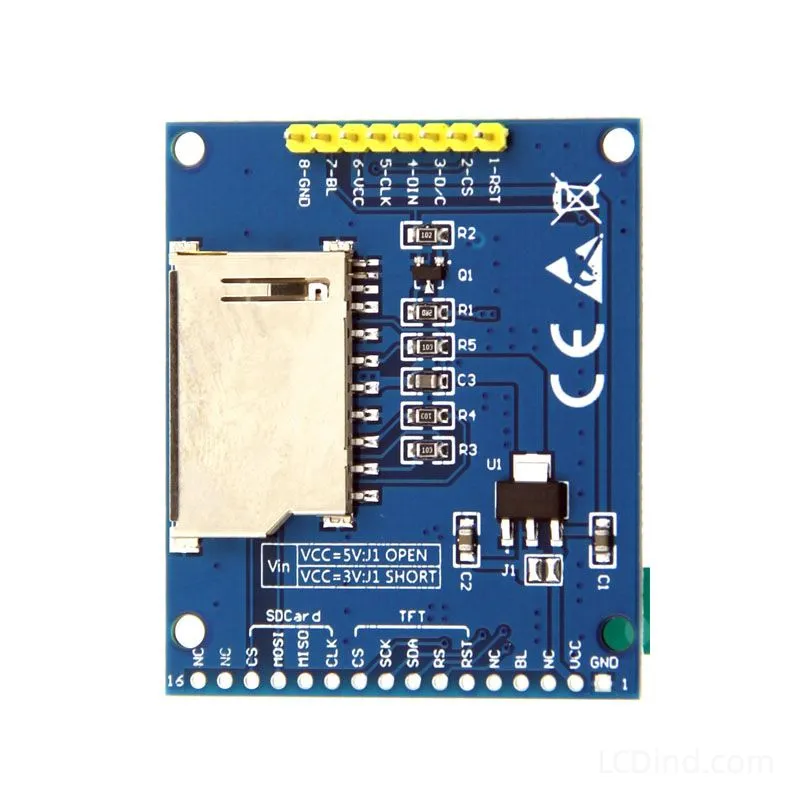
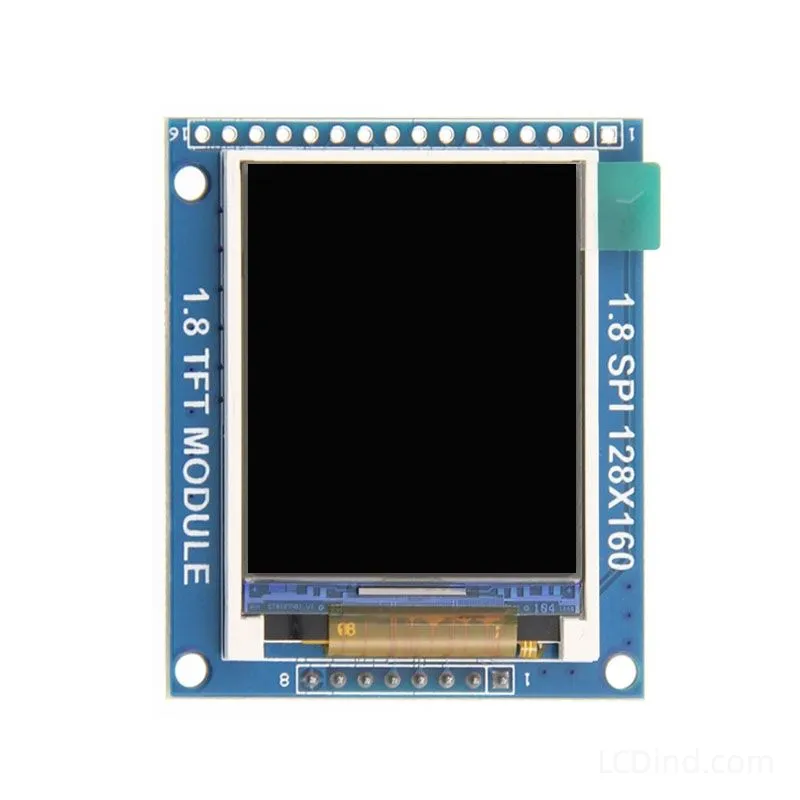
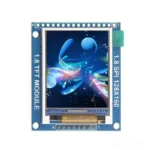
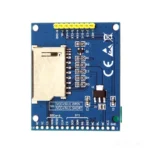
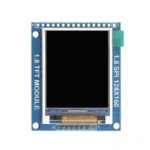
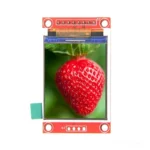
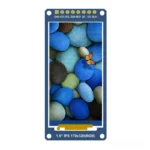
This 1.8 inch SPI TFT display is positioned for embedded control screens in compact equipment, controllers, instruments, and connected devices. The confirmed specifications include 1.8 inch size, 128×160 resolution, 4-wire SPI interface, -20 C~60 C operating range, 34.5 x 58.0 mm outline dimension, 28.03 x 35.04 mm act
Description
1.8-Inch SPI TFT Display for Embedded Control Screens
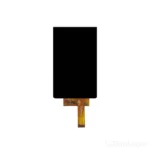
This 1.8 inch SPI TFT display is positioned for embedded control screens in compact equipment, controllers, instruments, and connected devices. The confirmed specifications include 1.8 inch size, 128×160 resolution, 4-wire SPI interface, -20 C~60 C operating range, 34.5 x 58.0 mm outline dimension, 28.03 x 35.04 mm active area, 3.3V power supply, and LCDind model LCDind-DS20208. Although the mechanical and electrical baseline is close to other 1.8 inch SPI products, the intended use here is embedded control logic, setup screens, and local device feedback.
Technical Specifications
| Size | 1.8 inch |
|---|---|
| Resolution | 128×160 |
| Interface | 4-wire SPI interface |
| Operating Temp | -20 C~60 C |
| Outline Dimension | 34.5 x 58.0 mm |
| Active Area | 28.03 x 35.04 mm |
| Power Supply | 3.3V |
| LCDind Model | LCDind-DS20208 |
Embedded Control Role
Embedded control screens are often used by technicians rather than general consumers. They show operating mode, calibration state, network status, sensor values, diagnostic codes, or setup prompts. The 128×160 resolution can work well if the UI is planned around one main value and a limited number of secondary indicators. This avoids cramped layouts and makes the display useful during installation and maintenance.
Mechanical Integration
The 34.5 x 58.0 mm outline and 28.03 x 35.04 mm active area should be checked with the internal PCB layout and the front-panel opening. In embedded products, the display may be mounted to a daughter board or directly to the main board, so connector orientation and cable strain relief should be confirmed early. If the final device uses a sealed front cover, include the lens stack in the optical review.
Firmware and Electrical Planning
The 4-wire SPI interface keeps the display connection simple, but embedded devices often have strict timing and startup requirements. Engineers should confirm reset sequence, display initialization, boot screen, sleep recovery, watchdog behavior, and what the display shows during communication loss. Because the power supply is 3.3V, the host design should avoid uncontrolled 5V signaling.
Application Examples
This display can fit embedded controllers, small gateways, power modules, test jigs, sensor nodes, device setup panels, and compact control boxes. It is useful when the product needs local service information without adding a large touchscreen. For equipment families, firmware can reuse the same display hardware across models while changing menu labels, units, and diagnostic screens.
Procurement and Approval
Use LCDind-DS20208 and the exact mechanical table when requesting quotation. Purchasing should include annual forecast, expected service life, sample validation plan, and whether the display will be used across multiple device variants. If the product is hard to service after installation, ask about long-term supply and revision management before mass production.
Customization Support
LCDind can review FPC route, connector position, cover lens, brightness target, packaging, and inspection standards. If touch is required, it should be defined separately with cover thickness, grounding, and interaction details. For many embedded control products, physical buttons beside the display may provide a more robust operation method.
Embedded UI Planning
For embedded control screens, the display is part of the service workflow. It may guide installers through setup, show firmware state, confirm network pairing, or display diagnostic codes. A 128×160 screen can support this well if the interaction is structured into short pages. Engineers should define the required states before choosing the display: boot, normal operation, warning, fault, menu, update, and recovery. This prevents late-stage UI problems where the selected display is mechanically acceptable but too limited for the product’s service logic.
Host Board and Firmware Ownership
The 4-wire SPI interface reduces pin count, but it also places responsibility on the host firmware for timing, refresh, and display state management. The engineering team should decide who owns the driver layer, who validates command initialization, and how display updates are handled during high CPU load. If the embedded device logs faults or supports firmware updates, the display should have a defined fallback message when the system is not in normal operating mode.
Use in Equipment Families
This module can be useful when a manufacturer wants one compact display platform across several controller variants. Different products can share the same hardware while firmware changes labels, units, or setup menus. That approach can reduce inventory complexity, but it requires disciplined documentation. The RFQ should note whether the display will support one device or an equipment family so mechanical, packaging, and revision-control expectations can be aligned at the start.
Validation Beyond the Bench
Bench testing confirms that the screen powers on, but embedded products need validation in the complete device. Test the display after enclosure assembly, after thermal soak, after repeated power cycling, and after communication or sensor-fault events. If the front cover has a tinted window, confirm that low-brightness states and warning colors remain readable. These tests are more useful than relying on generic display specifications alone.
Service Documentation
If the screen is used for diagnostics, document the final menu tree, error-code meanings, and display behavior during firmware update or maintenance mode. This helps production, service, and purchasing teams approve the same display configuration.
RFQ Checklist
- Target quantity, annual forecast, and sample schedule.
- Mechanical drawing with active area, outline, mounting, and cable route.
- Host board, interface timing, voltage rails, and controller-board requirement.
- Brightness, lens, bonding, touch, and operating-environment requirements.
- Inspection standard, packaging requirement, and revision-control expectation.
Engineering FAQ
How is this different from a status-panel display?
This page focuses on embedded control and setup screens, where firmware behavior, diagnostics, and service workflows are central to the display choice.
Is 128×160 enough for setup menus?
Yes, for short menus and focused service screens. Dense text, graphs, or multi-panel dashboards should use a larger display.
What voltage should the host board use?
The table lists 3.3V power supply. Logic-level compatibility should be confirmed with the final host board.
Can LCDind review the complete assembly?
Yes. Send the PCB layout, enclosure drawing, UI mockup, and operating environment for engineering review.
Engineering Review Note
For quotation, send the product URL, target application, required quantity, and any existing drawing or replacement panel details. LCDind will review whether the standard configuration fits or whether interface, backlight, FPC, cover glass, touch, bonding, or controller-board customization should be quoted.
Additional information
About brand
Source OEM / ODM LCD panels for OEM, replacement and industrial integration projects. Submit size, resolution, interface, brightness, lifecycle and annual quantity for review.
Engineering FAQ
Q: What is this 1.8 inch SPI TFT display best used for?
A: This SPI TFT display is intended for embedded control screens, embedded controllers, instrument panels, compact terminals, and OEM equipment programs that need stable display sourcing with 128x160 resolution.
Q: Which interface details should engineers confirm before sampling?
A: Use the 4-wire SPI interface interface as the starting point. Before sample approval, confirm pinout, signal timing, voltage, cable length, connector direction, firmware support, and EMC layout with the host board.
Q: Can LCDind customize touch, cover glass, or bonding for this display?
A: Yes. LCDind can review resistive touch, capacitive touch, cover lens thickness, logo printing, AG/AR/AF coating, optical bonding, and controller matching. Current touch note: touch configuration is reviewed during RFQ.
Q: How should brightness be selected for the final device?
A: The current brightness guidance is brightness should be confirmed against the lighting environment. Share indoor, vehicle, kiosk, outdoor shade, or sunlight-readable requirements so LCDind can review backlight, heat, bonding, and cover-glass options.
Q: What mechanical details matter before enclosure tooling?
A: Check outline 34.5 x 58.0 mm, active area 28.03 x 35.04 mm, power input 3.3V before releasing tooling. Buyers should confirm bezel opening, mounting stack, FPC bend radius, connector clearance, gasket pressure, and viewing area tolerance.
Q: What should be included in an RFQ for this SPI TFT display?
A: Send annual forecast, trial quantity, target schedule, host platform, interface requirement, mechanical drawing, brightness target, touch plan, operating environment, and any replacement display dimensions.
Q: Can this display be used for outdoor or high-ambient-light equipment?
A: It can be reviewed for outdoor equipment, but final approval depends on brightness, thermal design, sealing, UV exposure, cover glass, and viewing angle. For direct sunlight, request high-brightness or optical-bonding review.
Q: How does LCDind identify this product during engineering review?
A: Use LCDind internal model LCDind-DS20208 together with size, resolution, interface, and mechanical drawing. Supplier-only panel codes are not needed for public sourcing discussions.
Shipping and Delivery
Q: What is the MOQ?
A: The MOQ for our products is 1 piece. We are able to provide support throughout the testing process.
Q: What about the delivery time?
A: We have products in stock and can ship them within 3 working days.
Q: Does your product have any warranty?
A: Yes, we offer a warranty that ensures the LCD will function properly upon receipt. However, please note that we do not provide guarantees for any damage caused during use.
Q: What’s your payment method?
A: We accept several payment methods, including T/T (bank transfer), and PayPal.
Q: What’s your shipping method?
A: Thank you for your inquiry. We offer various shipping methods to suit different needs.
For small quantity orders, we use UPS Air-Express, DHL, FedEx, TNT, or EMS Express service. These options are safe and fast.
For large quantity orders, we typically work with the buyer’s cargo agent in China. Alternatively, we can arrange for air or sea transportation.
Please let us know your preferred shipping method and we will do our best to accommodate your request.
Q: Do you offer custom solution?
A: Yes, we offer custom solutions if our standard products do not meet the buyer’s requirements. Please let us know your specific needs, and we will work with you to create a tailored solution that meets your business needs.
Q: How to Contact us?
A: Send your Inquiry Details in the Below, Click “Send” Now!