13
Description
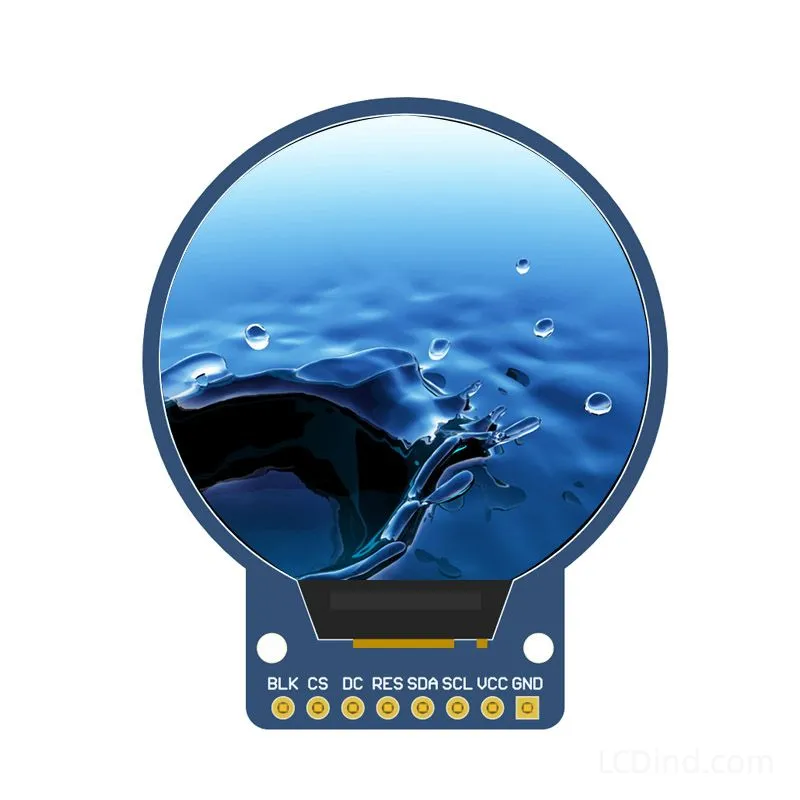
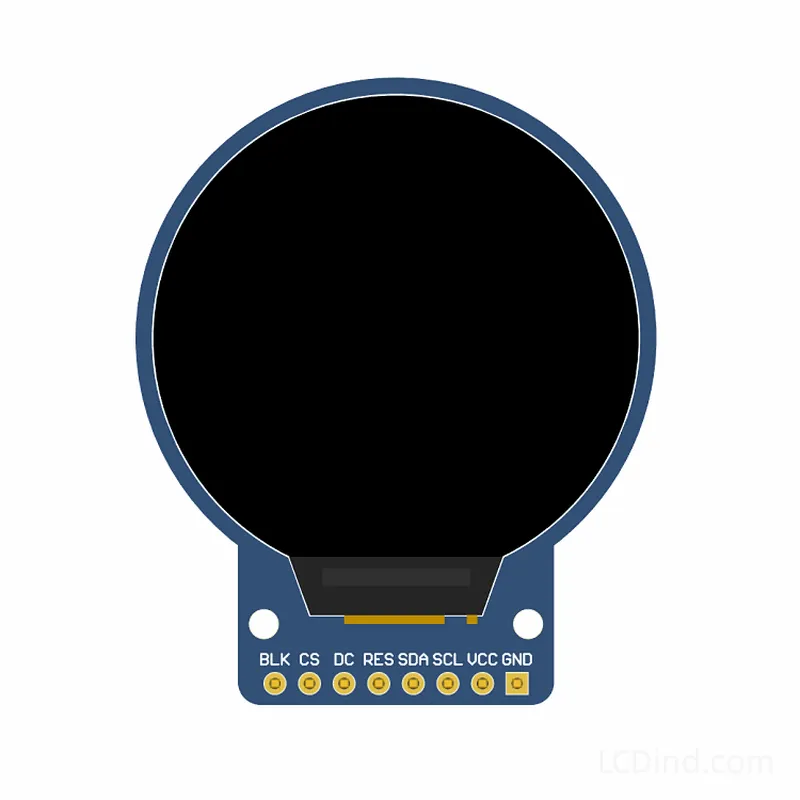
1.28-Inch Round TFT Display for Industrial Rotary Controls
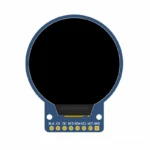
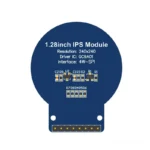
This 1.28 inch round TFT display is intended for industrial rotary controls, compact knob interfaces, and equipment panels where a circular color display sits inside or near a physical control. The confirmed specifications include 1.28 inch size, 240×240 resolution, 4-line SPI interface, -10 C~60 C operating range, 38.03 x 45.80 mm outline dimension, Diameter: 32.40 mm active area, 3.3V power supply, and LCDind model LCDind-DS20202. Brightness, touchscreen, and LED lifetime are not confirmed in the current table and should be treated as RFQ items.
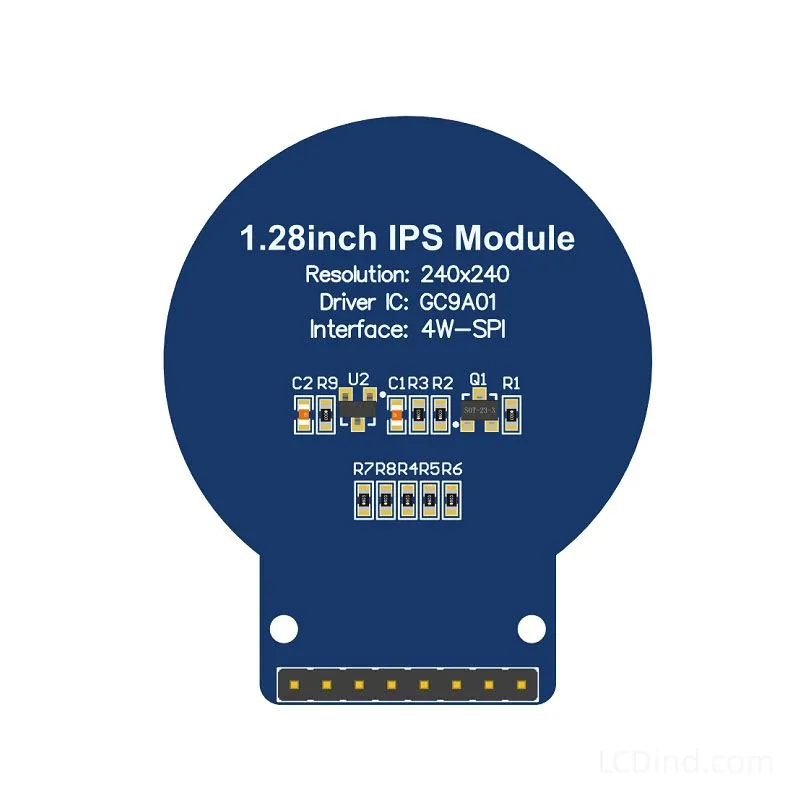
Technical Specifications
| Size | 1.28 inch |
|---|---|
| Resolution | 240×240 |
| Interface | 4-line SPI |
| Brightness | |
| Touchscreen | |
| Operating Temp | -10 C~60 C |
| Outline Dimension | 38.03 x 45.80 mm |
| Active Area | Diameter: 32.40 mm |
| Power Supply | 3.3V |
| LED Lifetime | |
| LCDind Model | LCDind-DS20202 |
Mechanical Planning for Rotary Controls
A rotary control display has different constraints from a normal square module. The visible area is circular, the user often reads it while turning a knob, and the display may share space with an encoder, shaft, ring light, or front-panel bearing. The 38.03 x 45.80 mm outline must be reviewed against the complete control assembly, not only the 32.40 mm diameter active area. If the module is installed behind a knob face, confirm display centerline, shaft clearance, retaining structure, and the relationship between the active area and printed cover.
Industrial rotary controls also need assembly robustness. The FPC should avoid sharp bends near moving parts, and the display should be protected from pressure applied through the knob or front cover. If the control is sealed against dust or moisture, the gasket and cover lens can affect optical performance. Share the mechanical stack so LCDind can check whether the standard module fits or whether a custom FPC, lens, or mounting approach is required.
SPI Control and UI Behavior
The 4-line SPI interface is suitable for knob displays that show setpoints, units, mode icons, alarm states, or progress. It keeps the board connection simple, but UI behavior should be matched to the host processor. Engineers should confirm refresh rate, screen rotation, color format, boot image, and whether the display should respond immediately to encoder movement. A sluggish update can make a rotary control feel inaccurate even if the display hardware is correct.
Because brightness is not listed, sample testing should include the actual front lens and expected lighting environment. Many industrial control panels are used under strong overhead lights or inside cabinets. The optical stack, viewing angle, and cover finish can decide whether the display is readable while the operator stands to the side. Power supply is listed as 3.3V, so logic compatibility and backlight control should be validated with the host board.
Best-Fit Industrial Uses
This module is well suited to industrial rotary setpoint controls, compact operator panels, power-supply knobs, HVAC controllers, laboratory equipment, audio or measurement instruments, and equipment dashboards that use circular UI elements. The 240×240 resolution is useful for icons, arcs, numeric setpoints, warning colors, and simple menu states. It gives product designers a more integrated appearance than placing a rectangular display next to a mechanical knob.
For B2B programs, the value is strongest when the display is part of a repeat-production control assembly. The engineering team can standardize one round display across several product versions by changing firmware graphics or cover printing. That reduces front-panel variant complexity, but only if the display supply, mechanical stack, and firmware timing are validated before tooling.
Procurement Risk Points
Procurement should request confirmation of LCDind-DS20202, active diameter, outline dimension, interface, power supply, and the blank optical fields. Do not treat missing brightness or LED lifetime as acceptable by default. Define the environment, expected operating hours, and viewing condition so LCDind can advise whether the standard option is suitable.
Rotary controls can create hidden cost if the display is approved without the encoder, knob, lens, and enclosure. A small mismatch in centerline or FPC direction can require redesign. For production sourcing, send the assembly drawing and expected annual volume together with the display requirement. Ask for packaging and cosmetic inspection standards because round displays are visually prominent in the final product.
Customization Options
LCDind can review FPC changes, connector direction, cover glass, printed mask, brightness target, bonding method, and packaging. For a premium rotary control, the display often needs a dark front lens or printed ring. Those items should be reviewed during sample stage, not after purchasing locks the display module.
Touch is not confirmed on this page. If the product needs touch in addition to rotary input, clarify whether the user touches the display face, the outer ring, or separate buttons. The small circular active area may make a physical encoder plus display more reliable than touch-only operation.
RFQ and Engineering Review Checklist
- Control assembly drawing with encoder, knob, lens, display centerline, and mounting details.
- Host MCU, SPI timing, orientation, update-rate requirement, and power plan.
- Lighting environment and brightness requirement because brightness is not confirmed.
- Whether the UI uses arcs, numeric values, icons, alarms, or menu states.
- Cover lens, printed mask, bonding, or surface-treatment requirements.
- Annual volume, sample schedule, cosmetic standard, and packaging requirement.
Engineering FAQ
Is this product only for appliance knobs?
No. It is positioned for industrial rotary controls and compact operator interfaces where a circular color display supports a physical control.
Why is the active area listed as a diameter?
The active area is circular, so Diameter: 32.40 mm is the useful visible graphic area. The full module outline is larger and must be checked against the assembly.
Can brightness be assumed from the attribute range?
No. The table brightness field is blank, so the exact brightness should be confirmed during RFQ and sample testing.
What should be validated in firmware?
Confirm initialization sequence, screen rotation, refresh behavior during knob movement, color rendering, and startup state after reset or power recovery.
Project Notes for Sourcing Teams
Use LCDind-DS20202 and the full rotary-control assembly drawing for engineering review. The display should be approved as part of the control stack, not as an isolated round screen.
Validation Before Tooling Release
Before this display is locked into a rotary-control assembly, build one mechanical sample that includes the real encoder, front cap, display mounting, cable route, and lens stack. Check whether the displayed value stays centered when the knob is viewed from the normal operator position. Also test startup graphics, rotation direction, alarm states, and display readability while the operator’s hand is near the knob. These checks are more useful than approving the module from a drawing alone because a circular display can appear misaligned even when the electrical interface works correctly.
If the project has several knob sizes or product variants, ask LCDind to review whether this 1.28 inch display can serve as a shared platform. A common round display can simplify purchasing and firmware maintenance, but only if the enclosure centerline, FPC exit, brightness target, and assembly method are consistent across the product family.
Additional information
About brand
Source OEM / ODM LCD panels for OEM, replacement and industrial integration projects. Submit size, resolution, interface, brightness, lifecycle and annual quantity for review.
Engineering FAQ
Q: What is this 1.28 inch round TFT display best used for?
A: This round TFT display is intended for industrial rotary controls, embedded controllers, instrument panels, compact terminals, and OEM equipment programs that need stable display sourcing with 240x240 resolution.
Q: Which interface details should engineers confirm before sampling?
A: Use the 4-line SPI interface as the starting point. Before sample approval, confirm pinout, signal timing, voltage, cable length, connector direction, firmware support, and EMC layout with the host board.
Q: Can LCDind customize touch, cover glass, or bonding for this display?
A: Yes. LCDind can review resistive touch, capacitive touch, cover lens thickness, logo printing, AG/AR/AF coating, optical bonding, and controller matching. Current touch note: touch configuration is reviewed during RFQ.
Q: How should brightness be selected for the final device?
A: The current brightness guidance is brightness should be confirmed against the lighting environment. Share indoor, vehicle, kiosk, outdoor shade, or sunlight-readable requirements so LCDind can review backlight, heat, bonding, and cover-glass options.
Q: What mechanical details matter before enclosure tooling?
A: Check outline 38.03 x 45.80 mm, active area Diameter: 32.40 mm, power input 3.3V before releasing tooling. Buyers should confirm bezel opening, mounting stack, FPC bend radius, connector clearance, gasket pressure, and viewing area tolerance.
Q: What should be included in an RFQ for this round TFT display?
A: Send annual forecast, trial quantity, target schedule, host platform, interface requirement, mechanical drawing, brightness target, touch plan, operating environment, and any replacement display dimensions.
Q: Can this display be used for outdoor or high-ambient-light equipment?
A: It can be reviewed for outdoor equipment, but final approval depends on brightness, thermal design, sealing, UV exposure, cover glass, and viewing angle. For direct sunlight, request high-brightness or optical-bonding review.
Q: How does LCDind identify this product during engineering review?
A: Use LCDind internal model LCDind-DS20202 together with size, resolution, interface, and mechanical drawing. Supplier-only panel codes are not needed for public sourcing discussions.
Shipping and Delivery